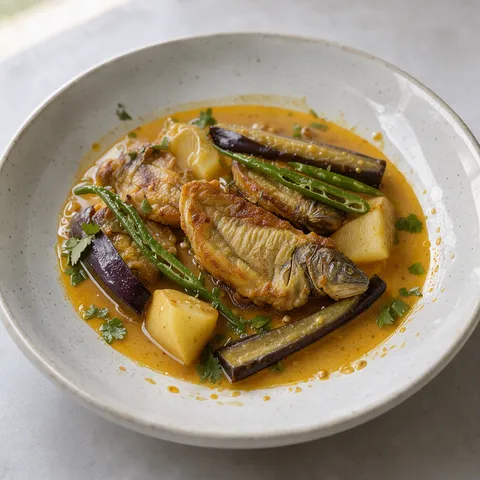
Light Bengali Fish Curry with Potato Macher Jhol
An Indian main course. Takes 1 hr, Serves 4. Difficulty: medium.
At a glance
- Total time
- 1 hr
- Serves
- Serves 4
- Difficulty
- Medium
- Cuisine
- Indian cuisine
- Dish type
- Main course
- Diet
- Gluten-free
- Allergens
- Fish, Mustard, Sulphites
Ingredients
Fish
- 600 g carp or sea bass on the bone (8 steaks 2 cm thick, rohu in Bengal)
- 1 tsp salt
- 1/2 tsp ground turmeric
Vegetables
- 2 medium potatoes (about 300 g, peeled)
- 1 small aubergine (about 200 g)
- 1/4 tsp salt
Oil
- 6 tbsp mustard oil (90 ml, or sunflower oil if unavailable)
Panch phoron (five seeds)
- 1/4 tsp each of cumin seeds
- fennel seeds
- nigella seeds
- black mustard seeds and fenugreek seeds
Sauce
- 2 green chillies (slit lengthways)
- 2 cm piece of fresh ginger (grated)
- 1 tsp ground cumin
- 1 tsp ground coriander
- 1/2 tsp ground turmeric
- 1 tsp sweet paprika (or Kashmiri chilli powder)
- 3 tbsp water
- 1 medium tomato (about 120 g, grated)
- 700 ml hot water
- 1 tsp salt
- 1/2 tsp sugar
To finish
- 2 tbsp chopped fresh coriander
Equipment
- Mixing bowls
- Chopping board
- Chef's knife
- Sauté pan
- Silicone spatula
- Box grater
- Probe thermometer (optional)
Method
- Salt the fish: Rinse the fish steaks and pat them thoroughly dry with kitchen paper. In a bowl, rub them all over with 1 tsp salt and 1/2 tsp turmeric and leave for 10 min. In Bengal fish is always rubbed this way: the turmeric masks any fishy smell and protects the surface during frying
- Prepare the vegetables and spice paste: On a chopping board, use a chef's knife to cut the potatoes and aubergine into fingers 6 cm long and 1.5 cm thick. Put them in separate bowls and sprinkle the aubergine with 1/4 tsp salt. Grate the ginger and tomato on the coarse side of the grater and discard the tomato skin. In a small bowl, mix the ground cumin, ground coriander, turmeric and paprika with 3 tbsp water to a paste. Ground spices mixed with water do not burn in hot oil
- Heat the mustard oil: In a 28 cm deep sauté pan with a lid, heat the mustard oil over high heat until the first wisps of smoke appear, about 2 min, then reduce to medium heat and leave for 1 min. The oil forms a thin film over the base of the pan, which is enough for shallow-frying. Smoking takes away the sharp, raw pungency of mustard oil
- Fry the fish: Fry the fish steaks in two batches, turning once with a spatula, for 2-3 min on each side until light golden, then transfer to a plate. The fish is not cooked through at this stage, it only forms a crust. The crust stops the steaks breaking up as they cook in the sauce
- Fry the vegetables: In the same oil, fry the potatoes for 5 min, turning, until golden in places, then remove. Pat the aubergine dry with kitchen paper, fry for 3 min and remove. About 2 tbsp oil should be left in the pan, as the vegetables absorb the rest
- Make the tadka: Add the panch phoron to the oil in the pan and stir for 20-30 sec, until the mustard seeds pop and the cumin darkens. Add the green chillies and grated ginger and stir for 30 sec. Add the spice paste and fry for 2 min, until the oil separates at the edges. Add the grated tomato and cook for 3 min, until its liquid has evaporated
- Simmer the potatoes: Add the 700 ml hot water, 1 tsp salt and the sugar and bring to the boil. Return the potatoes to the pan and simmer over medium-low heat with the lid ajar for 10-12 min, until the tip of a knife goes in with slight resistance. Jhol is a thin curry: the sauce does not thicken but stays the consistency of a light soup
- Add the fish and aubergine: Lay the aubergine and fish steaks in the sauce and swirl the pan, rather than using a spoon, to baste them with the sauce. Simmer over low heat with the lid ajar for 6 min. The fish is ready when it comes away easily from the bone and, if you use a thermometer, reads 63°C at the thickest part
- Serve: Turn off the heat, scatter over the coriander and leave for 3 min. Divide between shallow bowls, allowing two pieces of fish per person with potato, aubergine and plenty of jhol, and serve hot
Chef's note
Macher jhol is one of the most commonly cooked everyday lunch dishes in Bengal, eaten with white rice. Mustard oil is traditionally bought ready-made and is available in Indian and Asian shops. If unavailable, use sunflower oil and add an extra 1/4 tsp black mustard seeds to the tadka. Nigella seeds are the equivalent of Bengali kalonji. In Türkiye, carp is the freshwater fish closest to rohu, but bear in mind that it is bony.
Frequently asked questions
- Why is macher jhol a thin curry?
- Jhol is a thin curry, so the sauce doesn't thicken and stays at a light soup consistency. The recipe adds 700 ml hot water.
- Why is the fish rubbed with salt and turmeric first?
- In Bengal the fish is always rubbed this way. The turmeric tempers the smell and protects the surface when frying. The fried fish forms a crust, which stops the steaks falling apart as they cook in the sauce.
- What can I use if I don't have mustard oil?
- The recipe suggests sunflower oil. If you use mustard oil, heat it until it gives off the first thin wisp of smoke, then lower the heat. The smoking takes away the sharp, raw bitterness of the oil.
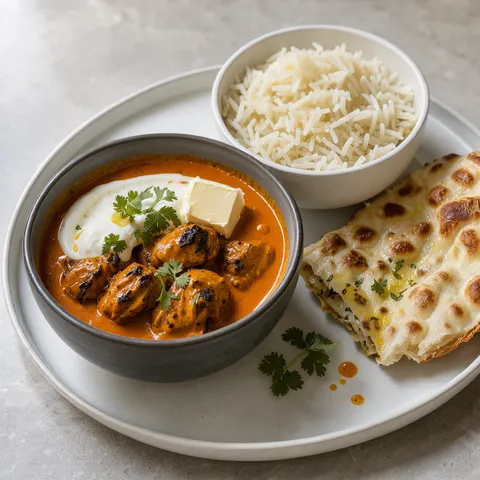 Indian Butter Chicken50 min · Main course
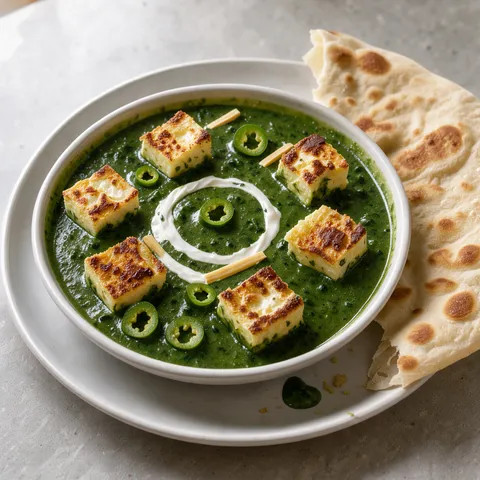 Spinach with Homemade Paneer45 min · Main course
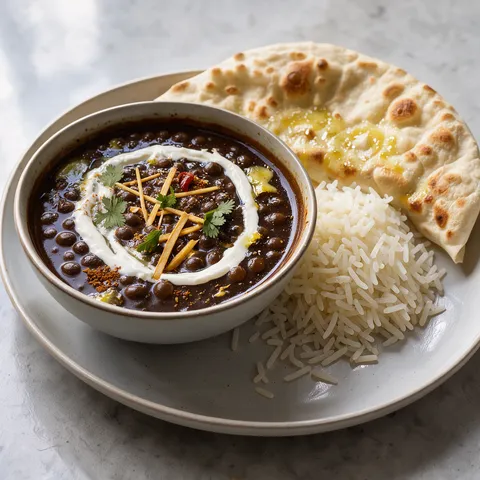 Black Lentil and Kidney Bean Stew1 hr 30 min · Main course
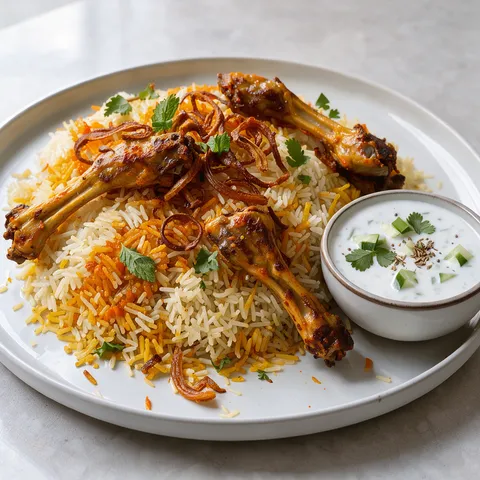 Chicken Dum Biryani1 hr 30 min · Main course
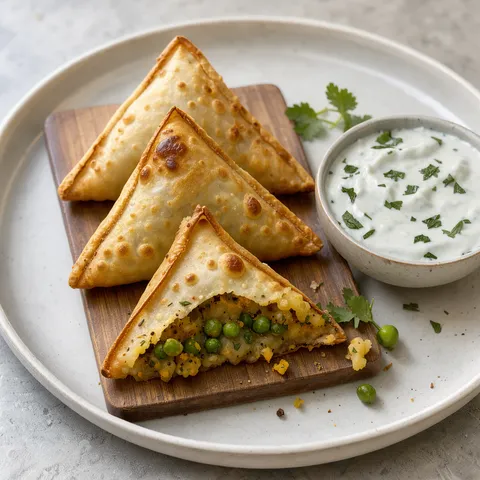 Indian Potato Pastries1 hr 30 min · Bread & pastry
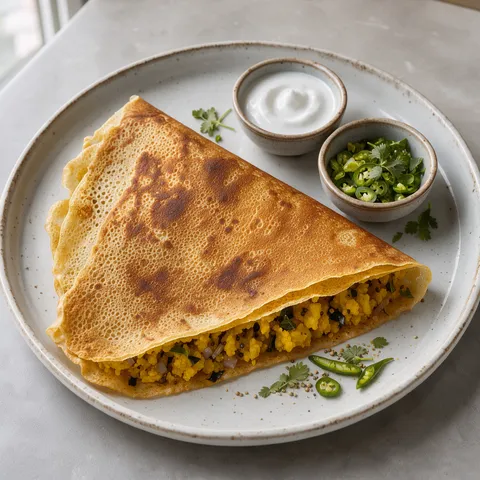 Fermented Rice Crêpes with Spiced Potato50 min · Bread & pastry