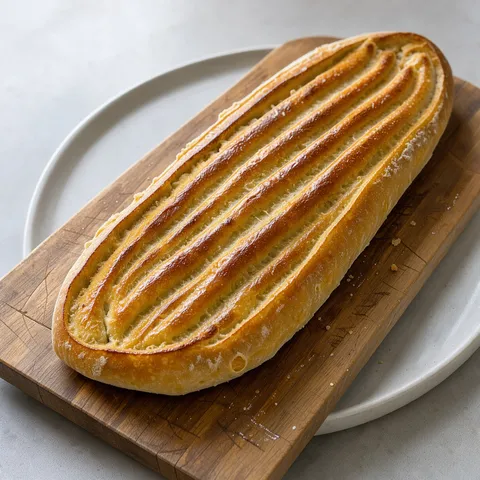
Armenian Grooved and Glazed Yeasted Loaf Matnakash
An Armenian bread & pastry. Takes 1 hr 20 min · +1 hr 55 min rising and resting, 2 loaves (8 servings). Difficulty: challenging.
At a glance
- Total time
- 1 hr 20 min · +1 hr 55 min rising and resting
- Serves
- 2 loaves (8 servings)
- Difficulty
- Challenging
- Cuisine
- Armenian cuisine
- Dish type
- Bread & pastry
- Allergens
- Gluten
Ingredients
Dough
- 500 g strong white bread flour
- 340 ml lukewarm water (about 35°C)
- 7 g fast-action dried yeast (1 sachet)
- 1 tsp caster sugar
- 10 g salt
- 20 ml sunflower oil (2 tbsp)
Glaze
- 10 g flour (1 tbsp)
- 1/2 tsp sugar
- 80 ml water
- 1/4 tsp bicarbonate of soda
Tray and bowl
- 1 tsp sunflower oil
- 1 tbsp flour (for dusting)
Equipment
- Mixing bowls
- Precision scales
- Dough scraper
- Cling film
- Saucepan
- Balloon whisk
- Baking tray
- Baking paper
- Pastry brush
- Oven
- Bread knife
- Stand mixer (optional)
- Probe thermometer (optional)
Method
- Activate the yeast: Mix the lukewarm water, yeast and sugar in a large bowl and leave for 10 min, until a thin foam forms on the surface. The foam shows that the yeast is alive: if it does not foam, either the water is too hot or the yeast is old
- Knead: Add the flour and salt and bring together with a dough scraper, then add the sunflower oil and knead on the work surface for 10 min (6 min at medium speed in a stand mixer with the dough hook). The dough should be soft and slightly tacky without sticking to your hands, and stretch into a thin membrane without tearing. This membrane shows that the gluten network has formed and that the crumb will be soft and open
- First prove: Grease the bowl with half the oil, put the dough in it, cover with cling film and leave in a warm place for 1 hr, until doubled in size. It is ready when a floured finger pressed into it leaves a dent that slowly fills back
- Cook the glaze: In the last minutes of proving, whisk the flour, sugar and water in a small saucepan until lump-free, then cook over medium heat for 2 min, whisking constantly, until it thickens to a translucent paste. Take off the heat and add the bicarbonate of soda: the mixture foams briefly. Leave to cool. The bicarbonate helps the crust colour faster and darker, while the flour paste gives the bread the glossy, thin, crisp crust typical of matnakash
- Divide and rest: Turn the dough out onto a floured work surface, press out the air gently and weigh it into two equal pieces (about 440 g each). Shape each piece into an oval ball, cover and leave to rest for 15 min. Rested gluten relaxes, so the dough does not spring back as you shape it
- Shape and groove: Line a baking tray with baking paper and grease it lightly with the remaining oil. Put each piece on the tray, leaving at least 5 cm between them, and spread it by hand into a 30×15 cm oval about 2 cm thick. Flour your fingertips and press a frame 2 cm in from the edge of the oval, then make 5 deep grooves along its length in the middle. Press until your fingers touch the tray, but do not pierce the dough. The grooves must stay visible after baking, which is why they are made deep before proving
- Second prove: Brush half the glaze over the loaves and into the grooves with a pastry brush and leave to rise, uncovered, for 40 min. Meanwhile preheat the oven to 230°C (conventional). A risen loaf should feel soft as a pillow when touched
- Bake: Brush the remaining glaze into the grooves once more, put the tray on the lower-middle shelf, reduce the temperature to 220°C and bake for 20-22 min. The crust should be deep golden brown, and the base should sound hollow when tapped. If you use a thermometer, the inside of the bread should read 96°C
- Cool and slice: Transfer the loaves to a wire rack and leave to cool for at least 20 min. Bread cut while hot loses its steam and turns doughy inside. Slice with a bread knife along the grooves or across them, and serve with cheese, herbs and tea
Chef's note
The name matnakash is said to mean "marked with the fingers", and it is one of the everyday loaves most often seen in bakeries in Armenia. If you cannot find bicarbonate of soda, make the glaze with just flour, sugar and water: the crust will be a little paler. If you use plain flour instead of strong bread flour, reduce the water by 20 ml. The next day the crust softens, and warming the slices in a dry frying pan or the oven for 2-3 min brings back their freshness. Makes 2 loaves, about 16 slices (serves 8).
Frequently asked questions
- How does Matnakash get its glossy crust?
- The glaze made of flour, sugar and water is combined with bicarbonate of soda. The bicarbonate makes the crust colour faster and darker, and the flour paste gives a glossy, thin, crisp crust.
- Why isn't Matnakash cut while hot?
- Bread cut while hot loses its steam inside and turns doughy. Cool the loaves on the oven rack for at least 20 minutes.
- What do you do so the grooves of Matnakash don't disappear after baking?
- Press the grooves deep enough for your fingers to touch the tray, without piercing the dough. The grooves should stay distinct once baked, so they are pressed deep before proving.
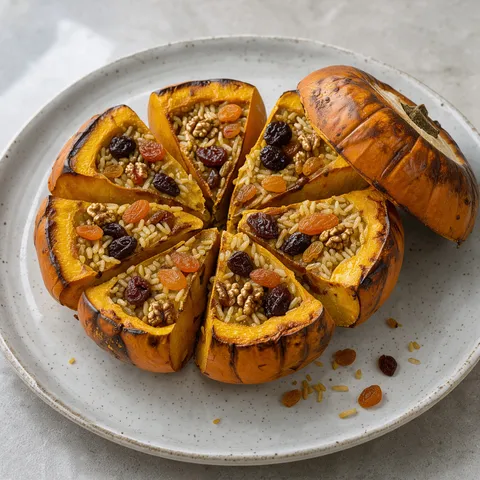 Pumpkin Stuffed with Rice and Dried Fruit2 hr 30 min · Main course
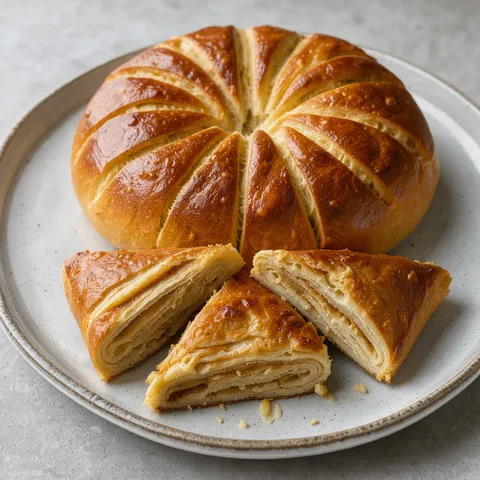 Armenian Buttery Sweet Bread3 hr 15 min · Bread & pastry
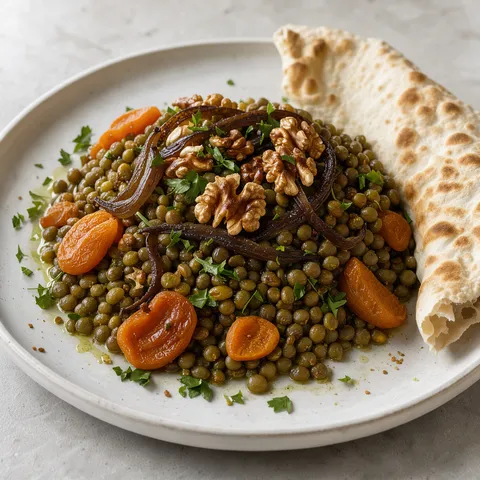 Lentils with Apricots and Walnuts50 min · Meze
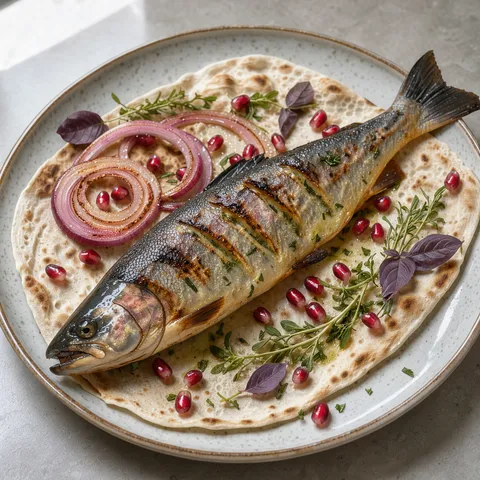 Chargrilled Trout with Tarragon and Pomegranate45 min · Main course
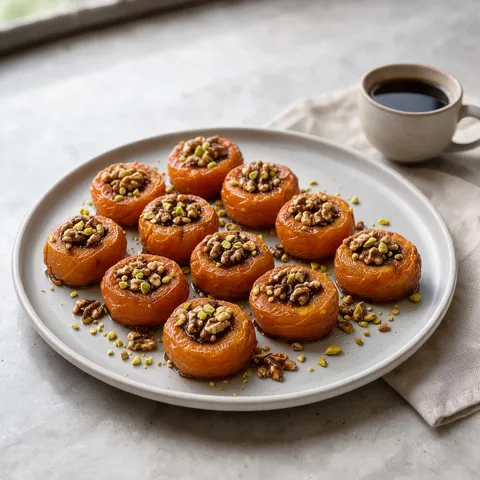 Walnut-Stuffed Dried Peaches1 hr 25 min · Dessert
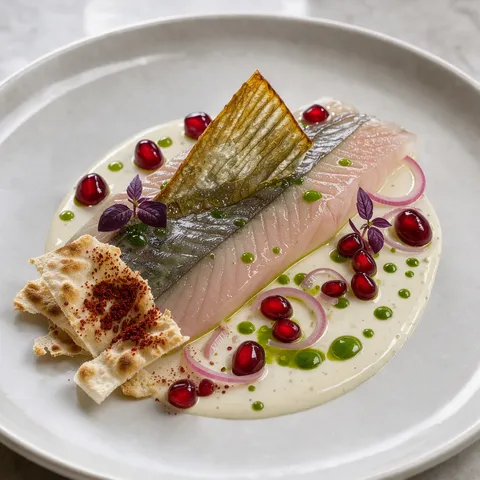 Ishkhan 2.01 hr 10 min · Main course