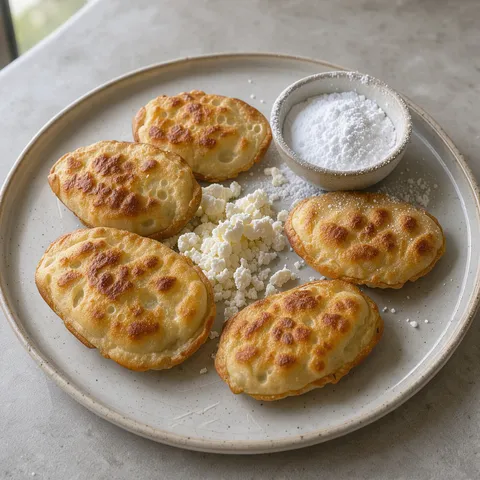
Bulgarian Yoghurt Dough Fritters Mekitsi
A Bulgarian breakfast. Takes 34 min · +45 min rising, 12 pieces (4 servings). Difficulty: easy.
At a glance
- Total time
- 34 min · +45 min rising
- Serves
- 12 pieces (4 servings)
- Difficulty
- Easy
- Cuisine
- Bulgarian cuisine
- Dish type
- Breakfast
- Allergens
- Gluten, Milk, Eggs
Ingredients
Dough
- 500 g plain flour
- 7 g fast-action dried yeast
- 250 g plain whole-milk yoghurt
- 150 ml lukewarm water
- 1 egg
- 1 tsp fine salt
- 1 tbsp sugar
Frying
- 1.2 litres sunflower oil
To serve
- 150 g white cheese
- 4 tbsp caster sugar (or jam)
Equipment
- Mixing bowls
- Ladle
- Saucepan
- Probe thermometer (optional)
Method
- Activate the yeast: Mix the yeast and sugar into the 150 ml lukewarm water (35-38°C) and leave for 4 min. Yeast that does not foam will not raise the dough, so start again with a new batch (~4 min).
- Beat the dough: Mix the 500 g flour and the salt in a bowl, put the yoghurt, egg and yeast water in the middle and work with a wooden spoon or by hand for 8 min, until you have a soft, sticky dough. Bulgarian mekitsi dough is soft and loose, and a stiff dough makes the inside dense, greasy and spongy. It should run slowly from the spoon (~8 min).
- Prove: Cover the bowl and leave in a warm place for 45 min, until doubled in volume and bubbly on the surface (resting, 45 min).
- Heat the oil: Heat the 1.2 litres oil (at least 4 cm deep, so that the mekitsi can float and puff) in a deep 24 cm pan over medium heat to 175°C. To test, drop a piece of dough into the oil, and it should rise to the surface and puff within 3-4 sec. Hot oil puffs the dough without soaking up oil (~8 min, during the last part of the proving).
- Shape: Oil your hand, pull off pieces of dough the size of an egg, stretch them lightly in your hand into a long oval and drop them straight into the oil. As the dough is soft and runny it is not flattened in the palm, and it sticks if your hand is dry. Do not knock out the gas, and handle the pieces lightly (~6 min).
- Fry: Drop the pieces into the oil in batches of 4 (12 pieces in 3 batches) and fry for 2 min on each side, until puffed and golden. They should look hollow in the middle and full of air. Turn and lift out with a slotted spoon, and do not pierce the dough, or oil gets inside (~12 min).
- Drain: Transfer to a plate lined with kitchen paper and leave for 1 min to drain off the oil (~2 min).
- Serve: Divide the hot mekitsi among 4 plates and put crumbled white cheese alongside, with caster sugar in a bowl. They are eaten with cheese or with sugar, and many Bulgarians like both savoury and sweet (~2 min).
Chef's note
Mekitsi is a yeasted yoghurt fritter eaten at breakfast and on the weekend table in Bulgaria, served with cheese or jam. The yoghurt gives the dough tang and softness. They should be eaten hot on the day, as they go hard when cold. Keeping the oil at 175°C is decisive for puffiness.
Frequently asked questions
- Why is Mekitsi dough soft and sticky?
- Bulgarian mekitsi dough is soft and loose. A firm dough makes the inside tight, greasy and spongy.
- Why aren't the Mekitsi pricked?
- Pricking lets oil get inside. Turn them and lift them out with a slotted spoon.
- What is Mekitsi eaten with?
- Serve them with crumbled white cheese or caster sugar. Many Bulgarians enjoy both savoury and sweet.
 Bob Chorba1 hr 40 min · Soup
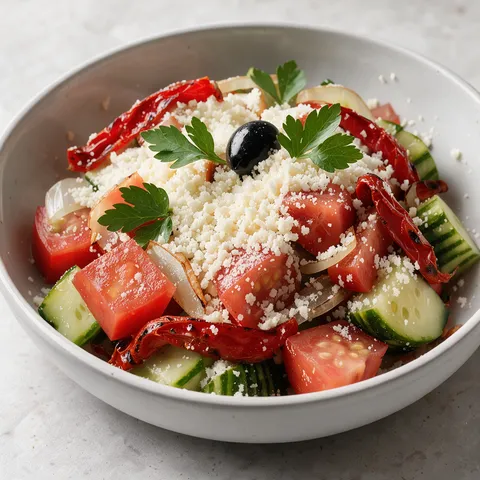 Shopska Salata35 min · Starter
 Bulgarian Cheese Borek2 hr 25 min · Bread & pastry
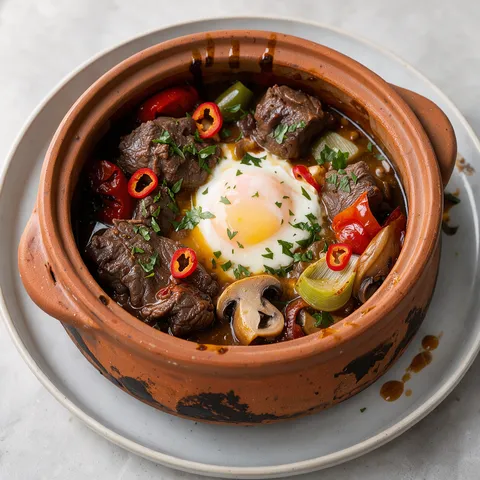 Bulgarian Beef and Vegetable Stew in a Clay Pot2 hr · Main course
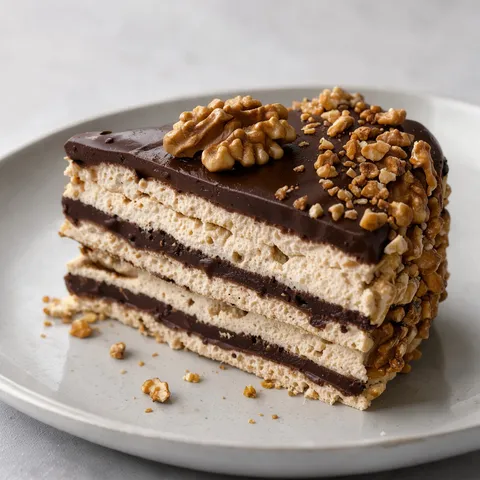 Garash Torta1 hr 45 min · Patisserie
 Shopska Salata 2.01 hr 15 min · Starter