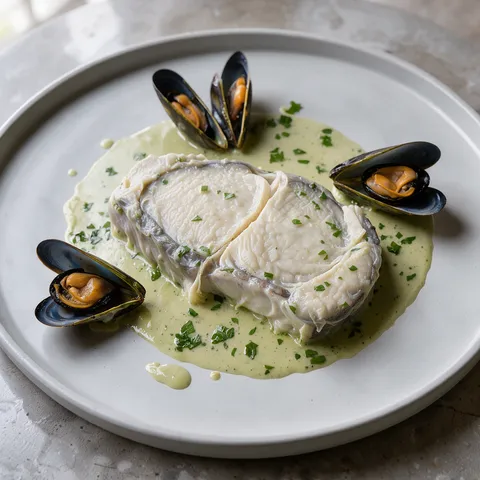
Basque Hake in Green Sauce Merluza en Salsa Verde
A Spanish main course. Takes 50 min, Serves 4. Difficulty: medium.
At a glance
- Total time
- 50 min
- Serves
- Serves 4
- Difficulty
- Medium
- Cuisine
- Spanish cuisine
- Dish type
- Main course
- Allergens
- Gluten, Milk, Fish, Molluscs, Celery, Sulphites
Ingredients
Fish
- 4 hake steaks (each 2.5 cm thick, about 180 g, bone-in steaks or thick fillets)
- 1 tsp salt
Fish stock
- 300 g hake heads and bones (from the fishmonger)
- 500 ml water
- 1/2 onion
- 3 parsley stalks
Mussels
- 16 mussels in their shells
Sauce
- 80 ml extra virgin olive oil
- 4 garlic cloves (finely chopped)
- 1 tbsp plain flour
- 100 ml dry white wine
- 300 ml fish stock (from above)
- 1/2 bunch flat-leaf parsley (about 4 tbsp, finely chopped)
Equipment
- Saucepan
- Fine sieve / chinois
- Sauté pan
- Balloon whisk
- Ladle
- Probe thermometer
- Chef's knife
- Chopping board
Method
- Make the stock: Rinse the fish heads and bones and remove the gills if present, as they make the stock bitter. Put them in a pan with the 500 ml water, half onion and parsley stalks. When it boils, skim and simmer over low heat for 15 min. Strain through a fine sieve: you'll have about 350 ml. Keep 300 ml of it hot
- Clean the mussels: While the stock cooks, scrub the mussel shells with a brush and pull off the beards, tugging towards the pointed end of the shell. Discard any that are open and don't close when tapped on the worktop, and any that are broken. Rinse twice in cold water
- Salt the fish: Pat the hake steaks dry with kitchen paper, salt both sides and leave at room temperature for 10 min. The salt firms the flesh slightly and stops it falling apart during cooking
- Soften the garlic: Put the olive oil and garlic into a 28 cm sauté pan while cold and heat over low heat for 2 min. The garlic should start to sizzle, with only the edges taking on a little colour. Browned garlic makes the sauce bitter
- Start the sauce: Sprinkle the flour into the garlic oil and stir for 1 min. Add the wine and boil for 1 min, until the smell of alcohol has gone. Slowly add the hot stock, whisking until lump-free, and simmer gently for 2 min. The sauce should stay thin and fluid: its body will come from the fish
- Cook the fish and bind the sauce: Arrange the hake in the pan over medium-low heat. Cook for 4 min, then carefully turn. Now, holding the pan by the handle, keep shaking it in small circles over the hob. The gelatine released from the fish combines with the oil and liquid, and you can watch the sauce turn whitish and creamy. Basque cooking has a special name for this shaking
- Add the mussels: 1 min after turning the fish, tuck the mussels in between the steaks, cover and cook for 3 min, until the mussels open. Their juices run into the sauce. Discard any that stay closed
- Fold in the parsley: Uncover, scatter over the chopped parsley and shake the pan for another 1 min. Push a thermometer into the thickest part of the fish: it should read 55-58°C, and the flesh should be opaque and come away easily from the bone. Overcooked hake turns dry and woolly
- Serve: Put one hake steak and four mussels on each plate and ladle the sauce over. Serve straight away: the sauce thickens as it stands
Chef's note
Merluza en salsa verde is one of the classic fish dishes of the Basque Country, traditionally cooked in an earthenware casserole and brought to the table in it. The original uses small clams (almejas) instead of mussels: if you can find them, cook them for the same time. In Türkiye hake is also sold as bakalyaro: if unavailable, whiting or sea bass fillets work, but bone-in steaks have more of the gelatine that binds the sauce. Some homes enrich it with hard-boiled eggs, peas and asparagus.
Frequently asked questions
- How does the green sauce get its creamy texture?
- While the fish cooks, hold the pan by the handle and keep swirling it in small circular movements. The gelatine from the fish combines with the oil and water, and the sauce turns pale and creamy.
- Can mussels that stay closed be eaten?
- No, throw away any that do not open. Also discard any with an open shell that do not close when tapped on the worktop, or that are broken, before you start.
- How do you keep the hake from drying out?
- Take it out when the thickest part reaches 55-58°C, when the flesh should be opaque and come away from the bone easily. Overcooked hake turns dry and cottony.
 Cold Córdoba Tomato and Bread Soup25 min · Soup
 Spanish Potato Omelette1 hr 5 min · Main course
 Paella Valenciana1 hr 20 min · Main course
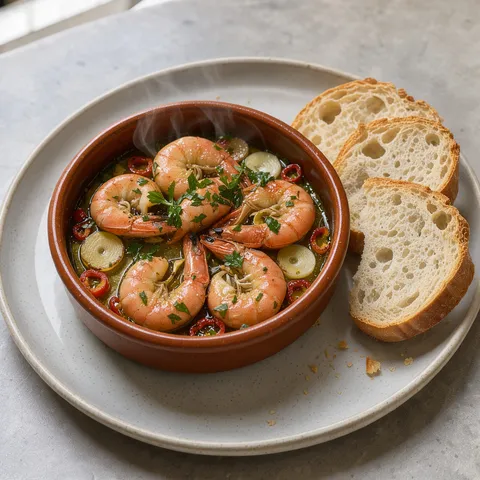 Sizzling Garlic Prawns20 min · Starter
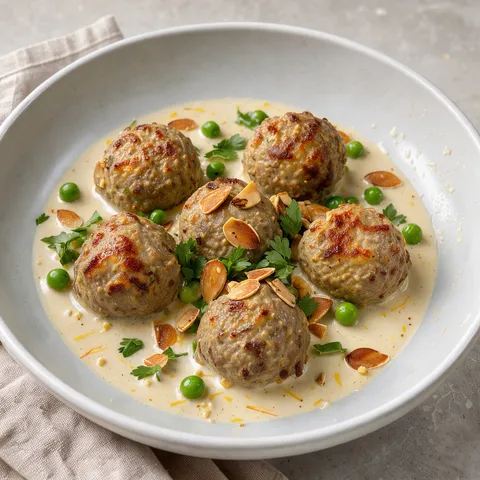 Meatballs in Almond Sauce1 hr 10 min · Main course
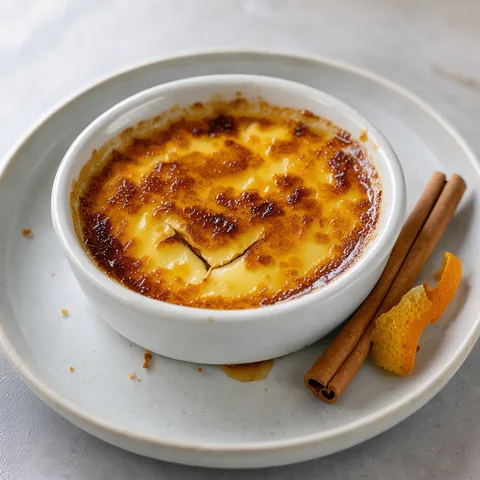 Catalan Burnt Cream35 min · Dessert