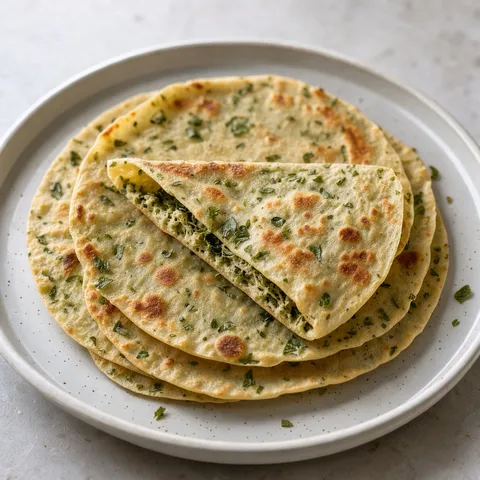
Gujarati Spiced Flatbread with Fenugreek Methi Thepla
An Indian bread & pastry. Takes 1 hr 10 min, Serves 4. Difficulty: medium.
At a glance
- Total time
- 1 hr 10 min
- Serves
- Serves 4
- Difficulty
- Medium
- Cuisine
- Indian cuisine
- Dish type
- Bread & pastry
- Diet
- Vegetarian
- Allergens
- Gluten, Milk, Sesame
Ingredients
Dough
- 250 g finely ground wholemeal flour
- 50 g gram flour (chickpea flour)
- 60 g fresh fenugreek leaves (methi, stalks removed)
- 1/4 tsp salt (to wilt the leaves)
- 100 g plain yoghurt
- 1 green chilli (chopped) and 2 cm piece of fresh ginger (grated)
- 1/2 tsp ground turmeric
- 1 tsp chilli powder
- 1 tsp ground coriander
- 1/2 tsp ground cumin
- 1 tsp white sesame seeds
- 1 tsp sugar
- 3/4 tsp salt
- 2 tbsp sunflower oil
- about 60 ml water
For rolling
- 30 g wholemeal flour
To cook
- 4 tbsp sunflower oil
Equipment
- Colander
- Chopping board
- Chef's knife
- Mixing bowls
- Box grater
- Rolling pin / oklava
- Cast-iron frying pan
- Silicone spatula
Method
- Prepare the fenugreek: Wash the fenugreek leaves in plenty of water, drain in a colander and pat dry with kitchen paper. Finely chop them on a chopping board with a chef's knife, mix with 1/4 tsp salt in a bowl and leave for 5 min. The salt draws out the bitter juices, so the leaves wilt and mix into the dough more easily
- Mix the dry ingredients: In a large bowl, mix the wholemeal flour, gram flour, turmeric, chilli powder, coriander, cumin, sesame seeds, sugar and 3/4 tsp salt by hand. The gram flour gives the thepla a sweet chickpea aroma and softness
- Knead the dough: Grate the ginger on the fine side of the grater and finely chop the chilli. Add the fenugreek leaves with their juices, the yoghurt, chilli and ginger and 2 tbsp oil to the bowl. First rub together with your fingertips, then knead for 5 min, adding the water a little at a time. The dough should be soft, smooth and not sticky. As the moisture in yoghurt varies, you may not need all the water
- Rest: Rub a few drops of oil (from the cooking oil) over the dough, cover the bowl and rest for 15 min. Rested dough has relaxed gluten and does not spring back when rolled thin
- Divide into balls: Divide the dough into 12 equal balls, about 45 g each. Roll each one between your palms and flatten slightly, keeping them covered so they do not dry out
- Roll out: Dip a ball in the rolling flour and roll it out with a rolling pin to about 18 cm across and 2 mm thick. Turn it as you go and dust with a little flour as needed to keep the thickness even: thin edges burn and a thick centre stays raw
- Cook in the pan: Heat a 26 cm cast-iron frying pan over medium-high heat for 3 min. Put a thepla in the pan and, after 40-50 sec, when the underside is covered in small brown spots and the top is bubbling, turn it with a spatula. Brush the top with 1/2 tsp oil, turn again after 30 sec, brush the other side with 1/2 tsp oil too and cook for another 30 sec, pressing with the spatula. Both sides should be speckled golden and slightly crisp. Each thepla takes about 2 min, so roll out the next one meanwhile
- Stack and serve: Stack the cooked theplas inside a clean tea towel: their own steam keeps them soft. Serve warm or at room temperature
Chef's note
Thepla is Gujarat's travel bread: thanks to the oil and yoghurt it stays soft for days, and it is eaten on trains and picnics with chhunda (grated mango preserve) and yoghurt. Fresh fenugreek can be found at some local markets and in Indian shops. If unavailable, use 3 tbsp dried fenugreek leaves (kasuri methi) and 50 g chopped spinach and skip the salting step. Cooked theplas keep for 3 days in an airtight container in the fridge.
Frequently asked questions
- How do you reduce the bitterness of fenugreek leaves?
- Leave the chopped leaves with 1/4 tsp salt for 5 minutes. The salt draws out the leaves' bitter juices, so they wilt and mix into the dough more easily.
- Why are thepla stacked inside a cloth?
- Stack the cooked thepla inside a clean cloth. Their own steam keeps them soft.
- How thin should thepla dough be rolled?
- About 18 cm across and 2 mm thick. Keep the thickness even, because thin edges burn while a thick middle stays raw.
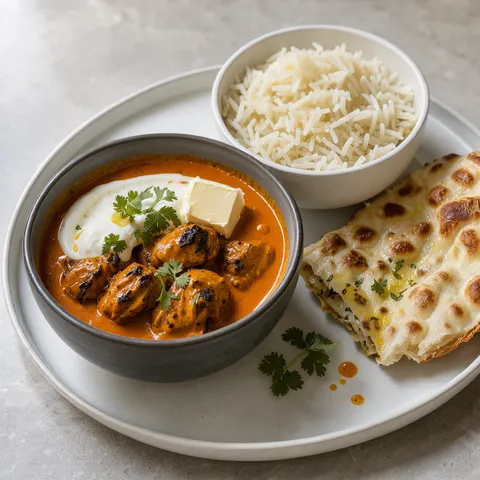 Indian Butter Chicken50 min · Main course
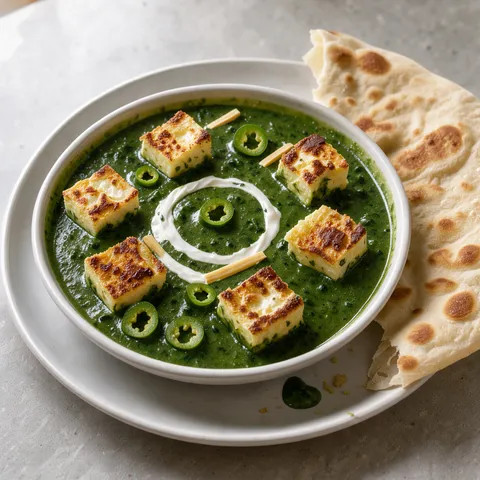 Spinach with Homemade Paneer45 min · Main course
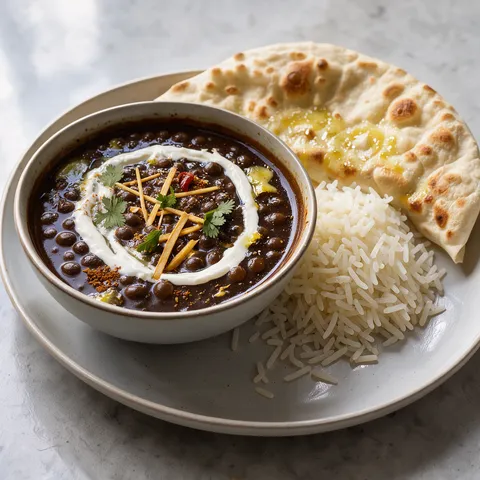 Black Lentil and Kidney Bean Stew1 hr 30 min · Main course
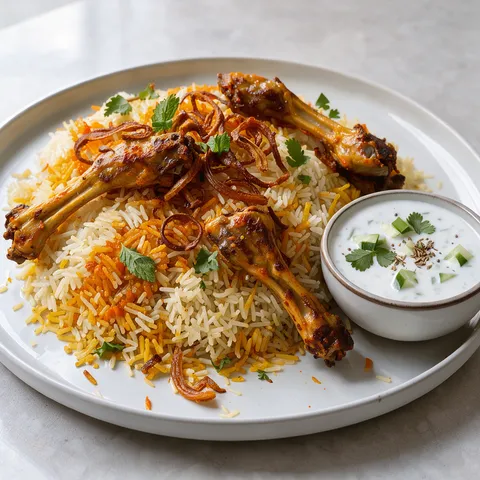 Chicken Dum Biryani1 hr 30 min · Main course
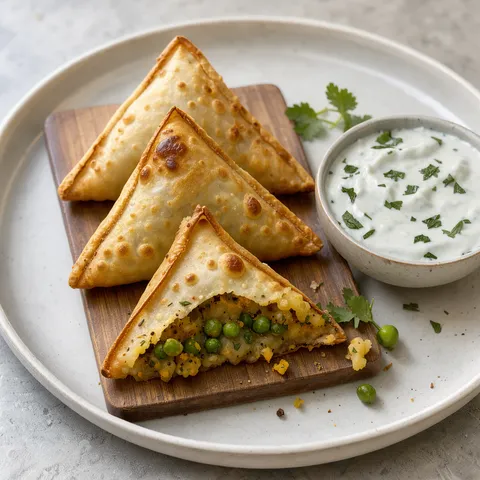 Indian Potato Pastries1 hr 30 min · Bread & pastry
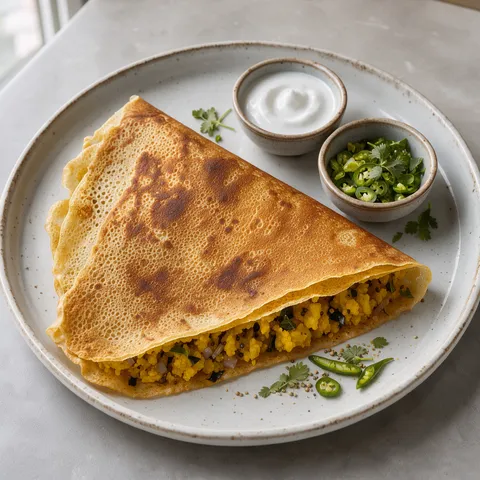 Fermented Rice Crêpes with Spiced Potato50 min · Bread & pastry