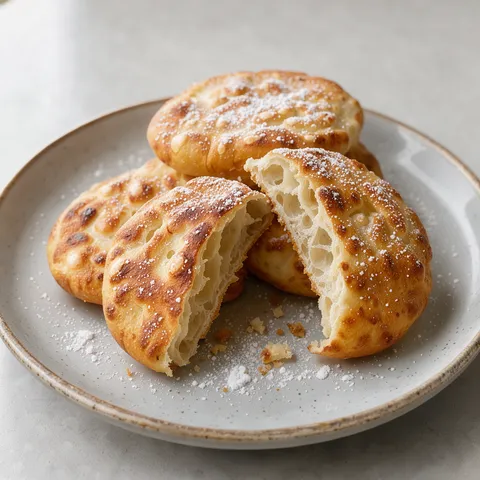
Congolese Fried Flatbread Mikate
A Congolese (DR Congo) bread & pastry. Takes 1 hr 50 min, 12 pieces (4 servings). Difficulty: challenging.
At a glance
- Total time
- 1 hr 50 min
- Serves
- 12 pieces (4 servings)
- Difficulty
- Challenging
- Cuisine
- Congolese (DR Congo) cuisine
- Dish type
- Bread & pastry
- Allergens
- Gluten
Ingredients
Dough
- 500 g plain flour
- 7 g fast-action dried yeast
- 60 g caster sugar
- 1 tsp salt
- 2 tbsp sunflower oil
- 1/4 tsp ground nutmeg
- 300 ml lukewarm water (35°C)
Frying
- 1 litre sunflower oil (about 4 cm deep in a deep pan)
To serve
- 2 tbsp icing sugar (optional)
- a pinch of salt
Equipment
- Heavy-based saucepan
- Wooden spoon / spatula
- Baking paper
- Probe thermometer
- Ladle
- Baking tray
- Mixing bowls
- Rolling pin / oklava
- Saucepan
Method
- Activate the yeast: In a bowl, mix 1 tbsp of the sugar and the yeast into 300 ml lukewarm water (not hot enough to burn a finger, about 35°C) and leave for 5 min. A ring of foam on the surface shows that the yeast is alive, and if there is none, the water is too hot or the yeast is old and the dough will not rise
- Knead the dough: Mix the flour, remaining sugar, salt and nutmeg in a large bowl, make a well in the middle and add the yeast water and oil. Bring together with a wooden spoon, then knead on the worktop for 10 min. The dough should be soft, smooth and as elastic as an earlobe, and spring back slowly when pressed with a finger. The oil keeps the dough soft, and the inside of the bread does not fall apart when fried
- Prove: Oil the inside of the bowl, put in the dough, cover with a damp cloth and leave in a warm place for 45 min. The dough should rise to twice its volume and hold a dent when pressed with a fingertip. In a cold room it takes longer, and if you hurry, the bread turns heavy and greasy
- Shape: Without knocking out the gas, divide the dough into 12 equal pieces (about 70 g each). Roll each piece into a ball in your palm and roll out on a floured worktop with a rolling pin into a flat disc about 1 cm thick and 8 cm across (it puffs up when fried). If the edges are an even thickness, everything fries at the same time
- Second rest: Arrange the discs spaced apart on a floured tray, cover with a cloth and rest for 15 min. Dough that has puffed up slightly and softened swells in the frying and becomes cottony inside, while a disc that has not rested stays dense
- Heat the oil: Heat 1 litre of oil in a heavy-based saucepan over medium heat and bring to 175°C with a thermometer. If the oil is colder, the mikate soaks it up and turns heavy, and if hotter, the outside burns and the inside stays raw. If the temperature drops, adjust the heat
- Fry: Lower the discs into the oil in 3 rounds of 4. Fry for about 2 min on each side, until golden brown and puffed, turning once with a slotted spoon. Each round takes 4-5 min. After each round wait for the oil to return to 175°C
- Drain and serve: Lift the mikate out with a slotted spoon, put on a tray lined with baking paper and drain for 2 min. Sprinkle with the optional icing sugar and salt while hot. Eat by tearing with your hands, without cutting. When lukewarm the inside is soft and the outside slightly crisp
Chef's note
Mikate is a yeasted fried bread sold on the street at all hours in the Democratic Republic of the Congo and eaten at breakfast with tea. At the table it is generally eaten with a bean stew or chicken soup. The recipe makes 12 discs, which is three for each of four people. If the same dough is shaped into small balls, it resembles puff-puff in Cameroon, but mikate is flat and more bread-like. Vegan.
Frequently asked questions
- Why does the mikate turn out heavy and greasy?
- If the oil is cooler than 175°C, mikate soaks up oil and goes heavy. Unrested, dense discs and a rushed proving also make the bread heavy.
- How can I tell the yeast is alive?
- A ring of foam should form on the surface of yeast mixed with lukewarm water. If it doesn't, the water is too hot or the yeast is old and the dough won't rise.
- Why is the second rest necessary?
- Rest the discs on a floured tray for 15 minutes. Dough that puffs slightly and softens swells when fried and turns out cotton-soft inside.
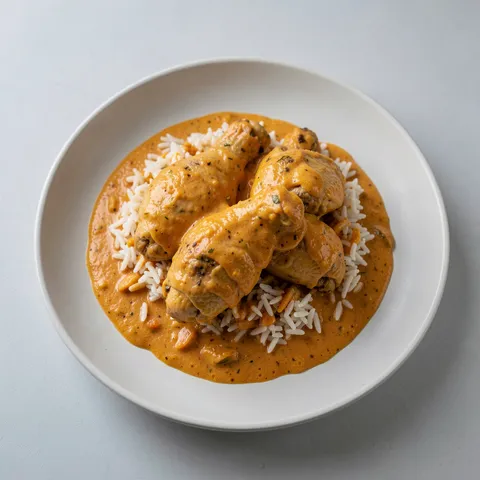 Congolese Chicken in Palm Nut Sauce1 hr 40 min · Main course
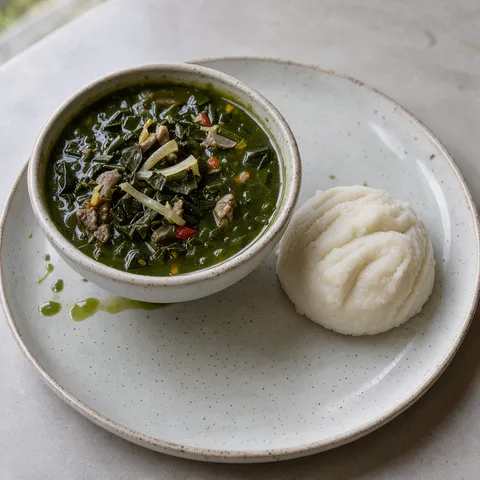 Congolese Cassava Leaf Stew with Fufu1 hr 55 min · Main course
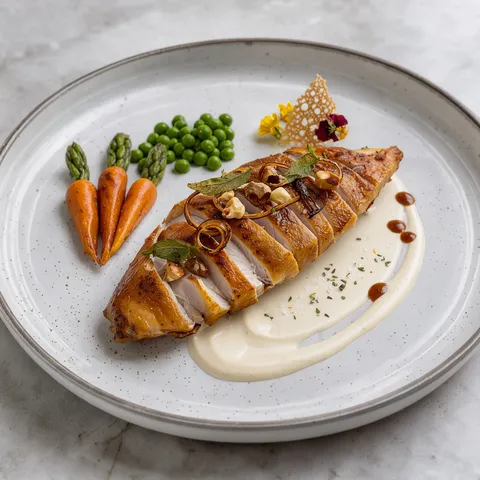 Poulet à la Moambe 2.01 hr 25 min · Main course
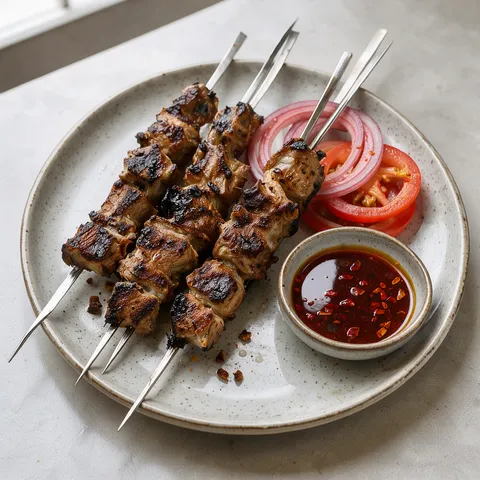 Congolese Chargrilled Goat Skewers1 hr · Main course
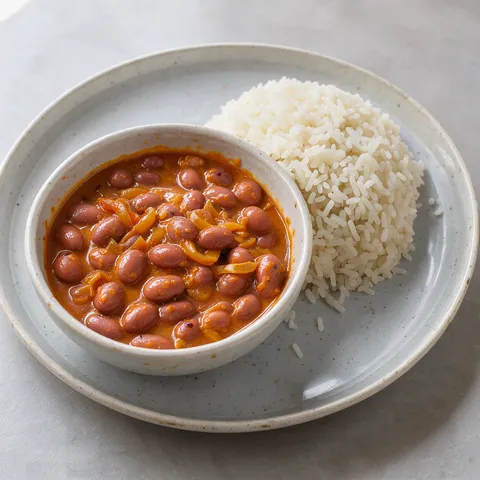 Congolese Bean and Tomato Stew1 hr 10 min · Main course
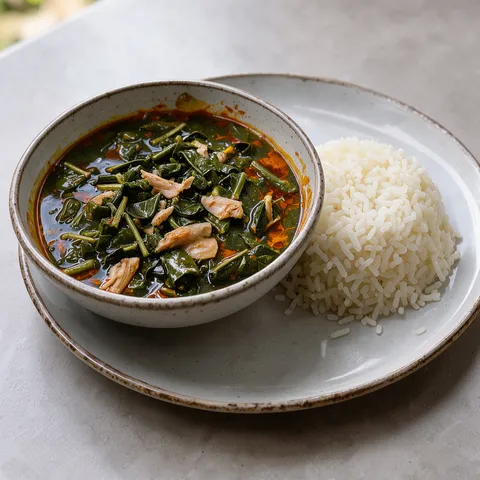 Congolese Peanut Greens Stew1 hr 6 min · Main course