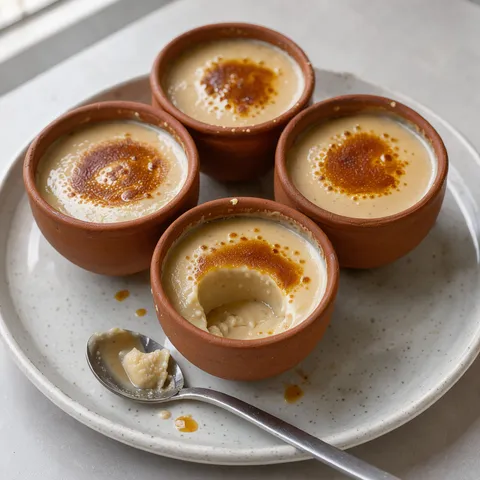
Bengali Caramelised Sweet Yoghurt Mishti Doi
An Indian dessert. Takes 1 hr 15 min · +6-8 hr setting, +2 hr chilling, 6 bowls (150 ml). Difficulty: medium.
At a glance
- Total time
- 1 hr 15 min · +6-8 hr setting, +2 hr chilling
- Serves
- 6 bowls (150 ml)
- Difficulty
- Medium
- Cuisine
- Indian cuisine
- Dish type
- Dessert
- Allergens
- Gluten, Milk
Ingredients
Milk
- 1.2 litres whole milk
Caramel
- 100 g caster sugar
- 3 tbsp water
Starter
- 100 g full-fat
- live plain yoghurt (at room temperature)
Pots
- 6 clay or ceramic bowls (150-180 ml each)
Equipment
- Heavy-based saucepan
- Wooden spoon / spatula
- Saucepan
- Ladle
- Probe thermometer
- Mixing bowls
- Balloon whisk
- Cling film
- Oven
- Baking tray
Method
- Reduce the milk: In a 24 cm heavy-based saucepan, bring the milk to the boil over medium heat, then reduce to medium-low. Cook for 25-30 min, scraping the bottom and sides with a wooden spoon every 2-3 min and stirring the skin that forms at the edges back into the milk. It is ready when it has reduced to about 800 ml, that is, by a third. Reduced milk gives the doi a creamy, firm texture and stops it turning watery
- Make the caramel: While the milk cooks, put the sugar and 3 tbsp water in a small 16 cm saucepan over medium heat and cook for 6-8 min without stirring, just swirling the pan. Take off the heat once the sugar has melted and turned deep amber and begins to smell faintly of burnt sugar. Caramel that is too pale gives the yoghurt neither colour nor flavour, and if it turns black it will be bitter
- Combine the caramel and milk: With the caramel pan off the heat, very slowly pour in a ladleful of the hot milk, standing well back: the caramel will foam and harden in places. Return the pan to low heat and stir for 1-2 min until the caramel has completely dissolved. Tip this into the large pan and stir: the milk should turn a light caramel-beige
- Cool the milk: Take the milk off the heat and leave for 25-30 min, checking with a thermometer, until it drops to 43-45°C. Stir occasionally so that no skin forms. Hotter milk kills the yoghurt bacteria, while cooler milk slows the setting right down
- Add the starter: In a bowl, whisk the room-temperature yoghurt with 3-4 tbsp of the warm milk until smooth. Then add this to all the milk and stir gently but thoroughly: no lumps of yoghurt should remain
- Divide between the pots: Ladle the mixture equally into the 6 bowls, about 150 ml each. Cover with cling film. In Bengal clay pots (bhar) are used: the clay absorbs excess liquid and the doi sets firmer, but ceramic bowls also give good results
- Set: Heat the oven to 50°C for 5 min, turn it off and leave only the oven light on. Arrange the bowls on a tray, put them in the oven and leave undisturbed for 6-8 hr. The doi has set when the surface moves as one piece and comes away from the side when the bowl is gently tilted. Left too long it turns sour, so take it out as soon as it has set
- Chill and serve: Transfer the bowls to the fridge and chill for at least 2 hr. Cold doi is firmer, firm enough to slice with a spoon. Serve cold, straight from the bowl
Chef's note
Mishti doi is one of Bengal's best-loved sweets, and sweet shops sell it in clay pots. Some recipes use nolen gur (date palm sugar) instead of caramel. The yoghurt you use as a starter must contain live cultures. If you make your own yoghurt, 2 tbsp saved from the previous batch will also work. Setting time depends on the room temperature, and in summer 5-6 hr may be enough. It keeps for 3 days in the fridge.
Frequently asked questions
- Why might mishti doi not set?
- The most common reason is the milk temperature. Hotter milk kills the yoghurt bacteria and cooler milk slows the culturing right down. Add the starter once the milk has cooled to 43-45°C.
- How can you tell mishti doi has set?
- When you tilt the pot gently, if the surface moves as one piece and pulls away from the edge, the doi has set. If left too long, it turns sour.
- What can I use instead of clay pots?
- Ceramic bowls also work well. In Bengal clay pots are used, which absorb excess moisture and make the doi firmer.
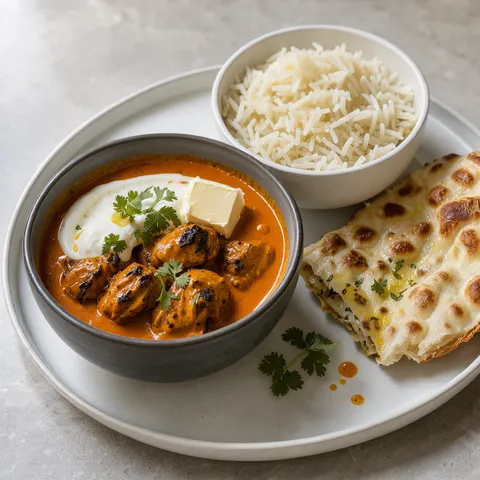 Indian Butter Chicken50 min · Main course
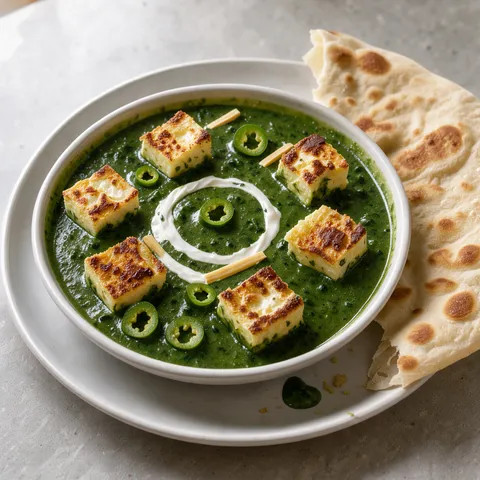 Spinach with Homemade Paneer45 min · Main course
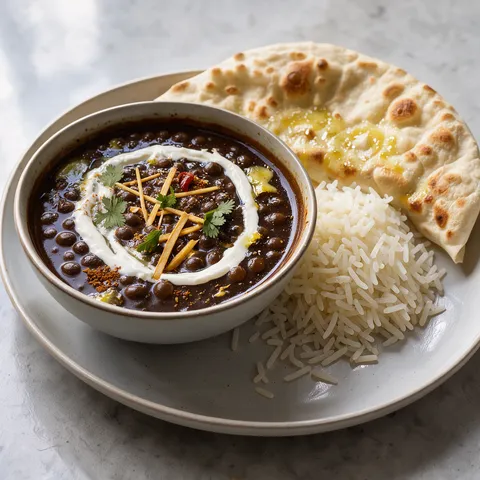 Black Lentil and Kidney Bean Stew1 hr 30 min · Main course
 Chicken Dum Biryani1 hr 30 min · Main course
 Indian Potato Pastries1 hr 30 min · Bread & pastry
 Fermented Rice Crêpes with Spiced Potato50 min · Bread & pastry