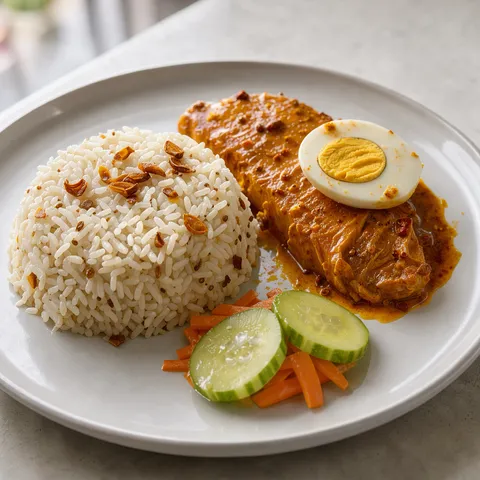
Terengganu Coconut Rice with Tuna Gulai Nasi Dagang
A Malaysian main course. Takes 55 min · +3 hr soaking, Serves 4. Difficulty: medium.
At a glance
- Total time
- 55 min · +3 hr soaking
- Serves
- Serves 4
- Difficulty
- Medium
- Cuisine
- Malaysian cuisine
- Dish type
- Main course
- Diet
- Gluten-free
- Allergens
- Milk, Eggs, Fish, Tree nuts, Mustard
Ingredients
Rice
- 250 g jasmine rice
- 100 g glutinous rice
- plenty of water for soaking
- 250 ml coconut milk
- 1 tsp fenugreek seeds
- 3 shallots (thinly sliced)
- 10 g ginger (finely julienned)
- 1 tsp salt
- 1 tsp sugar
Gulai paste
- 6 shallots
- 3 garlic cloves
- 15 g ginger
- 15 g galangal or an extra 10 g ginger
- 2 lemongrass stalks (bottom white part)
- 6 dried red chillies (soaked)
- 3 tbsp water
Gulai
- 3 tbsp sunflower oil
- 1/2 tsp fenugreek seeds
- 1 tbsp Curry Powder (Basics)
- 400 ml coconut milk
- 200 ml water
- 2 tbsp tamarind water (15 g tamarind plus 3 tbsp hot water)
- 1 tbsp palm sugar
- 1 tsp salt
- 600 g fresh tuna or Atlantic bonito (4 cm thick steaks)
On the side
- 4 eggs
- 1 cucumber and 1 carrot (in matchsticks)
- 2 tbsp rice vinegar
- 1 tbsp sugar
- 1/4 tsp salt
Equipment
- Chef's knife
- Chopping board
- Mixing bowls
- Steamer basket
- Muslin
- Saucepan
- Wooden spoon / spatula
- Blender
- Probe thermometer (optional)
Method
- Soak the rice: Rinse the jasmine and glutinous rice together 3 times and soak in plenty of water for 3 hr. The special texture of nasi dagang, softer and slightly stickier than ordinary rice, comes from this mix and the two-stage steaming
- First steaming: Bring the water in the steamer to the boil and line the basket with wet muslin. Drain the rice, spread it on the muslin and steam, covered, for 20 min. The grains should be half-cooked and soft on the outside
- Coconut mixture: While the rice steams, heat the coconut milk, fenugreek seeds, shallots, ginger, salt and sugar in a small saucepan for 3 min, to just below boiling point. The fenugreek gives the rice a faintly bitter, caramel-like aroma and is the signature of the Terengganu style
- Second steaming: Transfer the half-cooked rice to a large bowl, pour over the hot coconut mixture and mix with a wooden spoon without crushing the grains. Spread the rice on the muslin again and steam for another 15 min. The grains should be completely soft, glossy and slightly sticky
- Blend the gulai paste: When the first steaming starts, blend the paste ingredients for 3 min to a smooth paste
- Start the gulai: Heat the oil in a wide saucepan over medium heat and let the fenugreek seeds crackle for 30 sec. Add the paste and fry for 8 min, until it thickens and the oil separates. Add the curry powder and stir for 1 min: the raw spice taste disappears
- Build the sauce: Add the coconut milk, water, tamarind water, sugar and salt and, once it boils, simmer gently for 8 min. The sauce should be orange, thin and fragrant
- Cook the fish: Lay the fish steaks in the sauce in a single layer and shake the pan to coat them. Cook over low heat for 10-12 min, until the fish is completely opaque and flakes with a fork. The internal temperature of the fish should reach 63°C: check with a thermometer. Do not stir, or the fish falls apart
- Eggs and pickle: While the gulai cooks, boil the eggs in boiling water for 10 min, transfer to cold water, then peel and halve. Mix the cucumber and carrot with the vinegar, sugar and salt in a bowl and leave for 10 min. This simple acar cuts through the richness of the fish
- Plate: Turn a bowlful of rice out onto each plate as a dome. Add a fish steak alongside with plenty of gulai sauce. Place the boiled egg and drained acar at the side. Serve hot
Chef's note
Nasi dagang is a rice dish eaten for breakfast on Malaysia's east coast, in Terengganu and Kelantan, and its name translates as "traders' rice". In Terengganu white rice is mixed with glutinous rice, while in Kelantan a special brownish rice is used. The gulai traditionally uses ikan tongkol (a kind of small tuna), and Atlantic bonito is a good substitute. The curry powder is made with the recipe in the Basics section. Coconut milk and tamarind are traditionally bought ready-made.
Frequently asked questions
- Why is the Nasi Dagang rice steamed in two stages?
- The special texture comes from these two stages. First the soaked rice is steamed for 20 minutes, then mixed with the hot coconut mixture and steamed for 15 minutes more.
- What do fenugreek seeds add to the rice?
- Fenugreek gives the rice a slightly bitter, caramel-like aroma and is the signature of the Terengganu style.
- What should I do so the tuna doesn't fall apart in the gulai?
- Lay the slices in a single layer in the sauce, shake the pan to coat them and don't stir. The internal temperature should be 63°C.
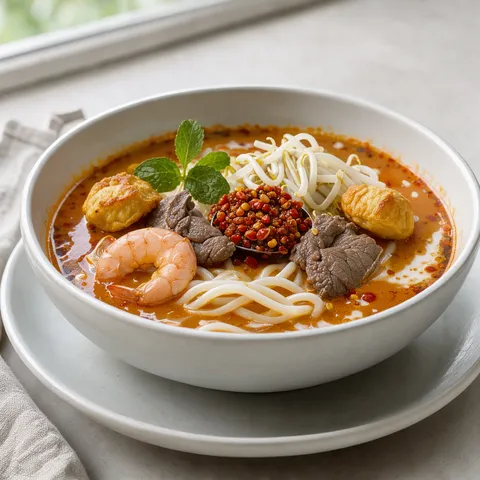 Laksa Lemak1 hr · Soup
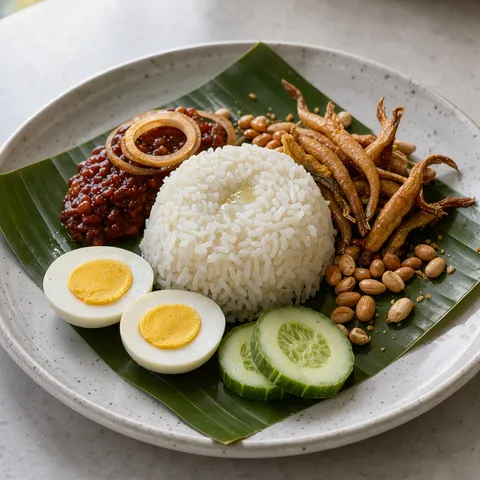 Pandan Coconut Rice with Sambal1 hr 25 min · Main course
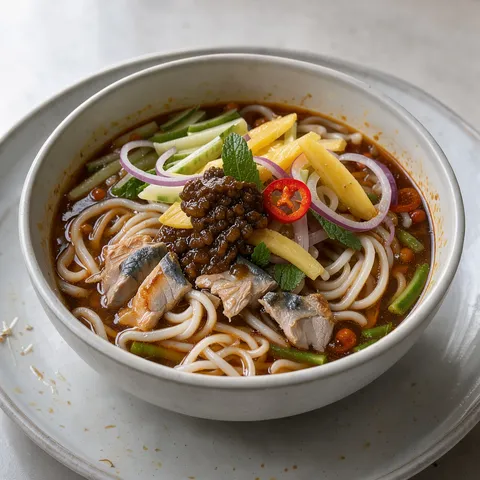 Penang Sour Mackerel Noodle Soup with Tamarind1 hr 15 min · Soup
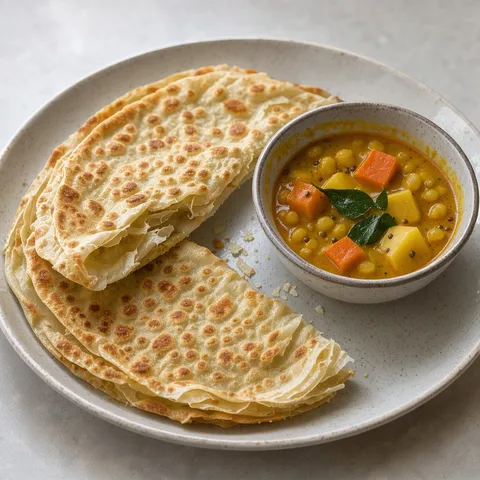 Folded Pan Flatbread with Lentil Curry1 hr 20 min · Bread & pastry
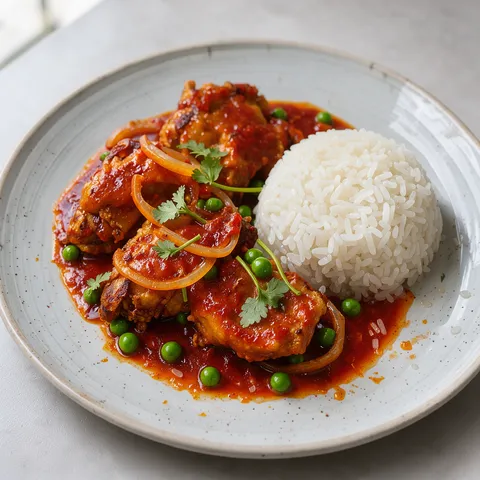 Chicken in Red Chilli and Tomato Sauce1 hr 15 min · Main course
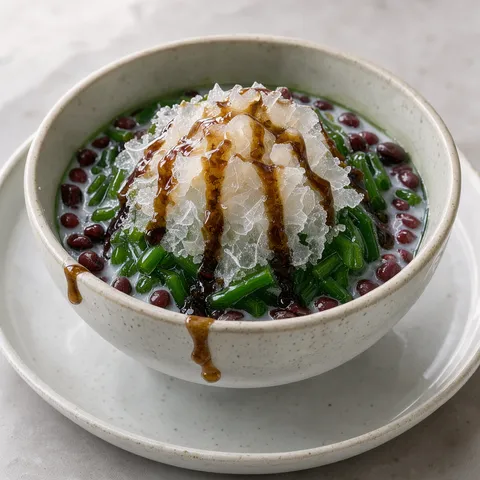 Iced Coconut Dessert with Pandan Jelly1 hr 15 min · Dessert