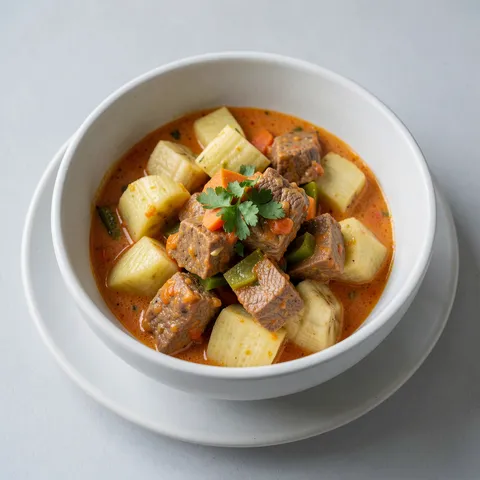
Green Banana and Beef Stew Ndizi Nyama
A Tanzanian main course. Takes 1 hr 40 min (pressure cooker: ~1 hr 10 min), Serves 4. Difficulty: medium.
At a glance
- Total time
- 1 hr 40 min (pressure cooker: ~1 hr 10 min)
- Serves
- Serves 4
- Difficulty
- Medium
- Cuisine
- Tanzanian cuisine
- Dish type
- Main course
- Diet
- Gluten-free
- Allergens
- Milk, Tree nuts, Soya
Ingredients
Meat
- 600 g boneless beef chuck or brisket (3 cm cubes)
- 1 tsp salt
- 700 ml water
Bananas
- 1.2 kg green cooking bananas (matoke in East Africa, or 4 green plantains if unavailable)
- juice of 1 lemon
- 1 tbsp oil for your hands when peeling
Coconut milk
- 100 g desiccated coconut
- 300 ml hot water
Stew
- 3 tbsp sunflower oil
- 1 large onion
- 3 garlic cloves
- 15 g fresh ginger
- 1 green chilli
- 1 tsp bizari (as in the Mchuzi wa Samaki recipe)
- 1/2 tsp turmeric
- 1 tbsp tomato paste
- 3 ripe tomatoes (about 400 g, grated)
- 1 green pepper
- 1 carrot
- 1/2 tsp black pepper
- salt
- 1/4 bunch coriander
Equipment
- Saucepan
- Paring knife
- Mixing bowls
- Blender
- Muslin
- Heavy-based saucepan
- Box grater
- Chef's knife
- Chopping board
- Pressure cooker (optional)
Method
- Poach the meat: Put the meat in a saucepan with the cold water. Once boiling, skim, add the salt and simmer over a low heat with the lid ajar for 45-50 min, until the meat is tender and a fork goes in easily. In a pressure cooker 20 min is enough. Separate the meat and the liquid: you should have about 400 ml of liquid left
- Peel the bananas: Rub a thin film of oil over your hands, as the skin of green bananas releases a sticky sap that stains. Cut off both ends of each banana, score the skin lengthways in three or four places without cutting into the flesh, and prise it off with your fingers or the tip of a knife. Cut the bananas into 4-5 cm pieces and drop them into cold water with the lemon juice to stop them browning
- Press the coconut milk: Blend the coconut with the hot water for 1 min and strain, squeezing it through muslin. You should have about 250 ml of milk
- Build the sauce base: Heat the oil in a wide, heavy-based saucepan and fry the finely chopped onion for 7 min until golden. Add the crushed garlic, ginger and chopped chilli and stir for 1 min. Add the bizari and turmeric and fry in the oil for 30 sec. Fry the tomato paste for 1 min, then add the grated tomato and cook for 6-8 min, until the oil separates at the edges
- Add the meat: Add the poached meat and 400 ml of the cooking liquid, bring to the boil and cook for 10 min so that the meat absorbs the spices
- Cook the bananas: Arrange the drained bananas and the pepper and carrot, cut into 2 cm pieces, in the pan and turn the bananas gently once so they are coated in the sauce. Cover and cook over a low heat for 20-25 min. Do not stir with a spoon: shake the pan by its handles instead, as the bananas break up easily. They are ready when a knife slides in without resistance but the pieces keep their shape, and their colour turns pale yellow
- Add the coconut milk: Add the milk, shake the pan to distribute it and cook for another 5 min without boiling, with the surface barely trembling. The sauce should be thick and creamy and come more than halfway up the bananas. If it is too thick, add a few spoonfuls of hot water. Adjust the salt and pepper
- Rest: Turn off the heat and rest, covered, for 5 min, as the banana starch thickens the sauce a little more
- Plate: Divide the bananas and meat evenly between deep bowls and pour over plenty of sauce. Scatter with the chopped coriander and serve hot
Chef's note
Ndizi nyama means "bananas and meat" and is an everyday dish in Tanzania, especially among the Chagga people on the slopes of Kilimanjaro. The bananas used are not sweet bananas but starchy cooking bananas: made with sweet bananas, the dish falls apart and turns sugary. On the coast it is made with coconut milk, inland without. It is also cooked with chicken or fish.
Frequently asked questions
- Why are peeled green bananas put in lemon water?
- Cold lemon water stops the bananas from browning. Lightly oil your hands when peeling too, so the sticky sap doesn't stain them.
- Why isn't the banana stew stirred with a spoon?
- A spoon breaks the bananas up easily. Hold the pot by the handle and swirl it, and the bananas keep their shape as they are coated in the sauce.
- What can I use if I can't find matoke?
- If you can't find the East African cooking banana called matoke, use green plantains. The recipe suggests 4 green plantains in place of 1.2 kg matoke.
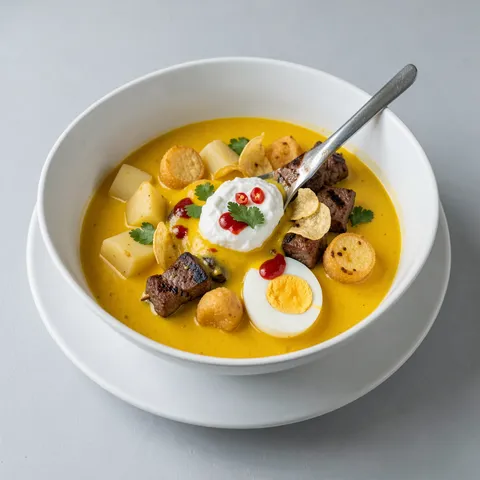 Zanzibar Mixed Soup with Mango1 hr 30 min · Soup
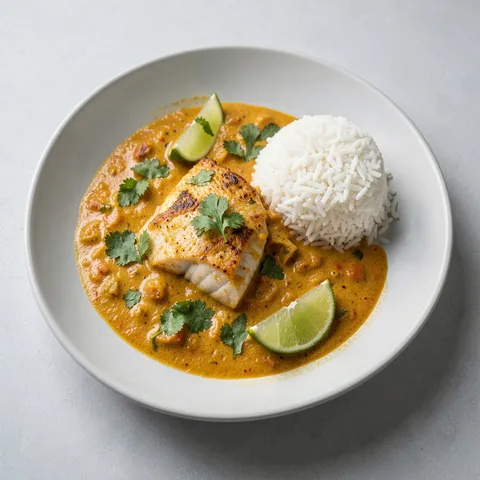 Zanzibar Coconut Fish Curry1 hr · Main course
 Tanzanian Coconut Rice Pancakes1 hr · Dessert
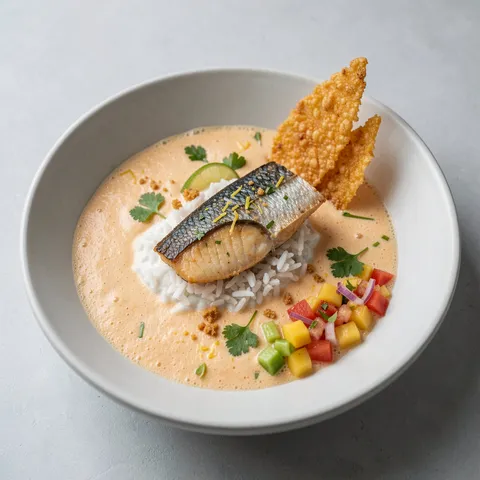 Mchuzi wa Samaki 2.01 hr 15 min · Main course
 Tanzanian Chips Omelette1 hr 40 min · Main course
 Coconut Rice1 hr 10 min · Main course