
Zanzibar Mixed Soup with Mango Urojo
A Tanzanian soup. Takes 1 hr 30 min, Serves 4. Difficulty: medium.
At a glance
- Total time
- 1 hr 30 min
- Serves
- Serves 4
- Difficulty
- Medium
- Cuisine
- Tanzanian cuisine
- Dish type
- Soup
- Allergens
- Gluten, Eggs, Tree nuts, Mustard
Ingredients
Soup
- 1 medium unripe green mango (about 300 g, sour)
- 2 tbsp sunflower oil
- 3 garlic cloves
- 15 g fresh ginger
- 1 tsp turmeric
- 1/2 tsp ground cumin
- 1/2 tsp chilli powder
- 1.1 litres water
- 50 g plain flour
- juice of 1 lemon
- 1 tsp salt
Potatoes
- 500 g waxy potatoes
Bhajia
- 120 g gram flour
- 1/2 tsp baking powder
- 1/2 tsp turmeric
- 1/2 tsp salt
- 1 small onion (finely chopped)
- 1 green chilli
- 2 tbsp chopped coriander
- about 150 ml water
Mishkaki
- 300 g beef rib-eye or fillet (2 cm cubes)
- 2 garlic cloves
- 10 g ginger
- 1 tbsp lemon juice
- 1/2 tsp curry powder
- 1/2 tsp salt
- 1 tbsp oil
- 6 wooden skewers (soaked in water for 30 min)
Eggs
- 2 eggs
Coconut chutney
- 80 g desiccated coconut
- 100 ml lukewarm water
- 1 green chilli
- 1/4 bunch coriander
- 1 tbsp lemon juice
- 1/4 tsp salt
Pili pili
- 2 red chillies
- 1 garlic clove
- 1 tbsp lemon juice
- 2 tbsp water
- salt
Crisps
- 1 medium potato
- 800 ml sunflower oil for frying
To serve
- 1/4 bunch coriander
Equipment
- Saucepan
- Pestle and mortar
- Mixing bowls
- Blender
- Heavy-based saucepan
- Balloon whisk
- Mandoline
- Probe thermometer
- Griddle pan
- Chef's knife
- Chopping board
Method
- Boil the potatoes: Put the 500 g potatoes in their skins in a pan of cold salted water and, once boiling, cook for 18-20 min, until a knife slides in without resistance. Drain, peel when cool enough to handle and cut into 2 cm cubes
- Marinate the mishkaki: Crush the garlic and ginger in a pestle and mortar and mix with the lemon juice, curry powder, salt and oil. Rub the beef cubes with the mixture and leave at room temperature for 30 min. At Zanzibar's Forodhani night market, mishkaki are cooked on the grill after a short marinade like this. Then thread the meat onto the soaked skewers
- Eggs and sauces: Cook the eggs in boiling water for 9 min, transfer to iced water and peel. For the chutney, soak the coconut in the lukewarm water for 10 min, then blend with the chilli, coriander, lemon juice and salt to a coarse paste. For the pili pili, blend all the ingredients to a pourable sauce. Rinse the blender in between
- Cook the soup: Peel the mango, cut the flesh away from the stone and cut into 1 cm dice. Heat the oil in a wide saucepan, stir the crushed garlic and ginger for 1 min, then add the turmeric, cumin and chilli powder and fry in the oil for 20 sec. Add the mango and 1 litre of the water, bring to the boil and cook for 12 min, until the mango softens and starts to break down. Roughly crush the mango against the side of the pan with the back of a spoon
- Thicken the soup: Mix the flour with the remaining 100 ml cold water until lump-free and whisk it into the soup. Cook over a low heat for 8-10 min, stirring constantly, until the raw flour taste has gone. It should be a pourable, glossy yellow sauce that thinly coats the back of a spoon. Add the lemon juice and salt: it should taste sour, salty and slightly hot
- Bhajia batter: Mix the gram flour, baking powder, turmeric and salt, then add the onion, chilli and coriander. Add the water a little at a time to make a thick batter that drops slowly from a spoon, and rest for 10 min
- Fry: Heat the oil to 160°C in a heavy-based saucepan. For the crisps, slice the potato 1.5 mm thick on a mandoline, rinse in cold water, pat thoroughly dry and fry for 4-5 min, until the bubbling subsides and they are golden, then salt them. Raise the oil to 175°C, drop in the bhajia batter with a teaspoon and fry for 3-4 min, until golden and crisp on each side. Transfer to kitchen paper
- Cook the mishkaki: Heat a griddle pan over a high heat until smoking hot. Cook the skewers for 1.5-2 min on each side, until the edges are brown with light char marks and the inside is still slightly pink. Slide the meat off the skewers
- Plate: In each wide bowl, arrange a handful of potato cubes, three or four halved bhajias, a few pieces of mishkaki and half an egg side by side. Ladle the hot soup over everything so the ingredients are half submerged. Top with a spoonful of coconut chutney, a few drops of pili pili, a handful of potato crisps and the coriander. Serve immediately, before the crisps soften
Chef's note
Urojo is the street soup of Zanzibar's Stone Town. Its name comes from a Swahili word meaning sticky, and it was shaped by the cooking of the Indian community from Gujarat. Locally it is also called "mix". It takes its sourness from unripe mango and lemon, and some stalls add tamarind too. On the street it is topped with ready-made crisps, and here it is written with homemade potato crisps.
Frequently asked questions
- Where does the sourness of urojo come from?
- The sourness comes from the unripe green mango and the lemon juice added at the end. The flavour should balance sour, salty and slightly hot.
- How is urojo thickened?
- Mix 50 g flour with cold water until smooth, whisk it into the soup and cook, stirring constantly. The raw flour taste should be gone and the consistency should coat the back of a spoon in a thin layer.
- Why are the potato crisps added at the last moment?
- Pour the hot soup over the ingredients in the bowl and sprinkle the potato crisps on top. Serve urojo as soon as it is ready so the crisps don't go soft.
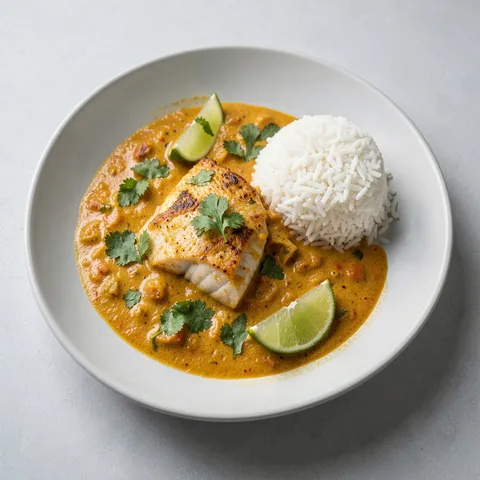 Zanzibar Coconut Fish Curry1 hr · Main course
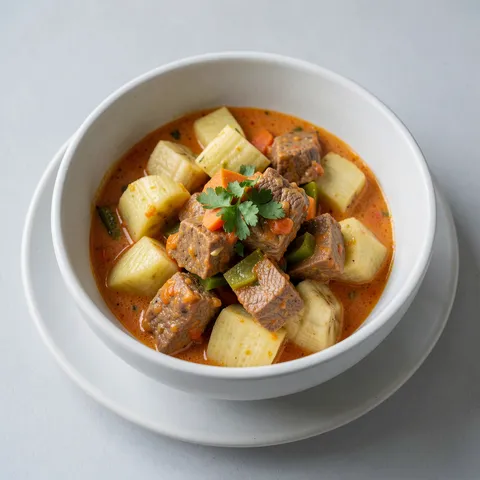 Green Banana and Beef Stew1 hr 40 min · Main course
 Tanzanian Coconut Rice Pancakes1 hr · Dessert
 Mchuzi wa Samaki 2.01 hr 15 min · Main course
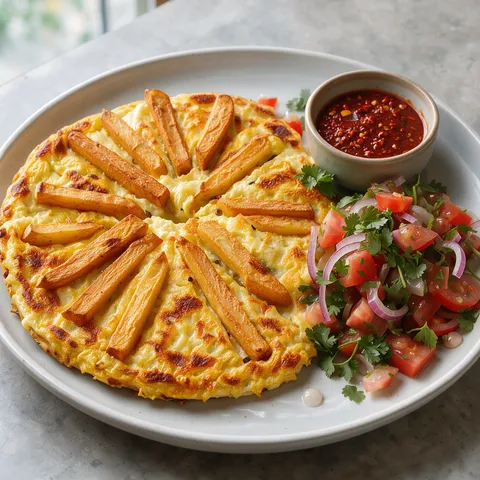 Tanzanian Chips Omelette1 hr 40 min · Main course
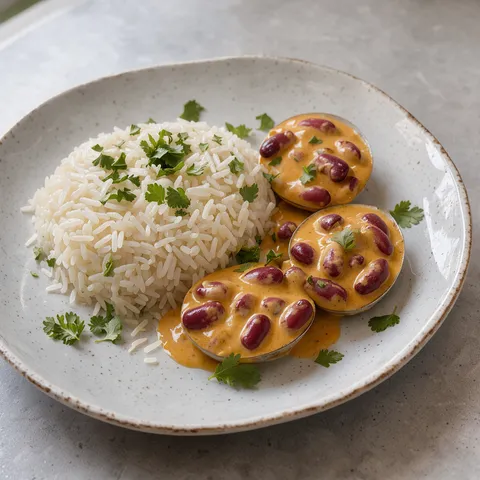 Coconut Rice1 hr 10 min · Main course