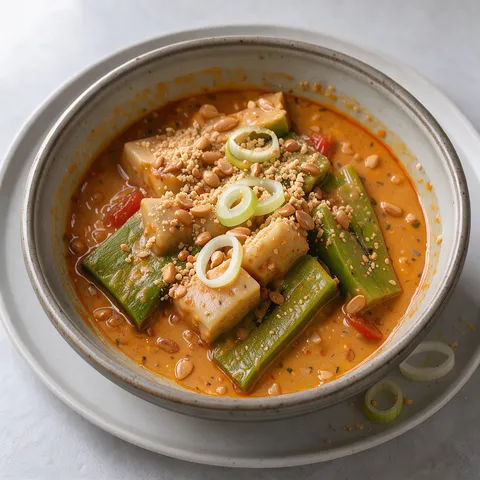
Taro and Plantain Peanut Stew Ngou ti Kassa
A Central African Republic main course. Takes 1 hr 25 min, Serves 4. Difficulty: medium.
At a glance
- Total time
- 1 hr 25 min
- Serves
- Serves 4
- Difficulty
- Medium
- Cuisine
- Central African Republic cuisine
- Dish type
- Main course
- Diet
- Gluten-free
- Allergens
- Peanuts, Tree nuts
Ingredients
Peanuts
- 120 g raw peanuts (shelled)
Red oil
- 4 tbsp sunflower oil
- 1 tsp sweet paprika (in place of palm oil)
Roots
- 700 g taro (if unavailable, 400 g potatoes and 300 g Jerusalem artichokes)
- 2 green plantains (about 500 g; if unavailable, 3 firm, greenish bananas)
Stew
- 1 onion (finely chopped)
- 2 garlic cloves (crushed)
- 1 red chilli (finely chopped)
- 2 ripe tomatoes (grated)
- 1 litre water
- 1 tsp salt
- 1/2 tsp black pepper
To serve
- 3 spring onions (cut into thin rings)
Equipment
- Frying pan
- Wooden spoon / spatula
- Baking tray
- Chopping board
- Paring knife
- Colander
- Chef's knife
- Box grater
- Pestle and mortar
- Heavy-based saucepan
- Mixing bowls
Method
- Toast the peanuts: Toast the peanuts in a heavy-based frying pan over medium heat for 8 min, turning often with a wooden spoon. They are ready when the skins crack and turn reddish brown and the insides are pale golden. Over high heat, the outside burns and the inside stays raw. Spread on a tray and let cool for 5 min, then rub between your palms and blow off the skins
- Peel the taro: Put on kitchen gloves, because the skin and sap of raw taro irritate the skin (calcium oxalate crystals). While the peanuts cool, peel the taro thickly on a chopping board with a paring knife, cut into 4 cm pieces and rinse in a colander under cold water for 1 min. Rinsing removes the slippery starch on the surface so the stew does not turn gummy
- Prepare the plantain and vegetables: Cut both ends off the plantains, score the skin lengthways in 3-4 places and peel off with your fingers. Green plantain does not peel like a banana, as the skin clings to the flesh. Slice diagonally 3 cm thick and drop into cold water so they do not darken. With a chef's knife, finely chop the onion, crush the garlic, finely chop the chilli and grate the tomatoes on the coarse side of the grater, discarding the skins
- Make the red oil and start the base: Warm the sunflower oil in a heavy-based 4 litre pan over low heat for 1 min, take off the heat, stir in the paprika and leave to infuse for 2 min. Paprika burns and turns bitter in hot oil, which is why it is added with the heat off. Return the pan to medium heat and cook the onion for 6 min, until soft and golden at the edges, then add the garlic and chilli and stir for 1 min. Add the tomatoes and cook for 6 min, until the liquid has evaporated and the oil separates at the edges
- Cook the taro: Drain the taro, add to the pan and stir in the 1 litre water and the salt. Bring to the boil over high heat (about 6 min), then lower the heat and simmer with the lid ajar for 15 min. The taro should begin to soften at the edges but still be firm in the centre
- Pound the peanuts: While the taro cooks, pound the skinned peanuts in a mortar for 4-5 min, to the consistency of coarse sand. They should not become a paste. Pounded peanuts thicken the stew while leaving a slightly grainy texture, which is the local "arachide pilée". Set aside 2 tbsp for serving
- Add the plantain: Drain the plantain, add to the pan and cook with the lid ajar for another 15 min. A knife should slide into the centre of the taro without resistance. Taro is never served undercooked, as half-raw taro makes the throat itch
- Thicken with the peanuts: Loosen the remaining pounded peanuts in a bowl with 200 ml of hot cooking liquid from the pan and pour back in. Cook over low heat for 10 min, scraping the bottom with a wooden spoon, as peanuts catch quickly. Mash a few pieces of taro against the side of the pan with a spoon, and the taro starch and peanuts together bring the sauce to a consistency that coats the back of a spoon. It is ready when orange rings of oil appear on the surface
- Serve: Stir in the black pepper and adjust the salt to taste. Ladle into deep bowls and sprinkle with the reserved peanuts and spring onions. Serve hot, as it is a filling one-pot meal on its own
Chef's note
Ngou ti kassa is a taro and plantain stew loved in the south of the Central African Republic, especially among the Yakoma and Sango peoples. The original recipe uses palm oil or shea butter, and it is made here with sunflower oil and sweet paprika. In Türkiye, taro is found around Anamur and Alanya in autumn and winter, and in Europe it is sold in Asian and African grocers as "taro" or "eddo". If you cannot find it, a mix of potatoes and Jerusalem artichokes gives a similar starchy softness, but the taro's slight chestnut flavour is lost. The difference from Kanda ti Nyama (Beef Meatballs in Peanut Sauce): there is no meat, and the peanuts are pounded, not made into a paste, and thicken the stew together with the root vegetables.
Frequently asked questions
- Why is the paprika added off the heat?
- Paprika burns in hot oil and turns bitter. Take the oil off the heat, stir in the paprika and let it infuse for 2 minutes.
- How do you peel plantain for the stew?
- Cut off both ends, score the skin lengthways in 3-4 places and pull it off with your fingers. Green plantain doesn't peel like a banana, as the skin clings to the flesh.
- How do I stop the stew turning gummy?
- Cut the peeled taro into 4 cm pieces and rinse in cold water for 1 minute to remove the slippery surface starch. Thicken the stew with the peanuts and a few mashed taro pieces.
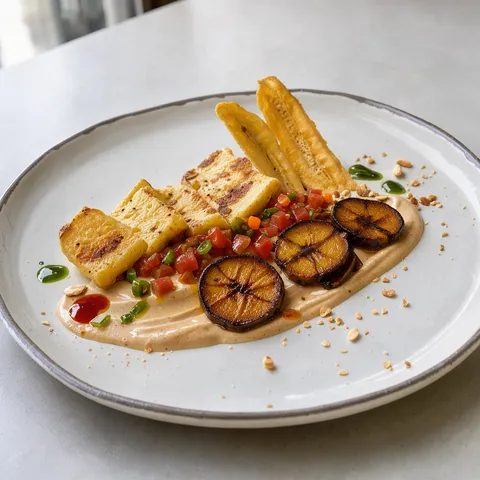 Ngou ti Kassa 2.01 hr 10 min · Main course
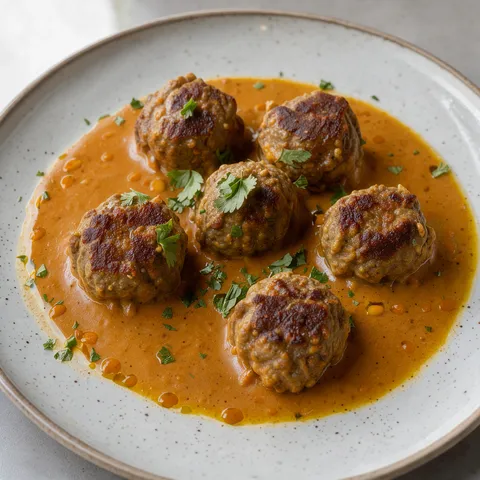 Beef Meatballs in Peanut Sauce1 hr 15 min · Main course