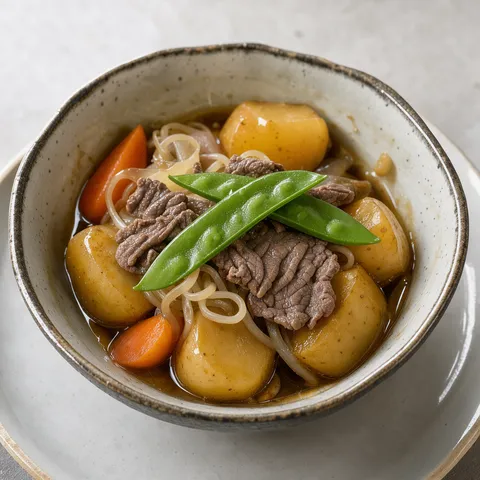
Japanese Beef and Potato Stew Nikujaga
A Japanese main course. Takes 1 hr 15 min, Serves 4. Difficulty: medium.
At a glance
- Total time
- 1 hr 15 min
- Serves
- Serves 4
- Difficulty
- Medium
- Cuisine
- Japanese cuisine
- Dish type
- Main course
- Allergens
- Gluten, Fish, Soya
Ingredients
Dashi
- 700 ml cold water
- 10 g kombu
- 15 g katsuobushi (bonito flakes)
Meat and vegetables
- 320 g thinly sliced fatty beef ribeye (2-3 mm, shabu-style slices)
- 600 g waxy potatoes (4 medium)
- 1 large onion (about 220 g)
- 1 medium carrot (120 g)
- 200 g shirataki (ito konnyaku noodles)
- 1 tbsp neutral oil
Cooking liquid
- 2 tbsp sake
- 1.5 tbsp sugar
- 3 tbsp mirin
- 3.5 tbsp Japanese soy sauce (koikuchi)
To finish
- 60 g mangetout (kinusaya) or fresh peas
- 1/2 tsp salt (for the cooking water)
Equipment
- Saucepan
- Fine sieve / chinois
- Colander
- Kitchen scissors
- Paring knife
- Chef's knife
- Chopping board
- Heavy-based saucepan
- Ladle
- Baking paper
- Mixing bowls
Method
- Make the dashi: Put the kombu in the cold water and leave for 20 min, then heat over low heat. When the water reaches 60-65°C and small bubbles appear at the edges, remove the kombu: if it boils, the seaweed leaves a bitter, slimy taste. Bring the water just to the boil, turn off the heat, scatter in the katsuobushi and leave for 2 min, until the flakes sink. Strain through a fine sieve without pressing. You will have a clear, pale golden dashi. Do the rest of the prep while it stands
- Chop the vegetables: Peel the potatoes, cut into large 4-5 cm pieces and lightly round off the sharp edges with a paring knife. This technique, called mentori in Japanese cooking, stops the potatoes rubbing against each other and breaking up during the long cooking. Soak the pieces in cold water for 5 min and drain: with the surface starch gone, the sauce stays clear. Cut the carrot into 3 cm triangular pieces, rolling it a quarter turn between diagonal cuts (rangiri), and cut the onion into thick 1.5 cm half-moons
- Clean the shirataki: Put the shirataki in a colander, blanch in boiling water for 2 min and drain. This removes the characteristic chalky smell of konnyaku and helps it take up the sauce. Cut into 10 cm lengths with scissors
- Brown the meat: Heat a heavy-based saucepan over medium-high heat and add the oil. Add the beef slices, separating them, and turn for 1-2 min, until they have only just lost their pinkness. Do not brown the meat for long: it is cooked again later and would toughen. Add the potatoes, carrot and onion and stir for 2 min to coat them in the oil. The edges of the onion should start to turn translucent
- Season: Pour in 500 ml of the hot dashi, add the shirataki and bring to the boil. Skim off the foam with a ladle. Add the sake and sugar first, then the mirin 2 min later. In Japanese cooking sugar goes in before salt: sugar molecules are larger, and if the salt goes in first the sugar will not penetrate the potato
- Cook under a drop lid: Cut a circle of baking paper the diameter of the pan, snip a small hole in the centre and lay it directly on the surface of the stew (otoshibuta). This inner lid turns the liquid back over the potatoes, lets steam escape and stops the pieces tumbling as they simmer. Simmer gently over medium-low heat for 10 min. Lift the paper, add the soy sauce, put the paper back and cook for another 10-12 min. It is ready when a thin knife slides into the centre of a potato without resistance and the liquid has reduced to about a third
- Rest: Turn off the heat and leave for 10 min with the paper on top. Nikujaga takes on its flavour as it cools: this is when the sauce is drawn into the potatoes. Meanwhile, blanch the mangetout in boiling salted water for 1 min, plunge into iced water, drain while still bright green and halve on the diagonal
- Plate: Pile the potatoes and carrots loosely in a deep, warm bowl. Tuck the shirataki in between and put the onion and beef slices on top. Drizzle with 3-4 tbsp of the sauce from the bottom of the pan: the potatoes should look glossy and light brown. Lay the mangetout crosswise on top and serve warm, with plain rice and misoshiru alongside
Chef's note
Nikujaga is a home-cooked dish, known in Japan as mother's cooking. In Kansai it is made with beef, in Kanto often with pork. Here it is made with beef, the Kansai way. Katsuobushi and shirataki are traditionally bought ready-made. It tastes even better the next day: when reheating, add a spoonful of dashi.
Frequently asked questions
- Why don't the potatoes fall apart in nikujaga?
- The edges of the potatoes are lightly rounded off (mentori), so they don't rub against each other and break up during the long simmer. A paper drop lid also stops the pieces from tumbling.
- Why is sugar added before the soy sauce?
- In Japanese cooking sugar goes in before salt, because sugar molecules are large and won't penetrate the potato if the salt goes in first. The soy sauce is added in the second half of cooking.
- What does the paper drop lid (otoshibuta) do?
- It turns the liquid back over the potatoes, keeps the steam in and stops the pieces rolling around as it simmers. A circle the width of the pan with a hole in the middle is enough.
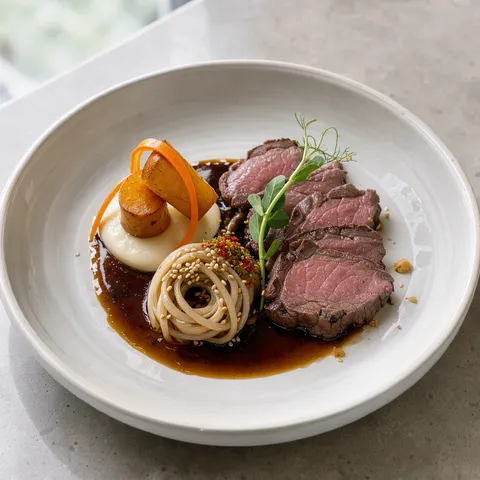 Nikujaga 2.01 hr 20 min · Main course
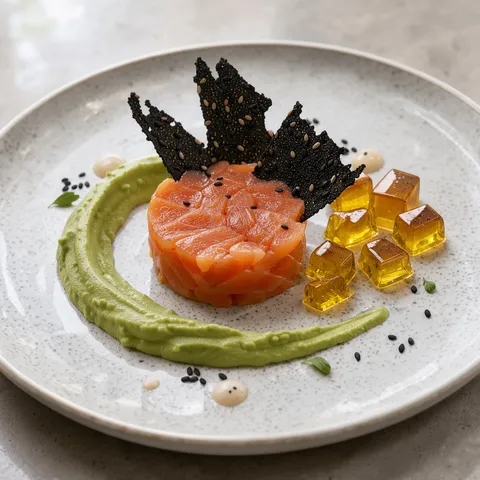 Salmon Tartare, Black Sesame Crisp, Wasabi Avocado45 min · Starter
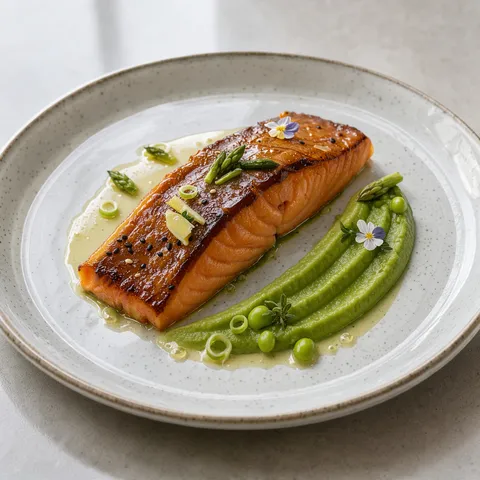 Salmon, Miso Glaze, Dashi Beurre Blanc, Edamame Purée50 min · Main course
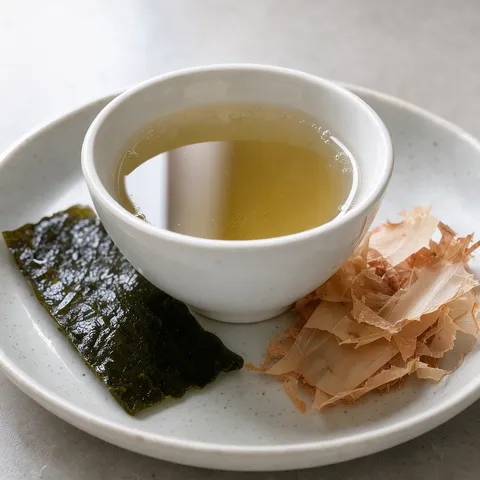 Ichiban Dashi1 hr 45 min · Basic recipe
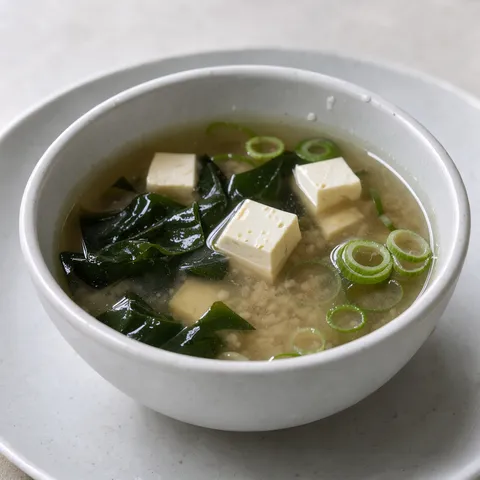 Miso Soup15 min · Soup
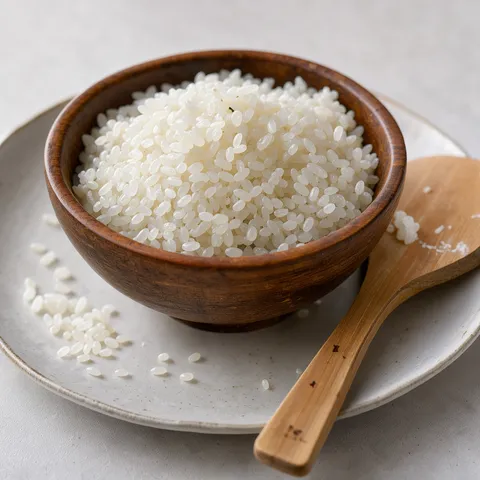 Sushi Rice1 hr 15 min · Basic recipe
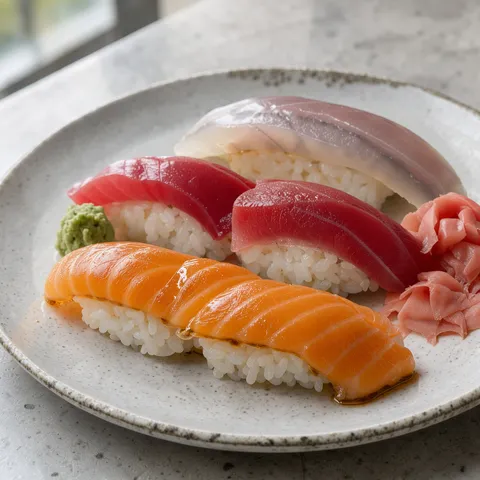 Nigiri45 min · Main course