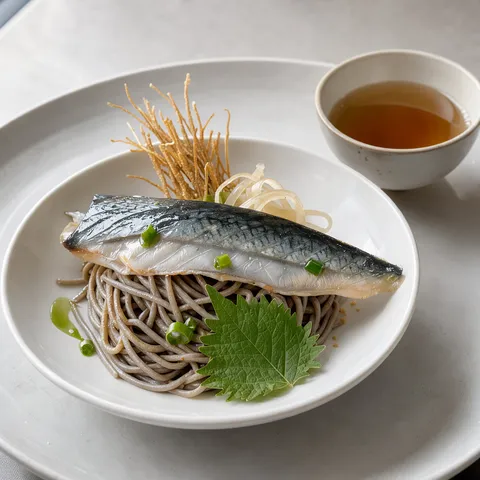
Nishin Soba 2.0
A Japanese main course. Takes 1 hr 12 min, Serves 4. Difficulty: challenging.
At a glance
- Total time
- 1 hr 12 min
- Serves
- Serves 4
- Difficulty
- Challenging
- Cuisine
- Japanese cuisine
- Dish type
- Main course
- Allergens
- Gluten, Fish, Soya
Ingredients
Herring
- 4 skin-on herring fillets (about 450 g in total previously frozen at -20°C for at least 24 hours)
- 4 g fine salt
- 1 tbsp vegetable oil
Glaze
- 60 ml sake
- 40 ml mirin
- 1 tbsp caster sugar
- 40 ml dark soy sauce
- 2 slices fresh ginger
Soba
- 240 g dried soba (high buckwheat content)
- 30 g dried soba (for the crisps)
- 250 ml oil for deep-frying
Consommé
- 800 ml dashi (Basics)
- 2 tbsp light soy sauce
- 1 tbsp mirin
- 1 tsp salt
Pickled daikon
- 150 g daikon
- 60 ml rice vinegar
- 30 ml water
- 1 tbsp caster sugar
- 1/2 tsp salt
Spring onion oil
- 3 spring onions (green part)
- 80 ml neutral oil
- 1 tsp grated lemon zest (if there is no yuzu)
- salt
To finish
- 4 small shiso leaves or micro greens
- flaky salt
Equipment
- Frying pan
- Saucepan
- Mandoline
- Probe thermometer
- Blender
- Fine sieve / chinois
- Colander
- Mixing bowls
- Chopping board
- Chef's knife
- Silicone spatula
- Pastry brush
Method
- Start the pickle: Slice the daikon into 1 mm strips with a mandoline and arrange in a rectangular dish. Heat the rice vinegar, water, sugar and salt in a small saucepan until the sugar dissolves and pour over the strips while hot. Hot vinegar softens the strips at once and lets them turn into a pickle over time. Leave the dish until plating. (~8 min)
- Prepare the spring onion oil: Very finely chop the green parts of the spring onions on a chopping board with a chef's knife and put them in a bowl with the lemon zest. Heat the oil to 100°C in a small saucepan, check with a thermometer and pour over the chopped onion. Hot oil keeps the colour vivid. Blend the mixture in a blender for 40 sec and pass through a fine sieve. A bright green, clear oil remains. (~8 min)
- Reduce the glaze: In a small frying pan, bring the sake, mirin, sugar, dark soy sauce and ginger to the boil over medium heat. Remove the ginger when the liquid has reduced by two thirds and coats the back of a spoon. The glaze should be runny enough to brush over the fish, and it thickens as it cools. (~10 min)
- Prepare the consommé: Heat the dashi in a saucepan with the soy sauce, mirin and salt and do not boil. Taste: it should be balanced and clear. Pass through a fine sieve back into the saucepan and keep warm. (~8 min)
- Fry the crisp soba: In a small saucepan, heat the oil to 190°C and check with a thermometer. Drop a pinch of the dry soba you set aside for the crisps into the oil. When the soba puffs up within 10 sec and turns light golden, lift out with a slotted spoon onto kitchen paper and sprinkle with flaky salt. Dry soba puffs up in oil like crisp wires. (~6 min)
- Boil the soba and form nests: Bring plenty of water to the boil in a large saucepan and boil the soba according to the packet time. Rub it in iced water in a colander to remove the starch. Divide the drained soba into 4 equal portions and wind around a fork to form small nests. Keep the nests in a bowl until plating. (~8 min)
- Prepare the herring: Pat the herring fillets thoroughly dry with kitchen paper. Make 3 shallow cuts in the skin with a sharp knife so the skin does not curl as it cooks. Sprinkle the fine salt over both sides. (~5 min)
- Cook the herring: Heat a large frying pan over high heat and add the oil. Place the fillets skin side down and press with a spatula for 20 sec, so the skin makes full contact with the pan. When the skin is crisp and golden, turn and cook briefly. Take off the heat when the internal temperature reaches 60°C on a thermometer, as it rises to 62°C while resting and the flesh stays moist. (~8 min)
- Glaze: Brush the glaze over the skin side of the herring, then heat the remaining glaze in the pan for a second. The skin should be glossy and lacquer-like, but the glaze should be brushed on thinly so that the crispness is not lost. (~3 min)
- Warm the nests: Dip the soba nests in the hot consommé in a colander to heat them, then drain. The consommé soaks into the soba and gives it flavour. (~3 min)
- Plate: Place a soba nest in the middle of a deep warm plate. Put the glazed herring on top skin side up. Pour 120 ml of the consommé into a bowl and serve on the side or pour it around the edge of the plate. Curl the pickled daikon strips next to the nest. Drip 5-6 drops of the green oil onto the plate. Stand the crisp soba upright beside the herring and finish with a shiso leaf. (~5 min)
Chef's note
The elements of the classic nishin soba are split here into separate textures: the herring cooked in sweet soy became a crisp-skinned, glazed fillet, the hot dashi turned into a separate clear consommé, and the soba comes in two textures as a nest and as crisp wires. The pickled daikon adds acidity that the classic lacks, and the spring onion oil adds a vivid green aroma. Heat the consommé just before serving and keep the soba nests warm.
Frequently asked questions
- Why take the herring off at an internal temperature of 60°C?
- This temperature removes the parasite risk and keeps the fish moist. The fish must also have been frozen beforehand.
- Which soba is used for the crisp soba?
- Dried, unsalted soba is suitable. Soba with a high buckwheat content is more brittle, so it crisps faster in oil.
- What can I do if I can't find herring?
- Mackerel or anchovy fillets cook the same way. Take mackerel off at an internal temperature of 60°C as well.
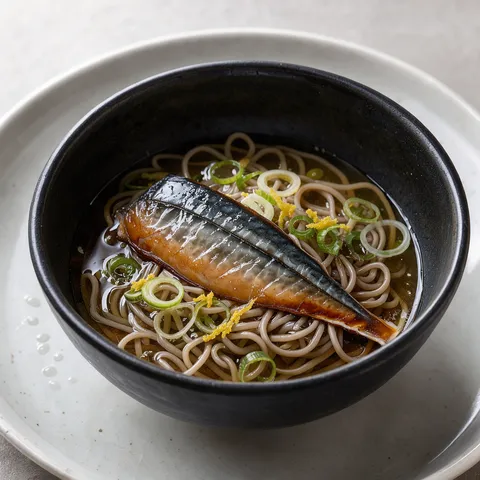 Nishin Soba28 min · Main course
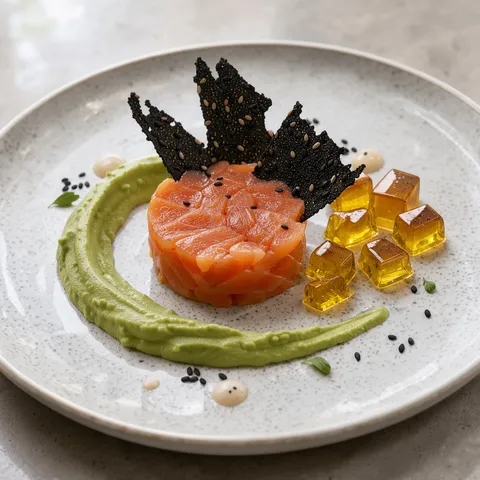 Salmon Tartare, Black Sesame Crisp, Wasabi Avocado45 min · Starter
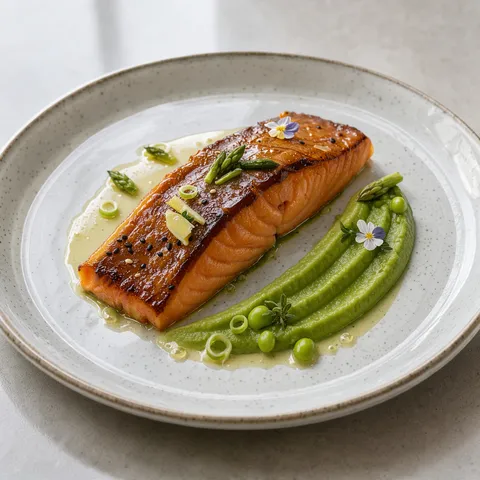 Salmon, Miso Glaze, Dashi Beurre Blanc, Edamame Purée50 min · Main course
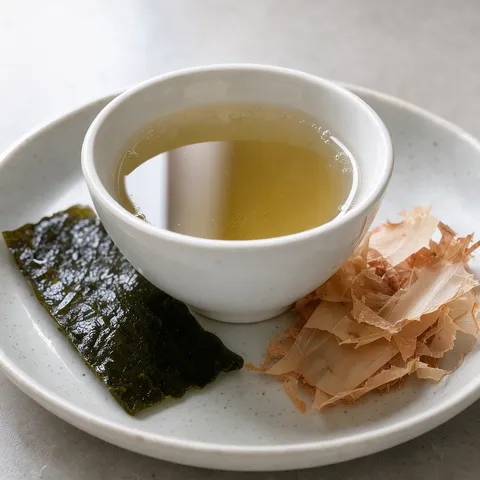 Ichiban Dashi1 hr 45 min · Basic recipe
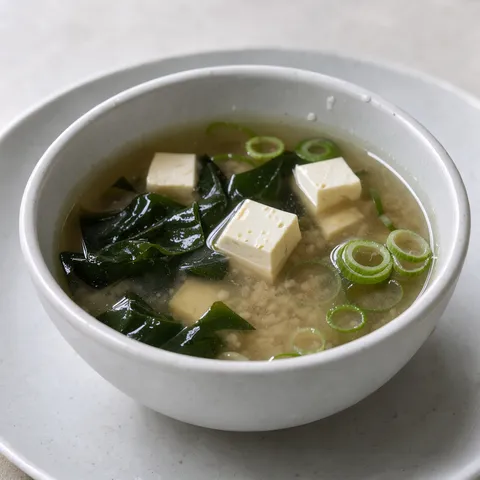 Miso Soup15 min · Soup
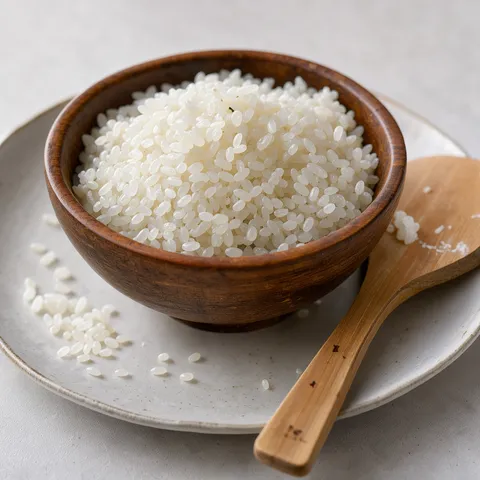 Sushi Rice1 hr 15 min · Basic recipe
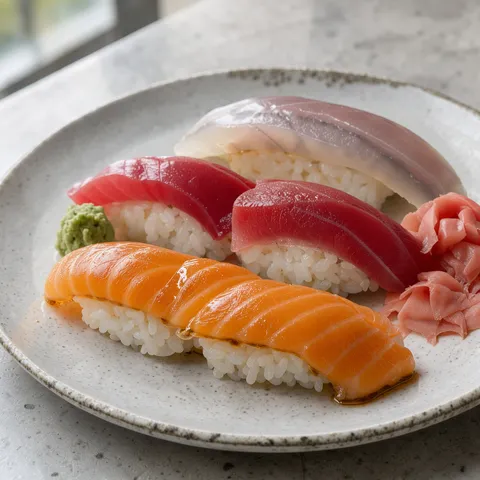 Nigiri45 min · Main course