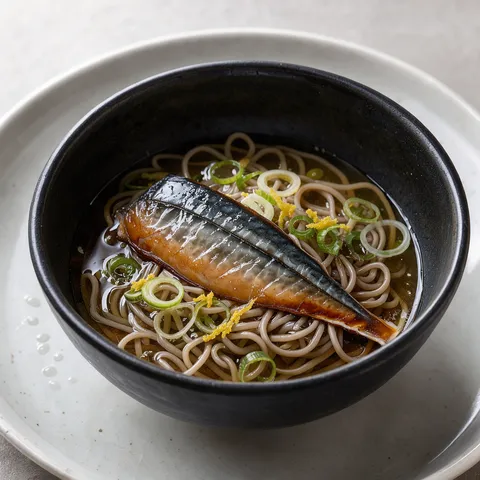
Nishin Soba Herring Soba in Hot Dashi
A Japanese main course. Takes 28 min, Serves 4. Difficulty: easy.
At a glance
- Total time
- 28 min
- Serves
- Serves 4
- Difficulty
- Easy
- Cuisine
- Japanese cuisine
- Dish type
- Main course
- Allergens
- Gluten, Fish, Soya
Ingredients
Herring
- 4 herring fillets (about 450 g in total)
- 100 ml sake
- 60 ml mirin
- 2 tbsp caster sugar
- 60 ml dark soy sauce
- 200 ml water
- 3 slices fresh ginger
Soup
- 900 ml dashi (Basics)
- 3 tbsp light soy sauce
- 2 tbsp mirin
- 1 tsp salt
Soba
- 320 g dried soba (high buckwheat content)
To serve
- 2 spring onions
- 1 tsp grated yuzu zest (if unavailable, use lemon zest)
Equipment
- Frying pan
- Saucepan
- Colander
- Baking paper
- Chopping board
- Mixing bowls
- Plating tweezers (optional)
Method
- Prepare the herring: Wash the herring fillets under cold running water and pat dry with kitchen paper. Pick out any remaining bones with tweezers and cut each fillet in two across on a chopping board. Put them in a bowl and pour boiling water over them, drain after 10 sec and rinse in cold water. This blanching step reduces the fishy smell. (~4 min)
- Bring the cooking liquid to the boil: In a wide frying pan, bring the sake, mirin, sugar, dark soy sauce, water and ginger slices to the boil. The sugar should dissolve completely and the alcohol should burn off, leaving a lightly sweet, glossy liquid. (~4 min)
- Cook the herring: Arrange the herring pieces in the pan skin side up. Lay a baking paper lid cut slightly smaller than the pan over them (otoshibuta). Cook over low heat, spooning the liquid over the fish from time to time. When the liquid has reduced by half and turned thick and syrupy, the fish is deep brown and glossy. (~12 min)
- Heat the soup: While the fish cooks, heat the dashi with the light soy sauce, mirin and salt in a separate saucepan. Do not boil it, just heat until steam rises. Taste: it should be balanced and lightly sweet. (~5 min)
- Boil the soba: Bring plenty of water to the boil in a large saucepan, add the soba and boil according to the packet time. Add 100 ml cold water to the boiling water to stop it boiling over. The soba should be soft but still slightly firm. (~5 min)
- Rinse the soba: Rinse the soba in a colander under cold running water, rubbing it with your hands. This removes the surface starch, so the soba does not turn sticky in the soup. Then dip it into boiling water for 10 sec and drain, so that it is hot again. (~1 min)
- Plate: Divide the soba between warm deep bowls. Pour the hot soup over it. Place the fish on top of the soba skin side up and spoon 1 tbsp of the cooking sauce over it. Sprinkle with the spring onions and yuzu zest. Serve immediately. (~2 min)
Chef's note
Nishin soba is a classic of Kyoto. As Kyoto is far from the sea, dried herring (migaki nishin) is traditionally used and softened overnight in rice water. Here fresh herring fillets are used, so the cooking time is shortened, which is a shortcut. If you cannot find herring, mackerel fillets cook the same way. For the dashi, use the Basics recipe.
Frequently asked questions
- Why is Nishin Soba considered a Kyoto dish?
- Kyoto is far from the sea, so dried herring was historically carried into the city and paired with soba. That is why the dish is linked to Kyoto.
- What can I use instead of herring?
- Mackerel or anchovy fillets cook in the same sweet soy sauce. As mackerel is oilier, keep the cooking time short.
- Why is soba rinsed in cold water?
- Cold water removes surface starch and stops the cooking. You then dip it briefly in boiling water to reheat, so the soup stays clear.
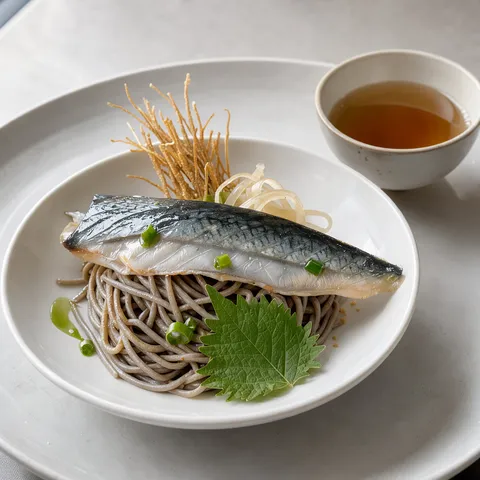 Nishin Soba 2.01 hr 12 min · Main course
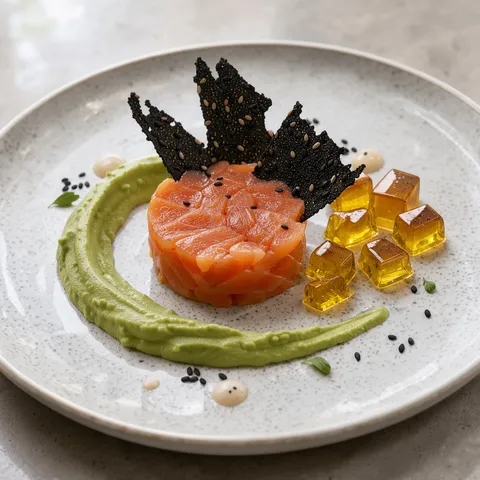 Salmon Tartare, Black Sesame Crisp, Wasabi Avocado45 min · Starter
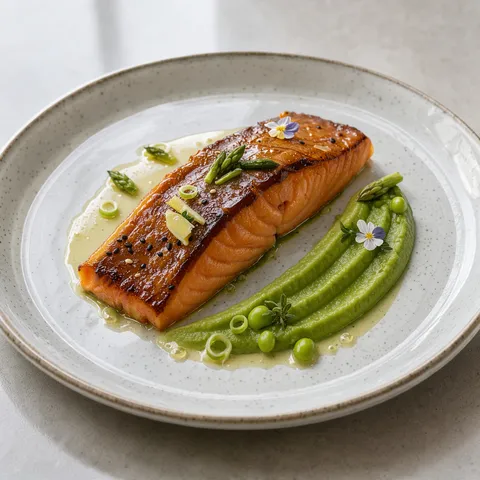 Salmon, Miso Glaze, Dashi Beurre Blanc, Edamame Purée50 min · Main course
 Ichiban Dashi1 hr 45 min · Basic recipe
 Miso Soup15 min · Soup
 Sushi Rice1 hr 15 min · Basic recipe
 Nigiri45 min · Main course