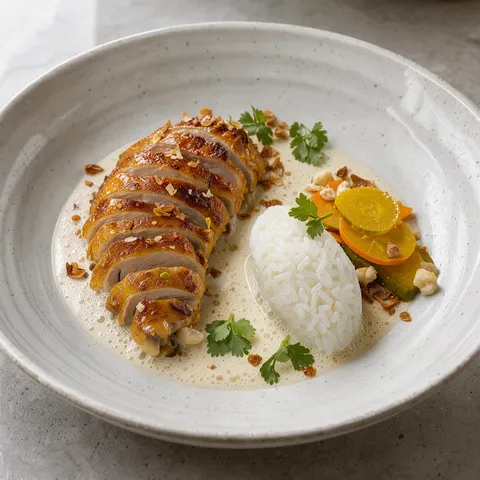
Opor Ayam 2.0
An Indonesian main course. Takes 1 hr 25 min, Serves 4. Difficulty: challenging.
At a glance
- Total time
- 1 hr 25 min
- Serves
- Serves 4
- Difficulty
- Challenging
- Cuisine
- Indonesian cuisine
- Dish type
- Main course
- Diet
- Gluten-free
- Allergens
- Milk, Tree nuts, Celery
Ingredients
Quick acar
- 1 cucumber (about 200 g)
- 1 small carrot
- 1 small red onion
- 60 ml rice vinegar
- 1 tbsp sugar
- 1/2 tsp salt
- 1/4 tsp ground turmeric
Crisps
- 4 shallots (thinly sliced into rings)
- 150 ml sunflower oil (2 tbsp set aside for the sauce)
- 40 g raw macadamias
- a pinch of salt
Opor sauce (bumbu)
- 6 shallots (about 90 g)
- 4 garlic cloves
- 5 raw macadamias
- 1.5 tsp coriander seeds
- 1/2 tsp cumin seeds
- 1/2 tsp ground white pepper
- 2 cm piece of ginger
- 1/4 tsp ground turmeric
- 2 tbsp water
For the sauce
- 1 lemongrass stalk (bruised)
- 2 cm galangal (sliced, or ginger if unavailable)
- 3 makrut lime leaves
- 300 ml Chicken Stock (Basics)
- 300 ml unsweetened coconut milk
- 1 tsp palm sugar or light brown sugar
- 1/2 tsp salt
- 20 g cold butter (diced)
Pandan coconut rice
- 200 g jasmine rice
- 150 ml unsweetened coconut milk
- 200 ml water
- 1 pandan leaf (knotted, or 1 makrut lime leaf if unavailable)
- 1/2 tsp salt
Chicken
- 4 boneless skin-on chicken thighs (about 180 g each)
- 1 tsp salt
- 1 tbsp sunflower oil
To plate
- 8 coriander sprigs (leaves only)
Equipment
- Mixing bowls
- Chef's knife
- Balloon whisk
- Frying pan
- Colander
- Blender
- Saucepan
- Fine sieve / chinois
- Stick blender
- Cast-iron frying pan
- Silicone spatula
- Probe thermometer
Method
- Make the acar: Halve the cucumber lengthways, scrape out the seeds with a teaspoon and slice into 3 mm half-moons with a chef's knife. Cut the carrot into 5 cm matchsticks and the red onion into thin half-rings. Whisk the vinegar, sugar, salt and turmeric in a bowl until the sugar dissolves, add the vegetables and mix. Leave it to stand for at least 45 min before serving, which softens the vegetables slightly but keeps their crunch. The turmeric gives the acar the yellow colour of the classic Indonesian acar and makes a bright contrast against the white sauce on the plate
- Prepare the crisps: Put the shallot rings in a 20 cm frying pan and pour over the 150 ml cold oil (about 5 mm). Fry over medium heat, stirring, for 8-10 min until light golden, then lift onto kitchen paper with a slotted spoon. Set aside 2 tbsp of the oil for the sauce and strain the rest into another container. Toast the macadamias in the same pan, in the thin film of oil left behind, for 3-4 min, and when golden, roughly chop them with a pinch of salt. On the plate they will be the crunchy echo of the creamy nuts in the opor sauce
- Blend the bumbu: Toast the coriander and cumin seeds in a small dry frying pan for 2 min, until fragrant. Blend the shallots, garlic, the 5 raw macadamias, toasted seeds, white pepper, ginger, turmeric and 2 tbsp water in a blender for 1-2 min, scraping down the sides twice, to a smooth paste
- Cook the opor sauce: In a 20 cm saucepan, heat the reserved 2 tbsp shallot oil over medium heat and fry the paste with the lemongrass, galangal and lime leaves for 6-7 min. When the raw garlic smell has gone and the oil separates at the edges, add the chicken stock and reduce by almost half over medium heat for 10 min. Add the coconut milk, palm sugar and 1/2 tsp salt and cook over the lowest heat, without bubbling, for 15 min. In the classic the chicken cooks in this sauce, but here the sauce is cooked separately and concentrated, so the chicken skin can stay crisp. Hob 1: sauce
- Cook the rice: While the sauce cooks, rinse the rice in cold water 3 times, until the water runs clear, and drain. Put the rice, coconut milk, water, pandan and salt in an 18 cm saucepan. When it comes to the boil, stir, cover and cook over the lowest heat for 12 min. Turn off the heat and leave to steam for 10 min without lifting the lid. Coconut milk tends to catch on the bottom, so remember to turn the heat down. Hob 2: rice
- Prepare the chicken: Pat the thighs thoroughly dry with kitchen paper and lightly score the thick parts on the flesh side with a knife to even out the thickness. Sprinkle 1 tsp salt in total over both sides. Dry skin crisps up, while wet skin poaches and turns rubbery
- Cook the chicken skin side down: Put the 1 tbsp oil in a 26 cm cast-iron frying pan, lay the thighs skin side down in the cold pan and turn the heat to medium. Cook for 12-14 min without moving them: the fat under the skin slowly renders and the skin turns golden brown and glassy crisp. Press with a spatula so the whole skin touches the pan. Turn and cook the flesh side for 4-5 min: the internal temperature at the thickest point should reach 74°C. Transfer the thighs, skin side up, to a wire rack and rest for 5 min. Hob 3: chicken. No more than three burners are on at the same time
- Strain and froth the sauce: Pass the opor sauce through a fine sieve into a bowl, pressing the solids with the back of a spoon, and discard them. Return the sauce to the pan, heat without boiling and taste for salt. Take off the heat, add the cold butter cubes and blitz with a stick blender for 30 sec, until a thin foam forms on the surface. The butter gives the sauce gloss and body, and the foam carries the aroma to the plate
- Plate: Drain the acar. Using a wet spoon, place an oval quenelle of rice on one side of each deep plate. Cut each chicken thigh into 4 slices and fan them out beside the rice, skin side up. Pour 4-5 tbsp of the opor sauce and its foam next to the chicken, without touching the skin. Place the acar in a small pile at the edge, scatter the fried shallots and chopped macadamias over the chicken and finish with a few coriander leaves. Serve immediately: the skin softens as it touches the sauce
Chef's note
The calm, creamy character of opor ayam at the festive table is kept while the textures are separated: the sauce is cooked separately and concentrated, the chicken skin is crisped, and the macadamias used instead of candlenuts appear twice, both in the sauce and as a crunchy crumb. The acar replaces the pickle plate on the classic table and cuts through the rich sauce. Make the chicken stock in advance. Pandan, galangal and makrut lime leaves are found in Asian supermarkets: ginger can replace galangal, and a makrut lime leaf can replace pandan.
Frequently asked questions
- Why is the opor sauce cooked separately from the chicken?
- In the classic version the chicken cooks in the sauce. Here the sauce is cooked separately and concentrated, so the chicken skin can stay crisp.
- Why does the chicken go into a cold pan to crisp the skin?
- Place the thighs skin side down in a cold pan and cook over a medium heat without moving them. The fat under the skin renders slowly and the skin turns crisp.
- How do I stop the coconut rice catching on the bottom?
- Coconut milk tends to catch on the bottom, so turn the heat to the very lowest. Stir as it comes to the boil, then cover, take it off the heat and let it steam without lifting the lid.
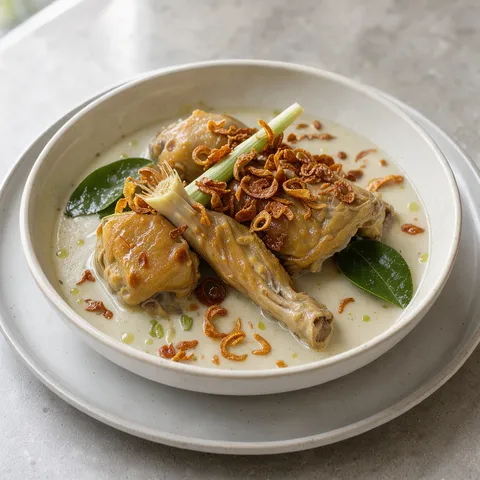 Javanese White Chicken Curry in Coconut Milk1 hr 20 min · Main course
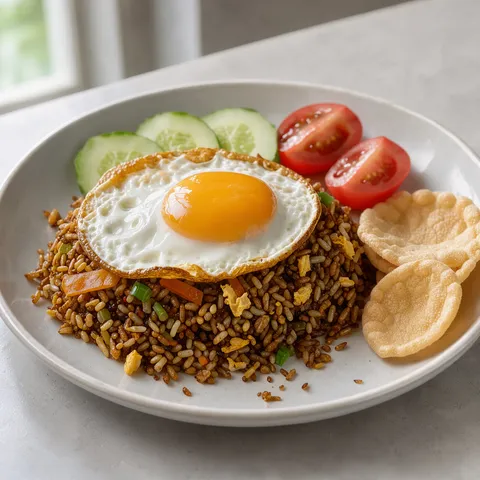 Nasi Goreng25 min · Main course
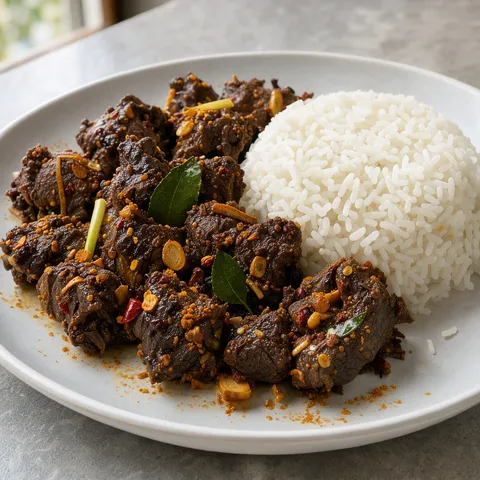 Beef Rendang1 hr 45 min · Main course
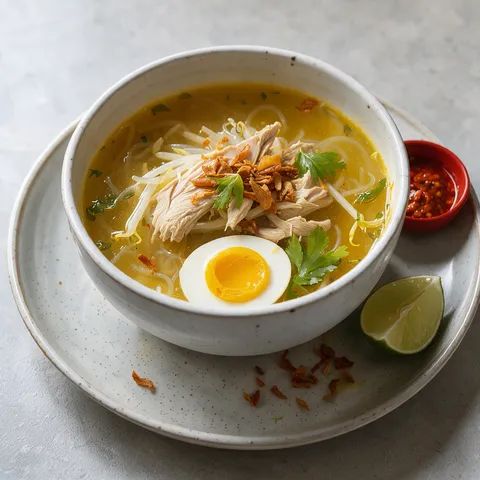 Indonesian Yellow Chicken Soup1 hr · Soup
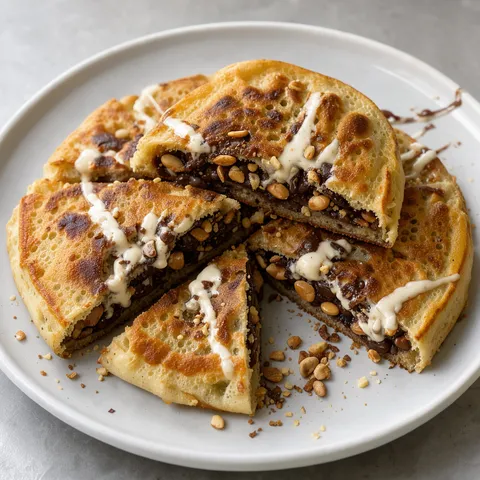 Indonesian Sweet Honeycomb Pancake35 min · Bread & pastry
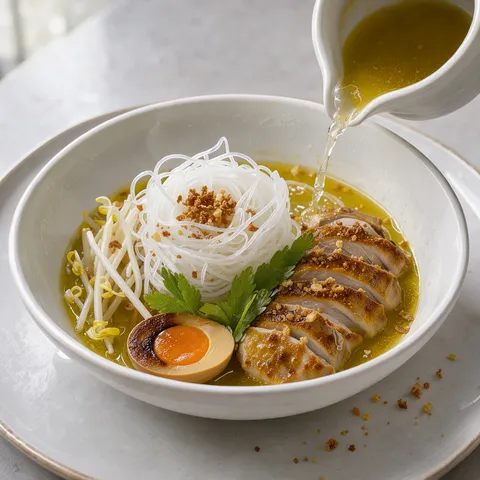 Soto Ayam 2.01 hr 20 min · Soup
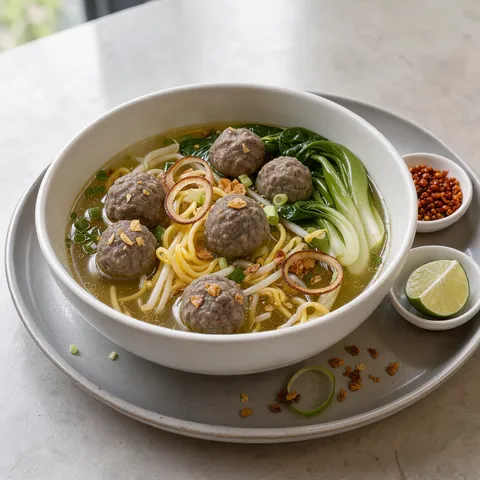 Indonesian Beef Meatball Soup2 hr 50 min · Soup