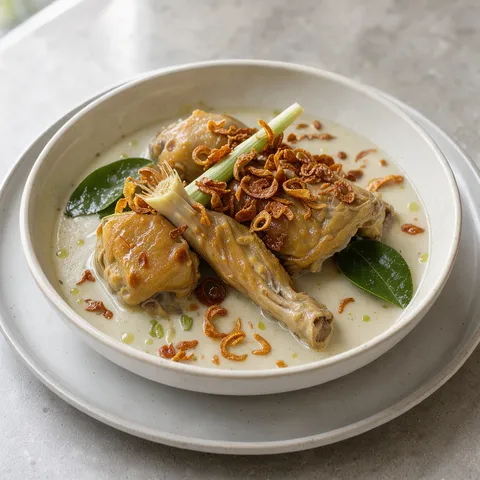
Javanese White Chicken Curry in Coconut Milk Opor Ayam
An Indonesian main course. Takes 1 hr 20 min, Serves 4. Difficulty: medium.
At a glance
- Total time
- 1 hr 20 min
- Serves
- Serves 4
- Difficulty
- Medium
- Cuisine
- Indonesian cuisine
- Dish type
- Main course
- Diet
- Gluten-free
- Allergens
- Milk, Tree nuts
Ingredients
Chicken
- 1.4 kg skin-on chicken on the bone (8 pieces: 2 drumsticks, 2 thighs, breast cut into 4)
- 1 tsp salt
- juice of 1/2 lime
Fried shallots
- 4 shallots (thinly sliced into rings)
- 150 ml sunflower oil (3 tbsp set aside for frying the paste)
- 1/4 tsp salt
Spice paste (bumbu)
- 8 shallots (about 120 g, roughly chopped)
- 5 garlic cloves
- 6 raw macadamias or 8 raw cashews (instead of candlenuts)
- 2 tsp coriander seeds
- 1 tsp cumin seeds
- 1/2 tsp ground white pepper
- 2 cm fresh ginger (peeled)
- 1/2 tsp ground turmeric
- 2 tbsp water
Cooking
- 2 lemongrass stalks (bruised and knotted)
- 3 cm galangal (sliced, or ginger if unavailable)
- 3 bay leaves
- 4 makrut lime leaves
- 400 ml water
- 600 ml unsweetened coconut milk
- 1 tbsp palm sugar or light brown sugar
- 1 tsp salt
Equipment
- Mixing bowls
- Frying pan
- Colander
- Blender
- Heavy-based saucepan
- Probe thermometer (optional)
Method
- Prepare the chicken: Pat the chicken pieces dry with kitchen paper, rub them with the 1 tsp salt and the lime juice and leave in a bowl for 15 min. Meanwhile, prepare the paste and shallots. The salt and acid firm up the surface of the meat, so the pieces do not fall apart during the long cooking
- Make the fried shallots: Put the shallot rings in a 20 cm frying pan and pour over the 150 ml cold oil (about 5 mm deep). Fry over medium heat for 8-10 min, stirring constantly. When the rings turn light golden, lift them onto kitchen paper with a slotted spoon and sprinkle with the 1/4 tsp salt. They darken by another shade in their own heat after leaving the pan, so if you wait until they are deep brown, they turn bitter. Set aside 3 tbsp of the shallot oil
- Toast the dry spices: In another dry frying pan, toast the coriander and cumin seeds over medium heat for 2 min, until fragrant and the coriander darkens by a shade. Toss the macadamias (or cashews) in the same pan for 3 min, until golden in places. Toasting releases the volatile oils of the seeds and removes the raw taste of the nuts
- Blend the paste: Put the shallots, garlic, toasted seeds and nuts, ginger, turmeric, white pepper and 2 tbsp water in a blender. Blend for 1-2 min, stopping twice to scrape down the sides. The paste should be smooth, pale yellow and creamy: any grains left will end up in the sauce
- Fry the paste: In a 28 cm heavy-based casserole, heat the reserved 3 tbsp shallot oil over medium heat. Add the paste and fry for 6-8 min, stirring so it does not stick. It is ready when the raw garlic smell gives way to a sweet aroma and the oil begins to separate at the edges. Add the lemongrass, galangal, bay leaves and lime leaves and stir for 1 more min
- Sear the chicken: Add the chicken pieces skin side down and turn them for 5 min to coat every side in the paste. When the outside of the meat turns white, pour in the 400 ml water, bring to the boil, then lower the heat and simmer with the lid ajar for 20 min. Cooking in water first tenderises the meat without the coconut milk splitting
- Finish with coconut milk: Add the coconut milk, palm sugar and 1 tsp salt. Reduce the heat to the lowest setting and cook uncovered for 20-25 min, stirring from the bottom now and then. The sauce should not boil, with just gentle bubbles on the surface, otherwise the coconut milk separates and looks grainy. It is ready when the sauce thinly coats the back of a spoon and the internal temperature of the thickest thigh reaches 74°C
- Taste and serve: Remove the lemongrass, galangal slices and bay leaves. Taste for salt and add a pinch if needed. Divide the chicken and sauce between shallow bowls, scatter generously with fried shallots and serve hot
Chef's note
Opor ayam is considered Javanese in origin and is especially associated with festive tables, alongside ketupat (rice cakes cooked in leaves) and spicy side dishes. Its colour is ivory white, not yellow: do not increase the turmeric. Kemiri (candlenuts) are found in Asian supermarkets and must not be eaten raw. Macadamias or cashews give the same creamy thickening in their place. If there is no galangal, use ginger, and if there are no makrut lime leaves, use 1 tsp finely grated lime zest. Coconut milk is traditionally bought ready-made: choose an unsweetened, thick one. The flavours settle even further the next day.
Frequently asked questions
- How do I stop the coconut milk splitting in opor ayam?
- After adding the milk, turn the heat to the very lowest. The sauce shouldn't bubble hard, with only a gentle ripple on the surface, otherwise the milk separates its oil and looks grainy.
- What can I use if I can't find candlenuts?
- The recipe uses 6 raw macadamias or 8 raw cashews in place of candlenuts. Toast either in a dry pan before adding to the spice paste.
- Why is the chicken cooked first in water and then in coconut milk?
- The chicken first cooks in 400 ml of water for 20 minutes. Cooking in water first tenderises the meat before the coconut milk, so the milk doesn't split.
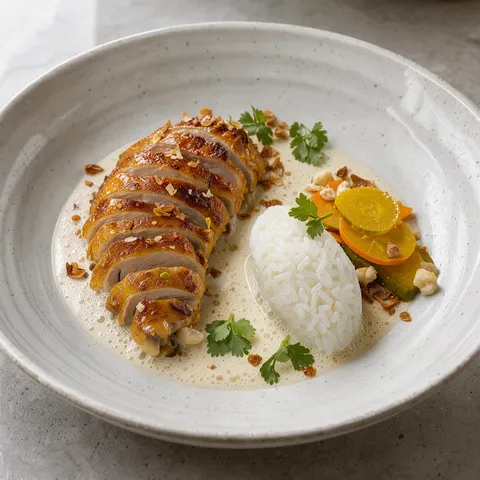 Opor Ayam 2.01 hr 25 min · Main course
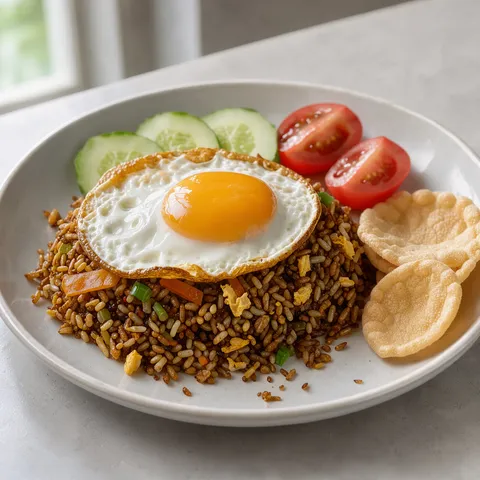 Nasi Goreng25 min · Main course
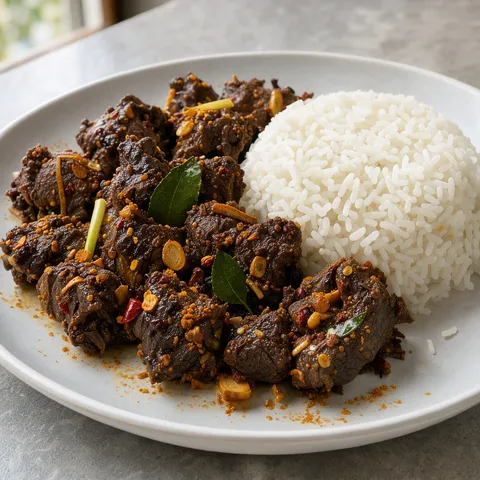 Beef Rendang1 hr 45 min · Main course
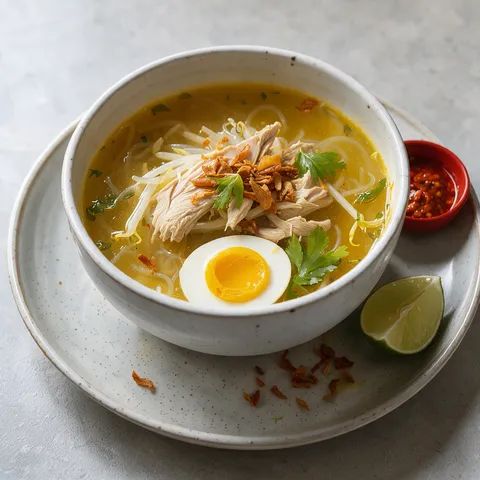 Indonesian Yellow Chicken Soup1 hr · Soup
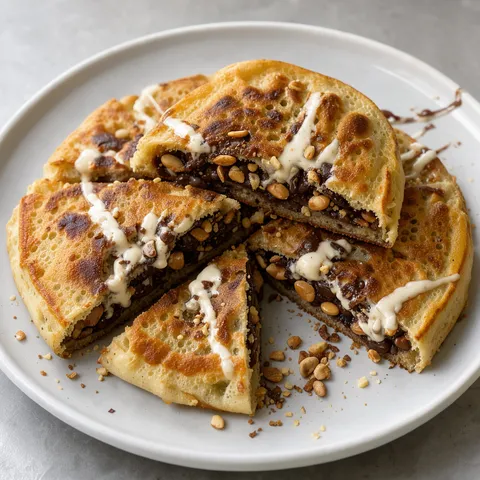 Indonesian Sweet Honeycomb Pancake35 min · Bread & pastry
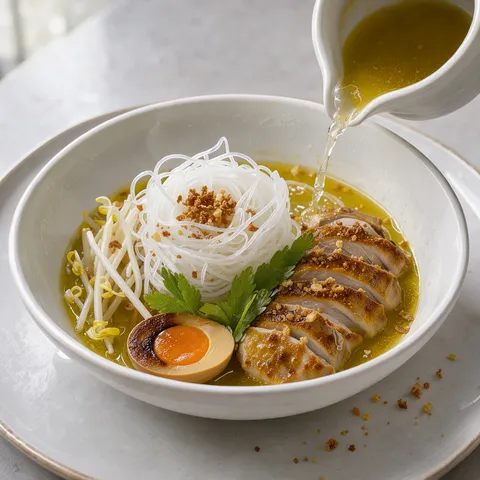 Soto Ayam 2.01 hr 20 min · Soup
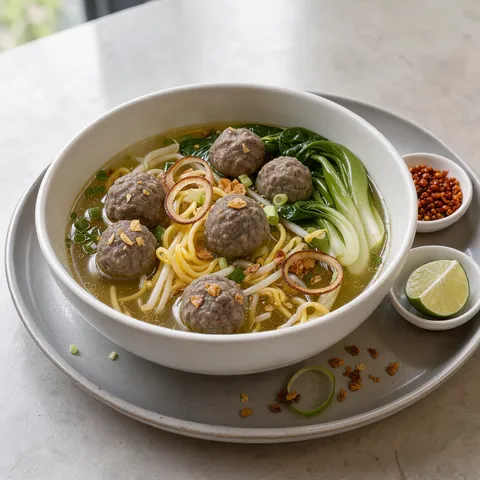 Indonesian Beef Meatball Soup2 hr 50 min · Soup