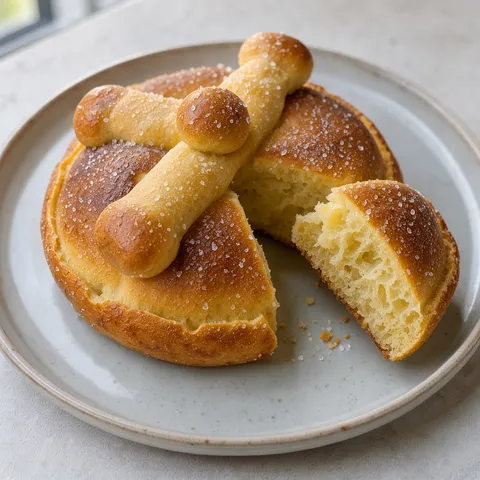
Day of the Dead Bread Pan de Muerto
A Mexican bread & pastry. Takes 1 hr 25 min · +2 hr 15 min rising, 2 pieces (16 slices). Difficulty: medium.
At a glance
- Total time
- 1 hr 25 min · +2 hr 15 min rising
- Serves
- 2 pieces (16 slices)
- Difficulty
- Medium
- Cuisine
- Mexican cuisine
- Dish type
- Bread & pastry
- Allergens
- Gluten, Milk, Eggs
Ingredients
Dough
- 500 g flour (strong white bread flour or plain flour)
- 100 g caster sugar
- 1 tsp salt
- 7 g fast-action dried yeast
- 3 eggs and 2 egg yolks (at room temperature)
- 120 ml lukewarm milk
- grated zest of 1 orange
- 1 tbsp orange blossom water
- 120 g softened butter (cubed)
Topping
- 60 g butter (melted)
- 120 g caster sugar
Makes
- 2 loaves
- 16 slices
Equipment
- Stand mixer
- Precision scales
- Fine grater
- Mixing bowls
- Cling film
- Baking tray
- Baking paper
- Oven
- Pastry brush
- Probe thermometer (optional)
Method
- Start the dough: In the bowl of a stand mixer, mix the flour, sugar, yeast and salt, keeping the salt and yeast in separate corners. Add the eggs, yolks, milk, orange zest and orange blossom water. Mix with the dough hook on low speed for 3 min, until no dry flour remains
- Work in the butter: Increase the speed to medium and add the butter cube by cube, adding the next piece once the previous one has disappeared into the dough. Knead for 10-12 min. The dough should come away from the sides of the bowl and cling to the hook, and a piece stretched thin should form a translucent membrane without tearing. A rich yeasted dough looks very sticky at first: do not add flour, as it comes together as you knead
- First prove: Put the dough in a lightly oiled bowl, cover with cling film and leave in a warm place at about 26-28°C for 1 hr 30 min, until doubled in size. It is ready if the dent left by your finger slowly fills back in
- Divide: Gently press the air out of the dough and weigh it. First set aside 180 g (for the decorations) and halve the rest. Roll the two large pieces under your palm in circles on the worktop into smooth balls with taut surfaces. Space them out on a tray lined with baking paper and press gently into 14 cm domes
- Shape the bones: Make two small 25 g balls from the reserved dough (the skulls). Divide the remaining 130 g into four equal pieces and roll each into a 20 cm rope. If you press the rope at intervals with two fingers while rolling, knuckles form, which give the bone look. Lay two ropes crosswise over each loaf and press the ends lightly against the edge of the loaf. Put a small ball in the middle of the cross, dabbing a drop of water underneath with a finger so it sticks
- Second prove: Cover the loaves loosely with cling film and leave for 45 min, until clearly risen. In the last 20 min of this time, preheat the oven to 175°C (conventional)
- Bake: Bake the loaves on the middle shelf of the oven for 30-35 min. If the tops are darkening too much at 20 min, cover with baking paper. They are done when they sound hollow when you tap the base and the internal temperature reads 90°C. Transfer to a wire rack and let cool slightly for 10 min
- Coat with sugar: While the loaves are warm, brush all over with the melted butter. Spread the sugar on a wide plate, turn each loaf upside down and press the top and sides into the sugar, sprinkling sugar by hand over any bare patches. Sugar melts on a very hot loaf and will not stick to one that has cooled completely, so the warm stage is right
- Serve: Cut each loaf into eight slices. Put one loaf whole on the plate and lean a slice beside it with the cut side showing. Serve with hot chocolate or coffee
Chef's note
Pan de muerto is made for the Día de Muertos (Day of the Dead) on 1-2 November, placed on altars in homes and shared at the table. It is commonly explained that the cross-shaped ropes on top represent bones and the ball in the middle a skull. Its shape and decoration vary by region: in Michoacán bread in human form is made, and in Oaxaca a pan de yema rich in egg yolks. Without orange blossom water, it can also be made with the orange zest alone. Bread that goes stale the next day is dipped into hot chocolate.
Frequently asked questions
- The dough is very sticky. Should I add flour?
- Enriched yeast dough looks very sticky at first, but don't add flour. It comes together as you knead, pulls away from the side of the bowl and wraps around the hook.
- Why is the sugar applied to warm bread?
- On very hot bread the sugar melts, and on fully cooled bread it won't stick. Brush the warm bread with butter and press it into the sugar.
- How are the bone shapes on top made?
- From the reserved dough make two small balls (the skull) and four rods. Press the rods with two fingers at intervals to make knuckles, lay them in a cross on each loaf and put a ball in the centre.
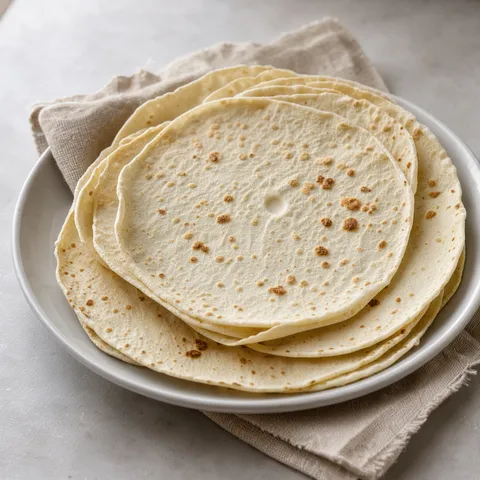 Corn Tortillas1 hr 15 min · Bread & pastry
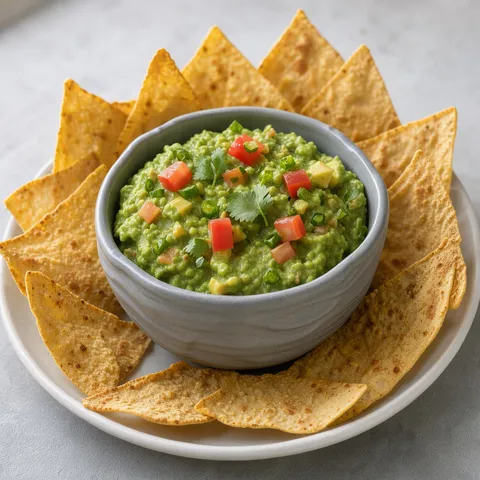 Guacamole25 min · Meze
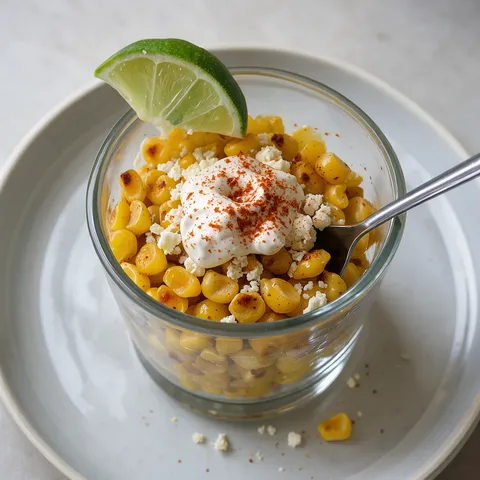 Mexican Corn in a Cup35 min · Meze
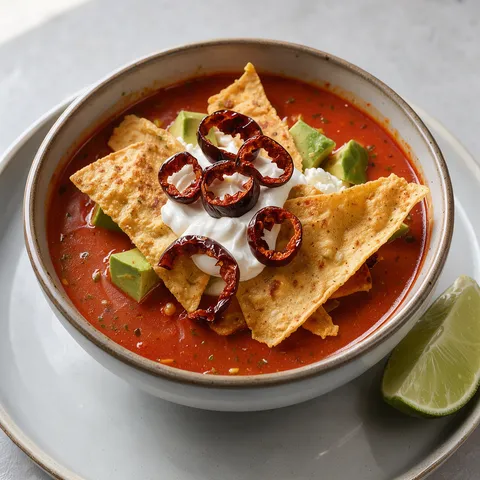 Mexican Tortilla Soup1 hr · Soup
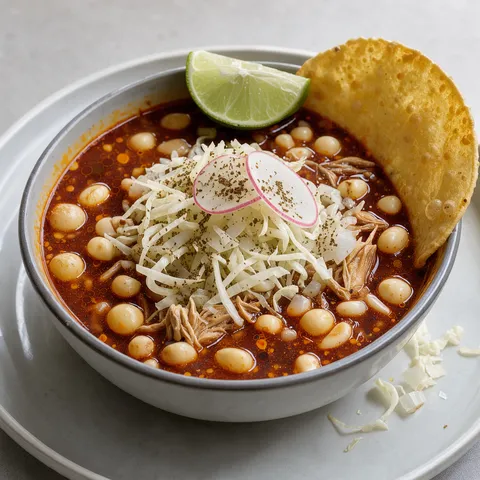 Red Chicken and Hominy Stew2 hr · Soup
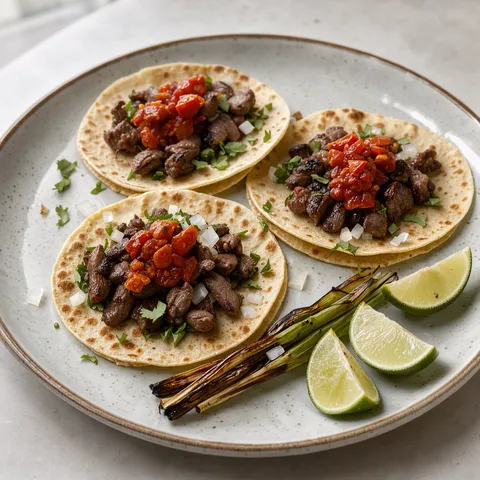 Chargrilled Beef Tacos1 hr · Main course