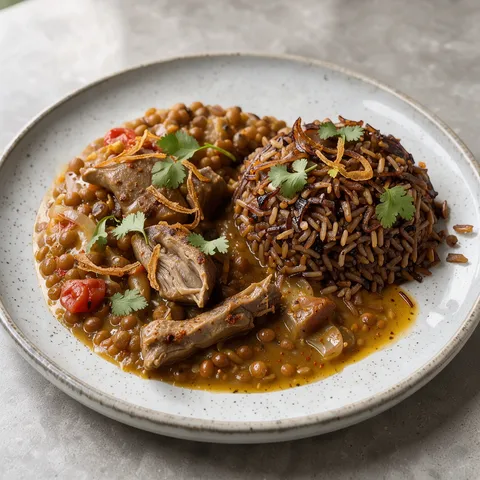
Lamb and Lentil Stew Parsi Dhansak
An Indian main course. Takes 1 hr 20 min (with a pressure cooker), Serves 4. Difficulty: medium.
At a glance
- Total time
- 1 hr 20 min (with a pressure cooker)
- Serves
- Serves 4
- Difficulty
- Medium
- Cuisine
- Indian cuisine
- Dish type
- Main course
- Diet
- Gluten-free
- Allergens
- Milk, Celery, Mustard, Sulphites
Ingredients
Stew
- 600 g lamb leg (large cubes)
- 100 g red lentils
- 100 g yellow lentils (toor dal)
- 50 g green lentils
- 50 g yellow moong dal
- 150 g pumpkin (cubed)
- 1 small aubergine (cubed)
- 2 tbsp dried fenugreek leaves (methi)
- 1 tsp salt
- 800 ml water
- 3 tbsp sunflower oil or clarified butter (ghee)
Dhansak masala
- 6 dried red chillies
- 1 tbsp coriander seeds
- 1 tsp cumin seeds
- 1/2 tsp black pepper
- 4 cloves
- 5 cm cinnamon
- 3 green cardamom pods
- 1 tsp mustard seeds
- 1/2 tsp turmeric
- 1/2 tsp fenugreek seeds
Base
- 2 medium onions (finely chopped)
- 5 garlic cloves
- 3 cm ginger
- 2 tomatoes
- 1 tbsp tamarind juice or lemon juice
Rice
- 300 g basmati rice
- 1 tsp salt
- 1 tbsp sugar
- 1 tbsp oil
- 1 onion (thinly sliced)
- 1 cinnamon stick
- 3 cloves
- 600 ml water
Equipment
- Pressure cooker
- Saucepan
- Chef's knife
- Chopping board
- Stick blender (optional)
- Pestle and mortar (optional)
Method
- Toast the masala: Toast the dried chillies and whole spices in a dry pan over medium heat for 2-3 min, until fragrant. Do not overdo it, as it turns bitter if it goes dark brown. Cool and grind to a fine powder in a mortar or spice grinder.
- Sear the lamb: Heat the oil in a pressure cooker and brown the lamb cubes over high heat for 6-8 min, until brown on every side, cooking in a single layer. Seared meat locks in its juices and gives the stew a deep flavour.
- Add the base: Add the onion and fry for 8 min, until deep golden, and cook the garlic and ginger for 1 min. Add the tomatoes and half of the masala and fry for 3 min.
- Lentils and vegetables: Wash the four lentils (red, toor, green, moong) thoroughly and add to the pan with the pumpkin, aubergine, fenugreek leaves, salt and water. Close the pressure cooker and, once it reaches pressure, cook over low heat for 25 min, then turn off the heat and let the pressure release by itself for 10 min.
- Mash: Open the lid and lift out the meat with a ladle. Mash the lentils and vegetables with a wooden spoon or stick blender until smooth, to the consistency of a thick soup. Return the meat, add the remaining masala, tamarind and, if needed, salt, and simmer over low heat for 10 min.
- Cook the rice: In another pan, heat the oil and fry the onion for 12 min, until a very dark caramel colour, then add the sugar and melt it for 1 min. Add the rice, cinnamon and cloves, add the water and salt, cover and cook over low heat for 12 min. Rest for 5 min.
- Plate: Ladle the rice onto half of a wide plate and the dhansak onto the other half. Drizzle with coriander and the hot caramelised onion. The balance of sweet, sour and hot is the signature of dhansak
Chef's note
Dhansak is the Sunday dish of the Parsi community and is traditionally eaten with caramelised brown rice. A pressure cooker cuts the time from about 2 hr 15 min to 1 hr 20 min. Lamb or chicken is used in the original recipe. Here the lamb is leg, not rib. If you cannot find fenugreek leaves, they can be left out.
Frequently asked questions
- Which lentils are used in Parsi Dhansak?
- Four kinds are used: red lentils, toor dal (yellow lentils), green lentils and yellow moong dal.
- Why can the dhansak masala turn bitter when toasted?
- The dried chillies and spices are toasted in a dry pan for 2-3 minutes until fragrant. If toasted too long and they turn dark brown, they turn bitter.
- How long does dhansak take in a pressure cooker and how is it mashed?
- Once the lentil mixture comes up to pressure, it cooks over low heat for 25 minutes, then the pressure is left to drop for 10 minutes. Mash the lentils and vegetables with a wooden spoon or a stick blender to a thick soup consistency.
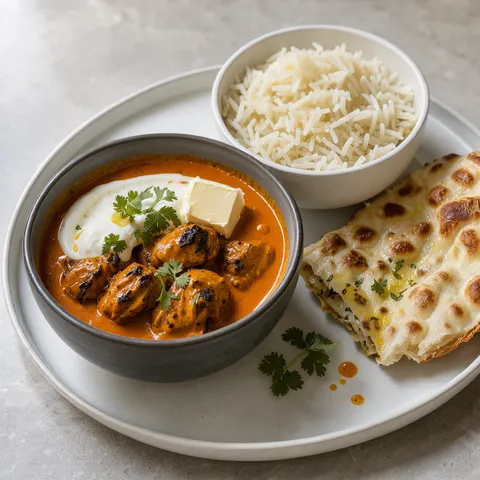 Indian Butter Chicken50 min · Main course
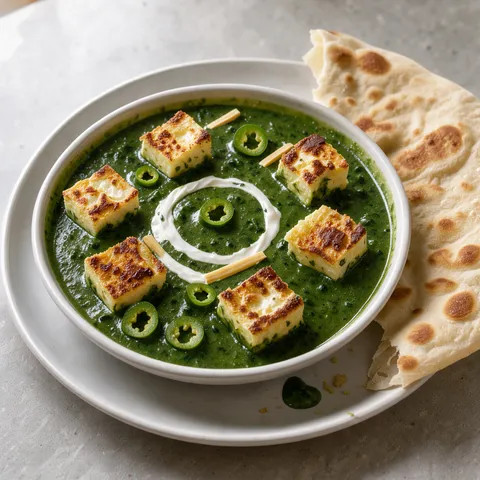 Spinach with Homemade Paneer45 min · Main course
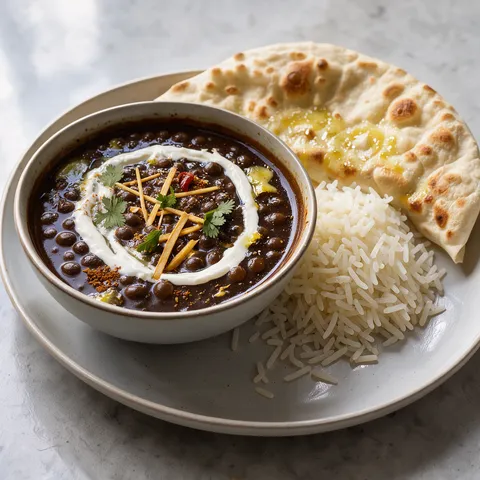 Black Lentil and Kidney Bean Stew1 hr 30 min · Main course
 Chicken Dum Biryani1 hr 30 min · Main course
 Indian Potato Pastries1 hr 30 min · Bread & pastry
 Fermented Rice Crêpes with Spiced Potato50 min · Bread & pastry