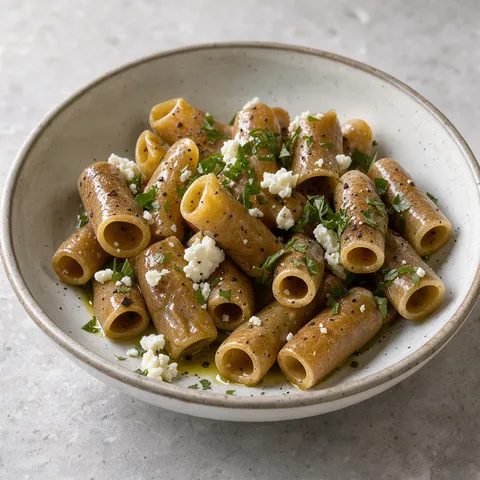
Skewer-Rolled Montenegrin Pasta Paštrovski Makaruli
A Montenegrin main course. Takes 1 hr 30 min · +30 min dough resting, +20 min drying, Serves 4. Difficulty: medium.
At a glance
- Total time
- 1 hr 30 min · +30 min dough resting, +20 min drying
- Serves
- Serves 4
- Difficulty
- Medium
- Cuisine
- Montenegrin cuisine
- Dish type
- Main course
- Allergens
- Gluten, Milk
Ingredients
Dough
- 250 g wholemeal flour
- 150 g plain flour (+30 g for dusting)
- 1 tbsp extra virgin olive oil
- 1 tsp salt
- about 200 ml lukewarm water
Boiling
- 4 litres water
- 1.5 tbsp salt
Sauce
- 80 ml extra virgin olive oil
- 2 garlic cloves
- 200 g salty white cheese (in brine, crumbled)
- 1/2 tsp black pepper
- 1/2 bunch flat-leaf parsley
Equipment
- Mixing bowls
- Cling film
- Chef's knife
- Baking tray
- Saucepan
- Wooden spoon / spatula
- Colander
- Sauté pan
- Chopping board
Method
- Knead the dough: Mix the two flours and the salt in a bowl, add the olive oil and 170 ml of the water. Bring together (about 2 min), then knead on the work surface for 10 min, adding the remaining water a spoonful at a time if needed. It is ready when the dough comes away from your hands and the work surface by itself and the surface is smooth, which is the sign the cooks of Paštrovići go by
- Rest: Shape the dough into a ball, wrap in cling film and rest at room temperature for 30 min. The gluten relaxes, so the thin pieces do not spring back when rolled onto the skewer
- Cut into pieces: Divide the dough into 4 and keep the pieces you are not working with in cling film. Roll each piece with your palm on the work surface into a long rope 1.5 cm thick and cut into 3 cm lengths with a chef's knife. Each piece weighs about 6-7 g and you get about 85-90 pieces in total. This takes about 15 min
- Roll onto the skewer: On an unfloured work surface, lay a 3-4 mm metal skewer lengthways across a piece of dough. Place your palms on either side of the skewer and roll back and forth, turning the dough into a thin tube 10-12 cm long around the skewer. If the work surface is too floury, the dough slips and will not roll. Twist the skewer slightly and pull it out, leaving a makaruli with a hole through the middle. Each piece takes about 20 sec, about 30 min in total
- Dry: Arrange the makaruli in a single layer on a floured tray and leave to dry on the work surface for 20 min, so the surfaces dry but do not turn brittle. A dried surface prevents sticking when boiling
- Boil: Bring 4 litres of water to the boil with the salt in a large pan (about 10 min). Add the makaruli, stir gently with a wooden spoon for the first 1 min, then cook for 8-10 min, until al dente but not raw. Thick handmade pasta takes longer than dried pasta, so check by biting one. Drain in a colander, reserving 100 ml of the cooking water
- Make the sauce: Warm the olive oil in a large sauté pan over low heat, slice the garlic thinly on a chopping board with a chef's knife and add it, and cook for 2 min, only until fragrant, without letting it colour
- Combine: Add the makaruli to the pan, add 3-4 tbsp of the cooking water and toss the pan over the heat for 1 min, until the oil and starchy water come together and coat the pasta in a glossy layer. Turn off the heat and fold in two-thirds of the cheese and the black pepper
- Serve: Divide among deep plates, sprinkle with the remaining cheese and the chopped parsley and serve warm
Chef's note
It is the traditional handmade pasta of the Paštrovići coastal region between Budva and Petrovac, and it is described as a special-occasion dish born of poor kitchens. It is eaten with olive oil and brined cheese. On Sunday tables it is said to be served with a local meat dish alongside. Dried makaruli keep for a few days in a lidded container.
Frequently asked questions
- How can you tell the makaruli dough is ready?
- It is ready when it comes away from your hands and the work surface by itself and the surface turns smooth. According to the recipe, this is the well-known sign among the cooks of Pastrovici.
- What can be wrong if the dough slips when rolling it around the metal skewer?
- If the work surface is too floury, the dough slips and will not roll. So roll the skewer on an unfloured surface.
- Why is the rolled pasta dried before boiling?
- Pasta with a dry surface does not stick when boiled. Lay it in a single layer on a tray for 20 minutes. The surface dries but the pasta should not turn brittle.
 Montenegrin Potato Cornmeal Porridge1 hr 5 min · Main course
 Montenegrin Stuffed Beef Steak1 hr · Main course
 Montenegrin Lamb Braised in Milk2 hr 30 min · Main course
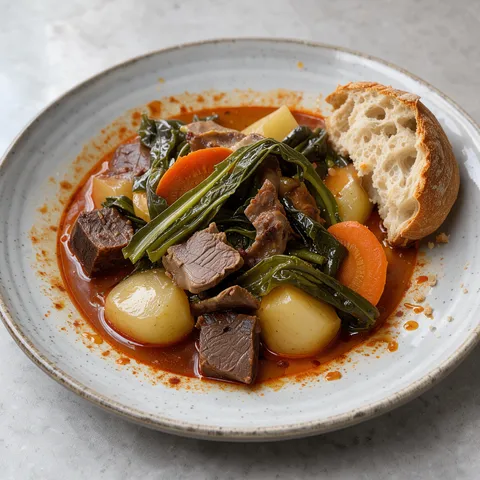 Montenegrin Kale and Lamb Stew1 hr 40 min · Main course
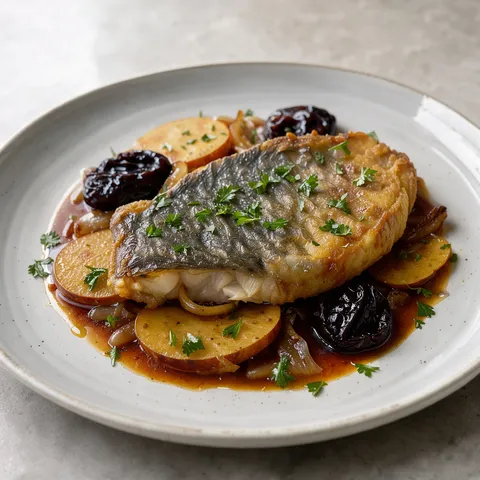 Baked Carp from Lake Skadar1 hr 40 min · Main course
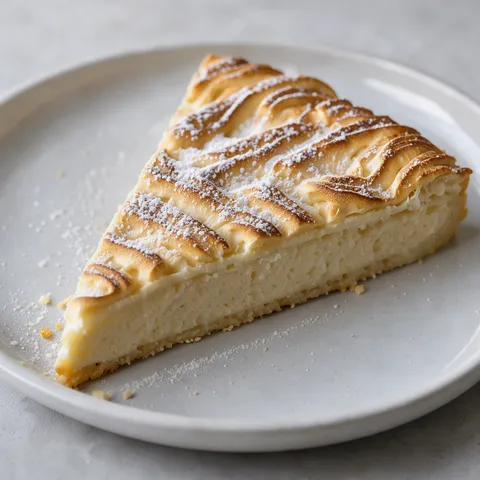 Perast Almond Meringue Lattice Tart1 hr 35 min · Dessert