Mumbai-Style Vegetable Mash Pav Bhaji
An Indian main course. Takes 2 hr 30 min (including 1 hr 30 min rising), Serves 4. Difficulty: challenging.
At a glance
- Total time
- 2 hr 30 min (including 1 hr 30 min rising)
- Serves
- Serves 4
- Difficulty
- Challenging
- Cuisine
- Indian cuisine
- Dish type
- Main course
- Allergens
- Gluten, Milk
Ingredients
Pav (12 rolls)
- 500 g plain flour
- 7 g fast-action dried yeast
- 1 tbsp sugar
- 1 tsp salt
- 150 ml lukewarm milk
- 150 ml lukewarm water
- 40 g soft butter
- 2 tbsp milk and 20 g melted butter for the tops
Pav bhaji masala
- 1 tbsp coriander seeds
- 2 tsp cumin seeds
- 1 tsp fennel seeds
- 4 dried red chillies
- 1 black cardamom pod (seeds only)
- 3 cloves
- 1 piece of cinnamon (3 cm)
- 1/2 tsp black peppercorns
- 1 tsp amchur (dried mango powder)
- 1/2 tsp black salt (kala namak, optional)
Bhaji
- 400 g potatoes (peeled and diced)
- 200 g cauliflower (small florets)
- 100 g peas
- 1 small carrot (about 80 g, diced)
- 80 g butter
- 2 onions (finely chopped)
- 1 green pepper (finely chopped)
- 4 garlic cloves and 2 cm ginger (pounded together)
- 1 green chilli (finely chopped)
- 4 ripe tomatoes (about 500 g, finely chopped)
- 2 tsp Kashmiri chilli powder
- 1/2 tsp ground turmeric
- 1 tbsp lemon juice
- salt
To serve
- 60 g butter
- 1 red onion (finely chopped)
- 1/2 bunch coriander (chopped)
- 2 lemons (cut into wedges)
Equipment
- Mixing bowls
- Frying pan
- Pestle and mortar
- Saucepan
- Colander
- Potato masher
- Precision scales
- Baking tray
- Oven
- Sauté pan
- Chef's knife
- Chopping board
- Pastry brush
- Cast-iron frying pan
- Bread knife
Method
- Knead the dough: Mix the lukewarm milk and water, add the sugar and yeast and leave for 5 min to froth. Put the flour and salt in a large bowl, add the yeasted liquid and knead for 8 min. Add the butter and keep kneading for 5 min more, until the dough is smooth, elastic and slightly sticky. A soft, moist dough gives pav its cotton-wool texture, so do not stiffen it with extra flour
- First prove: Put the dough in an oiled bowl, cover and leave in a warm place for 1 hr, until doubled in size
- Make the masala: Meanwhile, toast all the whole spices in a dry frying pan over low heat for 2-3 min, until fragrant and the coriander seeds have darkened slightly. Transfer to a plate to cool, grind to a fine powder in a mortar and stir in the amchur and black salt. Set aside 2 tbsp and store the rest in a jar. Freshly toasted masala has twice the aroma of ready-made blends
- Boil the vegetables: Boil the potatoes, cauliflower, peas and carrot in salted boiling water for 15-18 min, until completely soft. Drain in a colander, setting aside 300 ml of the cooking water, and roughly mash the vegetables with a potato masher
- Shape the rolls: Knock back the risen dough, divide it on the scales into 12 equal pieces (about 75 g) and shape into smooth balls. Arrange them in an oiled 23×33 cm tin in a 4×3 grid, leaving 1 cm between them. As the rolls rise and press against each other, their sides do not form a crust and stay soft. Cover and leave to prove a second time for 30 min, and preheat the oven to 200°C
- Build the bhaji base: During the second prove, melt 50 g butter in a wide, heavy-based sauté pan and cook the onions for 6-8 min, until soft and golden at the edges. Add the garlic-ginger paste and green chilli and stir for 1 min, then add the green pepper and cook for 3 min more
- Tomatoes and spices: Add the tomatoes, Kashmiri chilli, turmeric, 2 tbsp of the masala and 1 tsp salt. Cook over medium heat for 8-10 min, until the tomatoes have completely broken down and the butter separates, red, at the edges
- Mash and cook: Add the mashed vegetables to the pan and keep mashing them in the pan with the potato masher, adding the cooking water a little at a time. Mash and stir for 10-12 min, until you have a purée that drops slowly from the spoon but does not run. Stir in the remaining 30 g butter and the lemon juice and season to taste
- Bake the rolls: Brush the tops of the rolls with milk and bake in the 200°C oven for 15-18 min, until golden brown on top. As soon as they come out of the oven, brush with the melted butter, cover with a clean tea towel and let cool slightly: the steam softens the crust
- Toast the rolls: Pull the rolls apart and slice each one horizontally so it opens like a book, without cutting all the way through. Melt 1 tsp butter with a pinch of masala in a cast-iron pan and toast the cut sides of the rolls for 1 min, pressing down, until golden and crisp
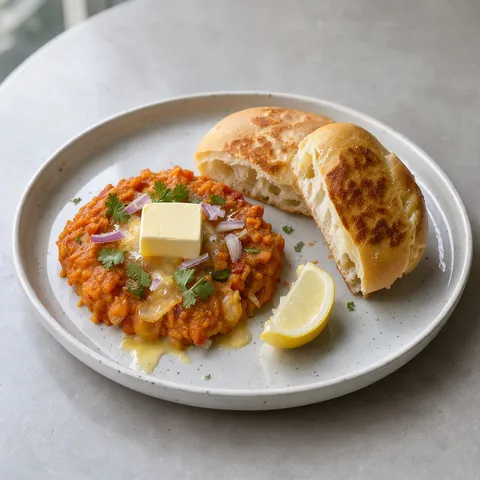
- Plate: Spread the bhaji over half of a flat plate in a thick mound and top with a knob of cold butter. Scatter with the red onion and coriander and put a lemon wedge at the side. Place two hot rolls on the other half of the plate, cut sides showing. Serve at once
Chef's note
It is said to have been born in the 1860s as a midnight meal for workers at the Bombay cotton exchange, made from the day's leftover vegetables and bread from the bakeries. The word pav comes from the Portuguese pão. Street vendors mash the vegetables with metal mashers on huge iron griddles (tawa), and at home a potato masher in a frying pan does the same job. Black salt has an eggy, sulphurous smell: if unavailable, use ordinary salt.
Frequently asked questions
- How do I get pav rolls as soft as cotton wool?
- Keep the dough soft and moist and don't stiffen it by adding flour. The rolls are baked touching each other, then brushed with melted butter as they come out of the oven and covered with a cloth.
- Why is the pav bhaji masala freshly roasted?
- Freshly roasted masala gives twice the aroma of ready-made mixes. Toast the spices in a dry pan and grind them to a powder in a mortar.
- What consistency should the bhaji be?
- It should be a mash that falls slowly from the spoon but doesn't run. Add the cooking water a little at a time and mash it in the pan.
 Indian Butter Chicken50 min · Main course
 Spinach with Homemade Paneer45 min · Main course
 Black Lentil and Kidney Bean Stew1 hr 30 min · Main course
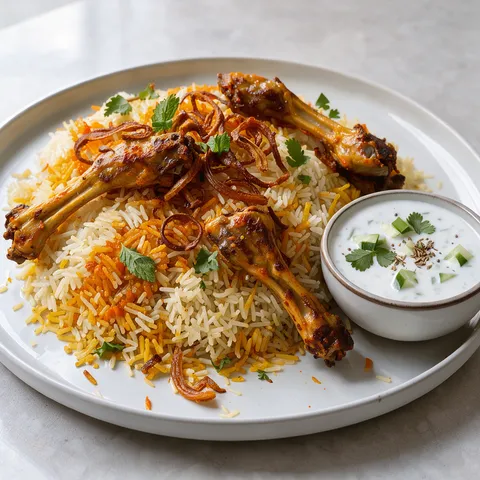 Chicken Dum Biryani1 hr 30 min · Main course
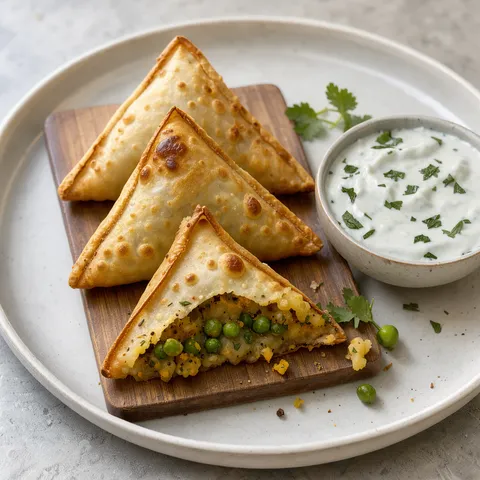 Indian Potato Pastries1 hr 30 min · Bread & pastry
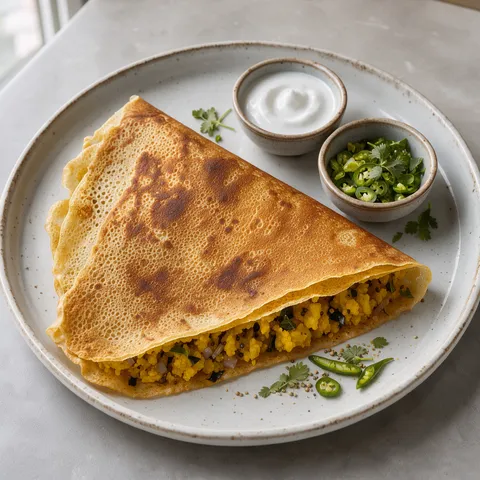 Fermented Rice Crêpes with Spiced Potato50 min · Bread & pastry