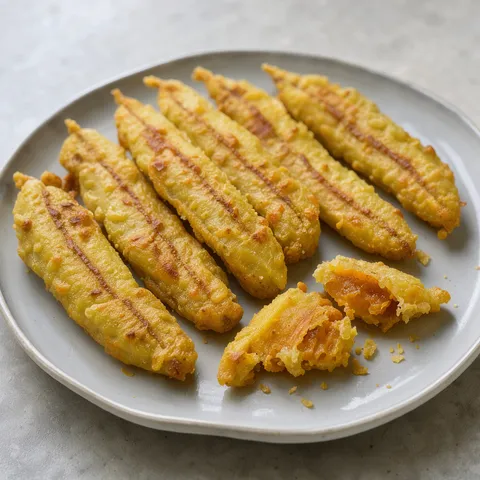
Kerala Ripe Plantain Fritters Pazham Pori
An Indian meze. Takes 45 min, 18 pieces (4 servings). Difficulty: medium.
At a glance
- Total time
- 45 min
- Serves
- 18 pieces (4 servings)
- Difficulty
- Medium
- Cuisine
- Indian cuisine
- Dish type
- Meze
- Allergens
- Gluten, Milk, Eggs, Tree nuts
Ingredients
Plantains
- 3 ripe plantains (skins yellow with black spots, about 600 g)
Batter
- 120 g plain flour
- 2 tbsp rice flour
- 3 tbsp caster sugar
- 1/4 tsp ground turmeric
- a pinch of salt
- 1/4 tsp bicarbonate of soda
- 1/4 tsp ground green cardamom
- about 170 ml water
For frying
- 750 ml sunflower oil or coconut oil
Equipment
- Mixing bowls
- Balloon whisk
- Chopping board
- Chef's knife
- Saucepan
- Colander
- Baking tray
- Probe thermometer (optional)
Method
- Make the batter: In a bowl, mix the flour, rice flour, sugar, turmeric, salt, bicarbonate of soda and cardamom. Gradually whisk in the water to make a lump-free batter with the consistency of a thick pancake batter. It should coat a spoon dipped into it in a thin but unbroken layer. Rest for 15 min so the flour absorbs the moisture and the batter clings more evenly when fried. The rice flour makes the coating crisp and the turmeric gives it its typical golden colour
- Check the plantains are ripe: A plantain should give slightly when pressed with a finger, and the skin should peel off easily. Hard, green plantains are starchy and bland, while overripe ones fall apart during frying. In Kerala the sweetness comes only from the ripe fruit, so the sugar in the batter is kept low
- Cut the plantains: On a chopping board, peel the plantains, cut each one in half crossways with a chef's knife and cut each half lengthways into 3 slices about 6-7 mm thick. That gives 18 slices in total. Slices that are too thin soak up oil, while thick ones stay hard in the middle
- Heat the oil: In a 22 cm deep saucepan, heat the oil (about 2 cm deep) over medium-high heat to 175°C on a thermometer. If you have no thermometer, a drop of batter should sizzle and rise to the surface within 2-3 sec. At too low a temperature the coating soaks up oil, while at too high a temperature it darkens outside before the inside warms through
- Coat: Dip the plantain slices into the batter one at a time and let the excess drip off against the side of the bowl. The coating should be thin and even, as a thick coating stays doughy
- Fry: Slide 3-4 slices into the oil per batch. After 2-3 min, when the underside is deep golden, turn with a slotted spoon and fry the other side for 2 min. It takes 5 batches in all, so let the oil come back to 175°C between batches
- Drain: Lift the fried slices out with a slotted spoon and stand them upright on a tray lined with kitchen paper, so the oil drains off and the underside does not steam and go soft
- Serve: Serve hot. The coating stays crisp for the first 15 min and softens as it stands, so it is best to send each batch to the table as it comes out
Chef's note
Pazham pori (ethakka appam) is one of the best-selling snacks in Kerala's tea shops. It is made with a large banana variety called nendran and eaten with afternoon tea. Plantains are available in African and Asian shops: choose ripe ones whose skins are starting to blacken. If you cannot find them, you can use firm, just-yellow bananas. They will be softer and sweeter, so reduce the frying time by 1 min on each side. Strain the frying oil and keep it.
Frequently asked questions
- How ripe should the plantains be for pazham pori?
- You need plantains with yellow skins spotted black, that give slightly when pressed with a finger. Hard, green ones stay starchy and bland, and overly soft ones fall apart when fried.
- How do you get pazham pori crisp?
- The rice flour in the batter makes the coating crisp. Keep the oil at 175°C, as at a low temperature the coating soaks up oil.
- Is pazham pori served hot or can it wait?
- Serve it hot. The coating stays crisp for the first 15 minutes and softens as it waits, so it is best to take each batch to the table as it comes out.
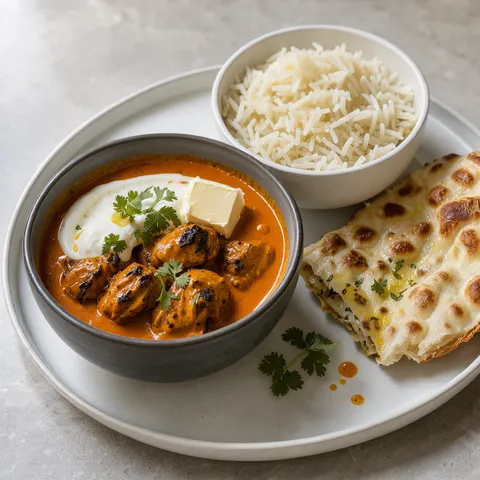 Indian Butter Chicken50 min · Main course
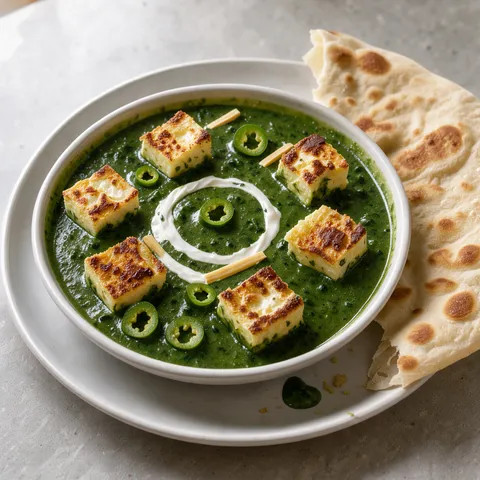 Spinach with Homemade Paneer45 min · Main course
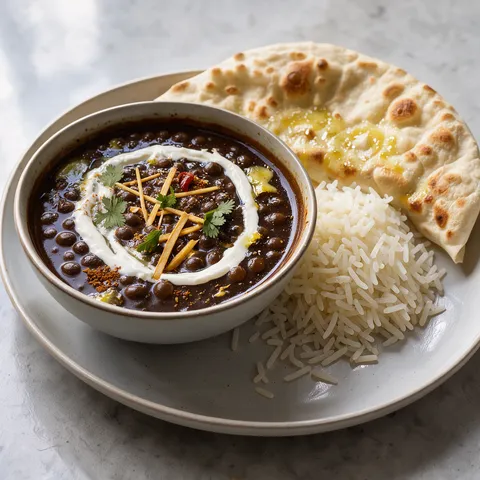 Black Lentil and Kidney Bean Stew1 hr 30 min · Main course
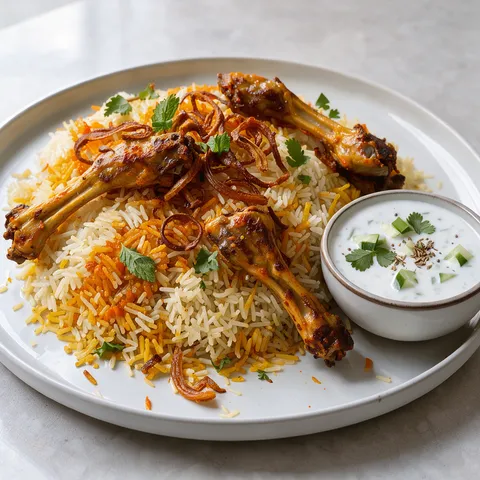 Chicken Dum Biryani1 hr 30 min · Main course
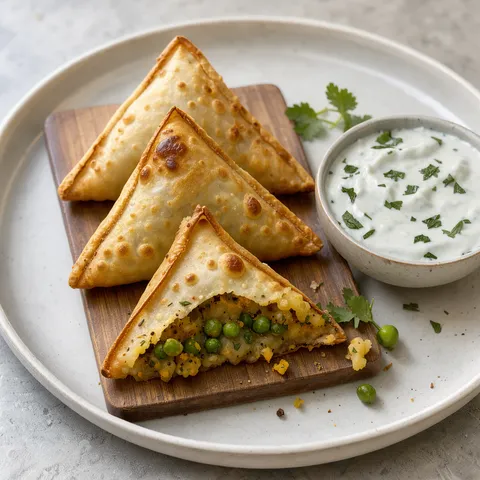 Indian Potato Pastries1 hr 30 min · Bread & pastry
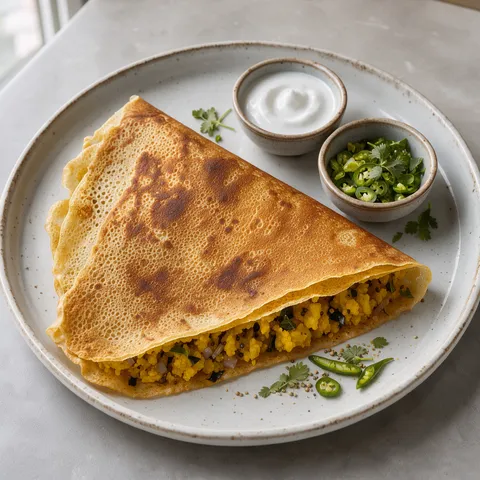 Fermented Rice Crêpes with Spiced Potato50 min · Bread & pastry