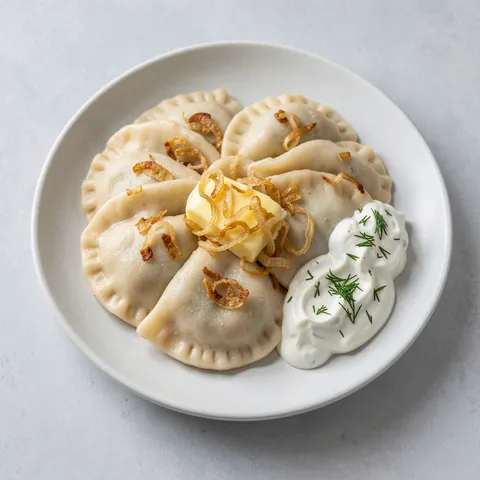
Polish Potato and Cheese Pierogi Pierogi Ruskie
A Polish bread & pastry. Takes 2 hr, Serves 4. Difficulty: medium.
At a glance
- Total time
- 2 hr
- Serves
- Serves 4
- Difficulty
- Medium
- Cuisine
- Polish cuisine
- Dish type
- Bread & pastry
- Allergens
- Gluten, Milk, Eggs
Ingredients
Dough
- 350 g plain flour
- 3/4 tsp salt
- 175 ml lukewarm water (about 50°C)
- 30 g melted butter or 2 tbsp sunflower oil
- 1 egg
Filling
- 450 g floury potatoes
- 200 g full-fat twaróg (Polish curd cheese) or Homemade Ricotta and Fresh Curd Cheese (Basics)
- 1 large onion
- 30 g butter
- 1 tsp salt
- 1 tsp black pepper
Topping
- 2 medium onions
- 50 g butter
To serve
- 200 g śmietana (soured cream, 18% fat) or Crème Fraîche (Basics)
- 1 tbsp chopped dill
Equipment
- Saucepan
- Potato masher
- Frying pan
- Mixing bowls
- Rolling pin / oklava
- Colander
- Chef's knife
- Chopping board
- Potato ricer (optional)
Method
- Boil the potatoes: Peel the potatoes, cut into large chunks and bring to the boil in cold salted water. Boil for 18-20 min, until a knife slides in without resistance. Drain, return to the pan and leave over low heat for 1 min to steam off. Dry potatoes won't make the filling watery
- Caramelise the onion: For the filling, chop the onion very finely and sauté in the 30 g butter over medium-low heat for 12-15 min, until golden brown and sweet. As the onion's sugars caramelise, they give the filling depth
- Make the filling: Pass the potatoes through a ricer or mash them while hot. Crumble in the twaróg, then mix in the onion, salt and plenty of black pepper. Taste: the filling should be slightly overseasoned, as the dough around it is unsalted. Leave to cool completely: hot filling softens and tears the dough
- Knead the dough: Put the flour and salt in a bowl and make a well in the centre. Add the lukewarm water, melted butter and egg and bring together first with a fork, then by hand. Knead on the worktop for 6-8 min, until smooth, soft and pliable, like an earlobe. Lukewarm water keeps the gluten relaxed, so the dough rolls out easily. Cover with an upturned bowl and rest for 20 min
- Roll out and cut: Divide the dough into four pieces. Roll out each piece on a floured worktop to 2 mm thick, keeping the other pieces covered so that they don't dry out. Cut out rounds with a 7-8 cm glass or cutter. You should get about 40 rounds, 10 pierogi per person
- Fill and seal: Put a dessertspoon (about 15 g) of filling in the centre of each round. Fold the round in half and press the edges firmly together with your fingers, pushing out the air. Air trapped inside makes pierogi burst as they boil. If you like, crimp the edge with small pleats. Lay the finished pierogi on a floured tray without touching
- Boil: Bring a large pan of salted water to the boil. Add the pierogi in batches of 10-12 and stir gently once so that they don't stick to the bottom. Once they float to the surface, boil for another 2-3 min: the edges of the dough should be soft. Lift out with a slotted spoon onto a buttered plate, spacing them so that they don't stick together
- Make the topping: For the topping, slice the onions into thin half-moons and fry in the 50 g butter over medium heat for 10 min, until golden
- Plate: Fan out 8-10 pierogi on a warm plate, slightly overlapping. Spoon the fried onions and their butter over the top. Add a spoonful of śmietana alongside and scatter with dill
Chef's note
The name ruskie comes not from Russia but from the historical region of Red Ruthenia, which also took in today's western Ukraine. In Poland pierogi appear at every table, from Christmas Eve to weddings. Frying leftover boiled pierogi in butter the next day until golden on both sides is another favourite way to eat them.
Frequently asked questions
- Why do pierogi burst while boiling?
- The most common cause is trapped air. Fold the circle over and press the edges firmly with your fingers to push the air out, as a badly sealed edge will also open up.
- Can I use a warm filling for pierogi?
- No, the filling must be completely cold. A warm filling softens the dough and tears it. It should also be slightly over-seasoned, as it will taste milder once wrapped in dough.
- What are pierogi ruskie served with?
- Top with onions fried golden in butter, add a spoonful of soured cream and scatter over dill. Arrange the pierogi slightly overlapping on a warm plate.
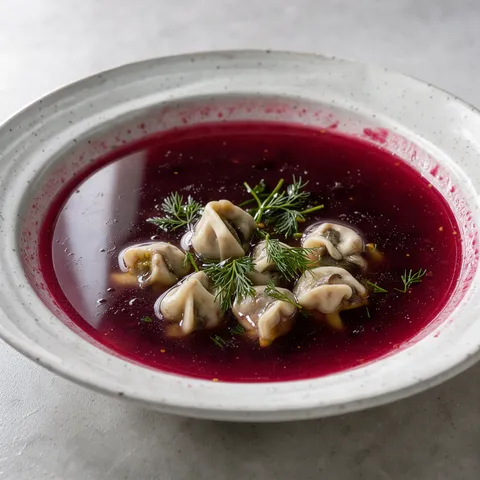 Barszcz Czerwony with Uszka1 hr 40 min · Soup
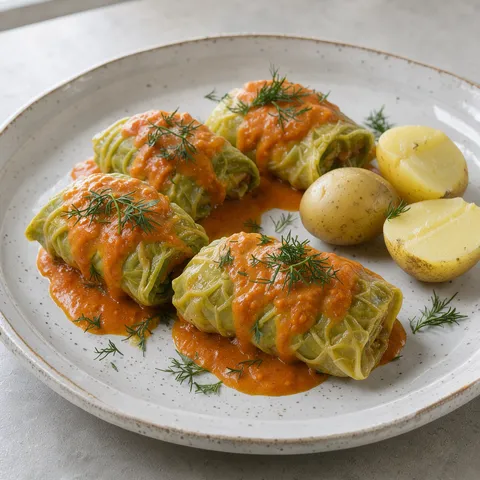 Polish Stuffed Cabbage Rolls2 hr · Main course
 Polish Potato Pancakes55 min · Starter
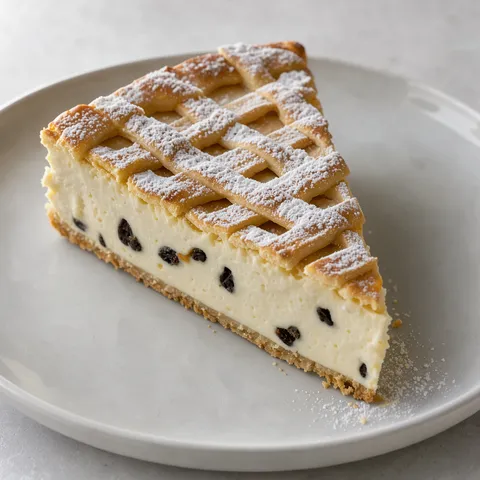 Kraków-Style Cheesecake2 hr 45 min · Patisserie
 Barszcz 2.01 hr 20 min · Soup
 Polish Barley, Vegetable and Beef Soup2 hr 15 min · Soup