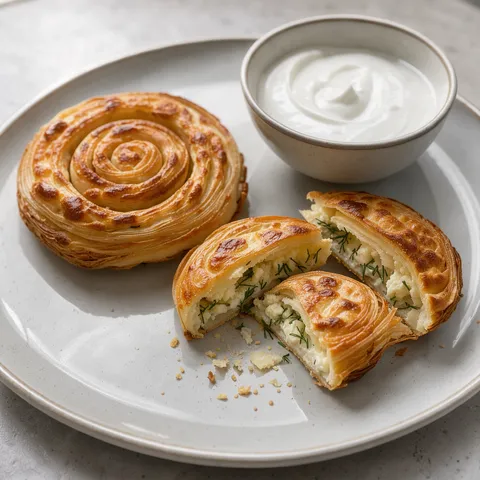
Moldovan Rolled Cheese Pastry Plăcintă cu Brânză
A Moldovan bread & pastry. Takes 1 hr 40 min, Makes 8. Difficulty: medium.
At a glance
- Total time
- 1 hr 40 min
- Serves
- Makes 8
- Difficulty
- Medium
- Cuisine
- Moldovan cuisine
- Dish type
- Bread & pastry
- Allergens
- Gluten, Milk, Eggs
Ingredients
Dough
- 500 g plain flour
- 270 ml lukewarm water
- 3 tbsp sunflower oil (for the dough)
- 1 tsp cider vinegar
- 1 tsp salt
Rolling
- 120 ml sunflower oil (for brushing the dough balls and the work surface)
Filling
- 400 g low-salt white cheese (sheep's milk preferred)
- 200 g curd cheese
- 2 eggs
- 1/2 bunch dill (finely chopped)
Topping
- 1 egg yolk
- 1 tbsp milk (makes 8)
Equipment
- Mixing bowls
- Cling film
- Baking tray
- Baking paper
- Pastry brush
- Oven
- Chef's knife
Method
- Knead the dough: Put the flour and salt in a bowl and make a well in the middle. Add the lukewarm water, 3 tbsp oil and the vinegar and knead first with a spoon and then by hand for 8-10 min, until soft and smooth. The vinegar relaxes the gluten, so the dough does not tear when stretched thin
- Divide and rest: Divide the dough into 8 equal balls (about 100 g each). Rub each ball with a spoonful of the rolling oil, arrange on a tray and cover with cling film. Rest for 30 min
- Make the filling: During the rest, crumble the white cheese with a fork and mix with the curd cheese, eggs and dill until smooth. If the cheese is salty, add no salt. Divide the mixture into 8 equal portions (about 90 g each)
- Stretch the dough: Oil the work surface with the rolling oil. Flatten one ball by hand, then stretch it gently from the edges and with the backs of your hands from underneath to a sheet of about 40×30 cm, thin enough to see through. Trim off the thick edges
- Fill and roll: Sprinkle a few drops of oil over the sheet. Lay one portion of the cheese mixture as a thin strip along the long edge. Starting from the filling, roll the sheet into a loose roll. Coil the roll around itself like a snail into a disc about 13 cm in diameter and tuck the end underneath
- Arrange: Preheat the oven to 190°C fan. Arrange the discs on two baking trays lined with baking paper, 4 on each. Press lightly with your palm to 2 cm thick. Repeat with the remaining seven balls. Shaping them all takes about 25 min
- Egg wash: Whisk the egg yolk with the milk and brush a thin layer over the plăcinte. The yolk gives the colour its shine and the crust its crispness
- Bake: Put the two trays on the bottom and top shelves of the fan oven and bake for 22-25 min, swapping their positions at 12 min, until the tops are golden brown. When you look at the base, the dough should be browned and the filling puffed
- Rest and plate: Take out of the oven and rest for 5 min so the filling settles. Put one or two plăcinte on each plate and serve warm with a bowl of yoghurt or soured cream
Chef's note
Plăcintă is the best-known pastry of Moldovan cooking, made by wrapping thin-stretched dough into a snail or an envelope. Fillings include cheese, potato, cabbage, pumpkin or sour cherry, and cheese is the most common. In some households it is cooked in a pan in a little oil, on both sides. A mixture of low-salt white cheese and curd cheese gives the same texture as the salted sheep's cheese (brânză) used in Moldova.
Frequently asked questions
- Why is vinegar added to the Plăcintă dough?
- Vinegar relaxes the gluten. The dough then does not tear as it is stretched thin.
- How thin should the Plăcintă dough be rolled?
- Flatten the dough balls by hand, then pull them gently from the edges and stretch over the back of your hand to about 40x30 cm. The sheet should be thin enough to see through.
- Is salt added to the cheese filling?
- If the cheese is salty, no salt is added. The filling is mixed from white cheese, curd cheese, eggs and dill.
 Moldovan Sour Chicken Noodle Soup1 hr 45 min · Soup
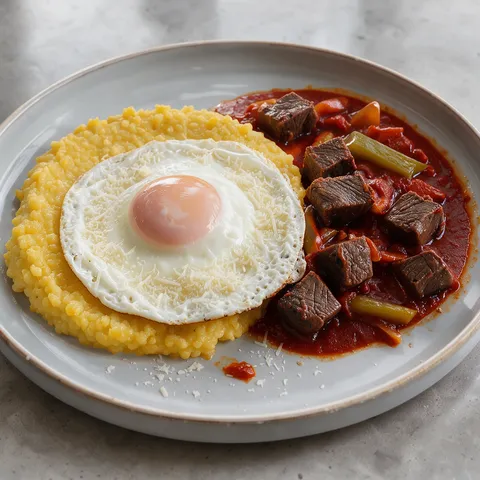 Moldovan Beef Stew with Polenta1 hr 45 min · Main course
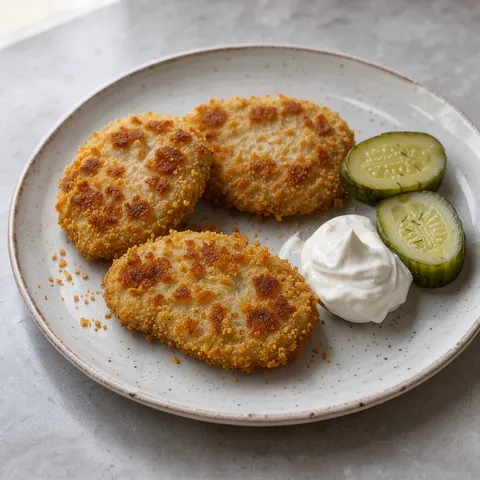 Moldovan Breaded Meat Patties1 hr 10 min · Main course
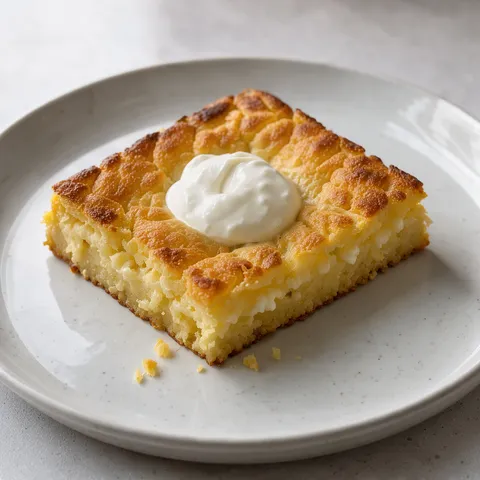 Moldovan Curd Cheese Cornmeal Bake1 hr 40 min · Dessert
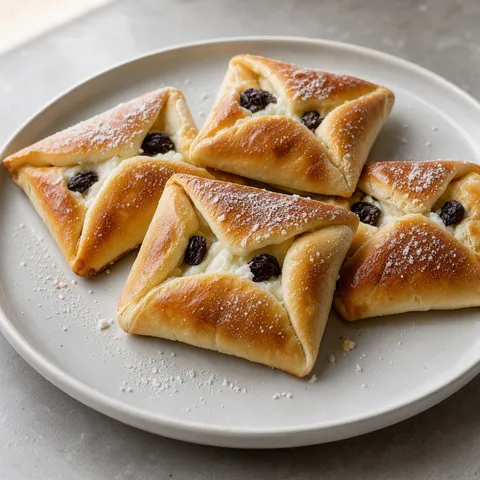 Moldovan Cheese-Filled Envelope Buns1 hr 25 min · Bread & pastry
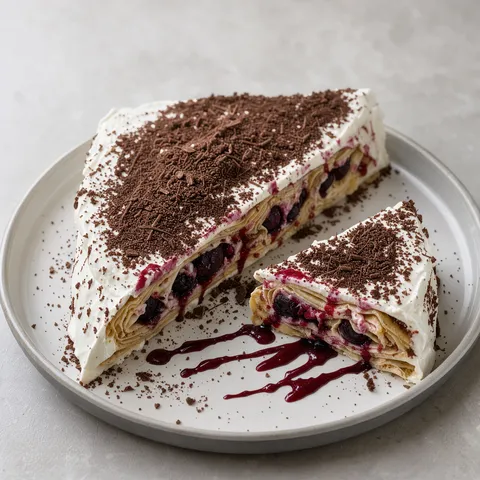 Moldovan Cherry Crêpe Pyramid Cake1 hr 45 min · Dessert