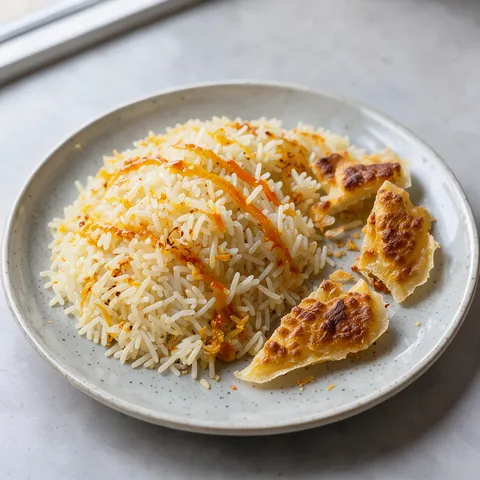
Persian Saffron Rice with Tahdig Polo ba Tahdig
An Iranian side dish. Takes 1 hr 12 min · +30 min soaking, Serves 4. Difficulty: medium.
At a glance
- Total time
- 1 hr 12 min · +30 min soaking
- Serves
- Serves 4
- Difficulty
- Medium
- Cuisine
- Iranian cuisine
- Dish type
- Side dish
- Diet
- Vegetarian, Gluten-free
- Allergens
- Milk, Eggs
Ingredients
Rice
- 400 g basmati rice
- 2 tbsp salt (for boiling)
- 3 litres water
Tahdig base
- 120 g yoghurt
- 1 egg yolk
- 1/2 tsp saffron (ground, steeped in 3 tbsp hot water)
- 1 tbsp olive oil
- 1/2 tsp salt
Fat
- 80 g butter (melted, divided in two)
- 2 tbsp water
To serve
- 1 tbsp saffron water (to drizzle over)
- optional barberries
Equipment
- Heavy-based saucepan
- Muslin
- Colander
- Pestle and mortar
- Mixing bowls
- Ladle
- Silicone spatula
Method
- Wash the rice: Wash the rice in a bowl 4-5 times, swirling gently by hand until the water runs clear. Once the starch is gone, the grains stay separate after boiling. Be gentle so as not to break the basmati grains
- Soak the rice: Soak the washed rice in plenty of water with 2 tbsp salt for 30 min. Soaked grains lengthen when boiled and do not break. Left any longer, the grains turn brittle
- Steep the saffron: Grind the saffron in a mortar with 3 tbsp hot water and set aside. In Iran the saffron infusion gives the pilaf both its colour and its aroma, which is why hot water is used rather than boiling water
- Boil: Bring the 3 litres of water to the boil with the salt, drain the soaked rice and tip it into the water. Boil for 5-6 min, until a bitten grain is slightly firm in the centre and soft outside (al dente). Drain in a colander and pour a ladleful of lukewarm water over it to stop the cooking
- Build the tahdig base: Put 40 g melted butter and 2 tbsp water in a heavy-based pan. In a bowl mix 150 g of the boiled rice with the yoghurt, egg yolk, 2 tbsp saffron water, olive oil and salt. Spread the mixture evenly over the bottom of the pan, 1.5 cm thick. This layer forms the crisp base and turns golden
- Layer the rice: Spoon the remaining rice on top in a pyramid, without pressing it against the pan. Make 5-6 holes down to the bottom with the handle of a spoon to open steam channels. Drizzle over the remaining 40 g butter and the saffron water
- Steam: Wrap the lid of the pan in a clean tea towel and close it tightly. Leave on high heat for 5 min, and when you hear sizzling from the base, turn the heat to the lowest and cook for 40 min. The towel absorbs the steam and keeps the rice free of lumps and dry. Do not lift the lid
- Release the tahdig: Remove the pan from the heat and stand it on a cold wet cloth for 2 min, so that the tahdig comes away easily from the pan. Spoon the rice onto a dish first, then lift out the tahdig with a spatula and place it beside the rice in broken golden pieces
Chef's note
Tahdig is the most prized part of the Iranian table, and the thinner and more even the crisp golden layer, the more it is admired. The base can also be made with just rice and fat instead of yoghurt and egg yolk. A non-stick or heavy-based pan is the key to success. It is served with lamb or chicken stews.
Frequently asked questions
- How do I release the tahdig from the pot easily?
- After cooking, stand the pot on a cold wet cloth for 2 minutes. The steam loosens the base. Serve the rice first, then lift out the tahdig with a spatula.
- Why is the pot lid wrapped in a tea towel?
- The cloth absorbs steam and keeps the rice dry and fluffy. Do not lift the lid during cooking.
- Why soak the basmati first?
- Soaked grains stretch lengthways when boiled and do not break. Soaking for more than 30 minutes, however, makes the grains brittle.
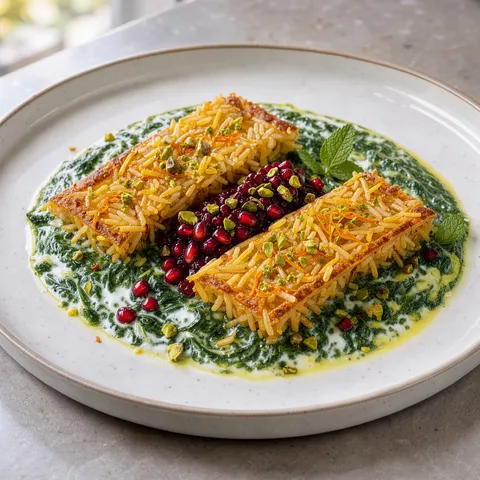 Polo ba Tahdig 2.01 hr 15 min · Main course
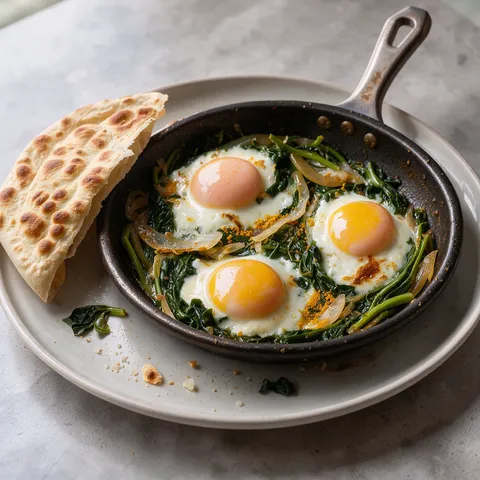 Iranian Spinach and Egg Skillet27 min · Main course
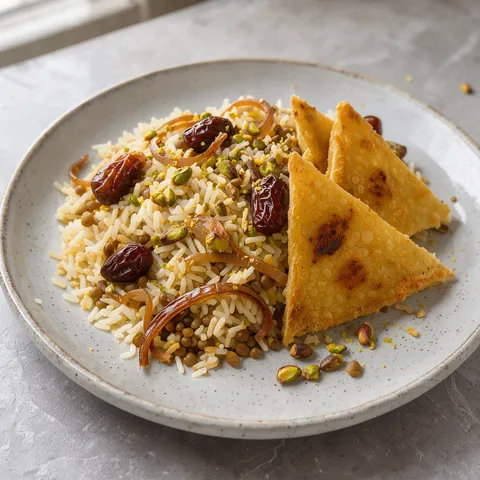 Iranian Lentil and Date Rice1 hr 43 min · Main course
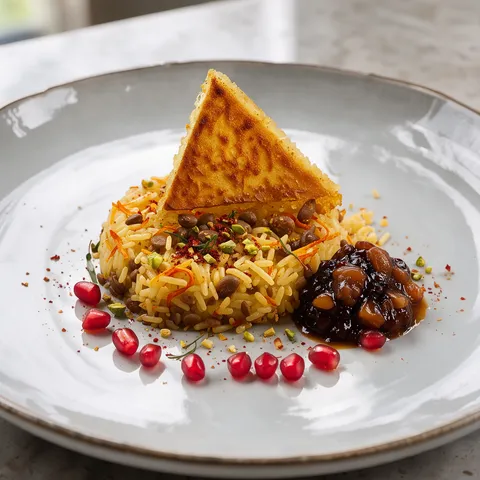 Adas Polo 2.01 hr 17 min · Main course
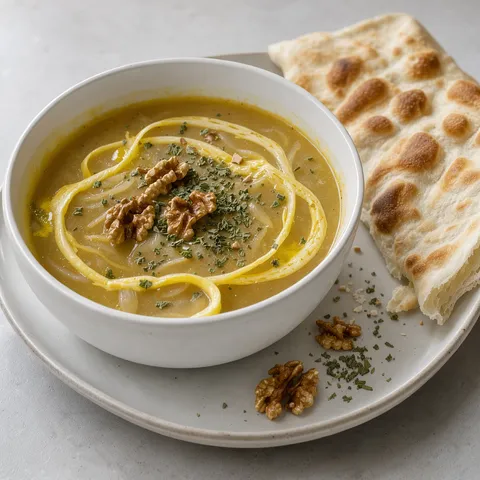 Iranian Onion and Fenugreek Soup27 min · Soup
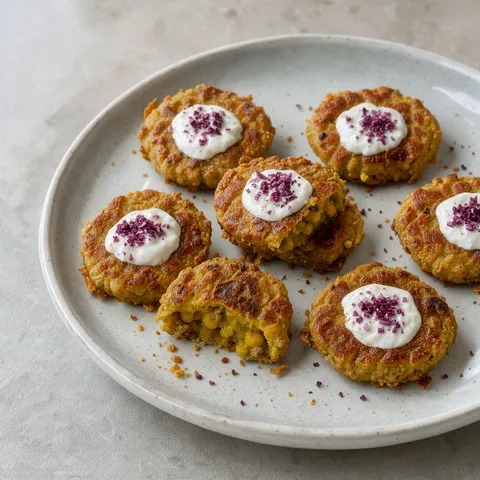 Gilan Chickpea and Beef Patties1 hr 32 min · Meze
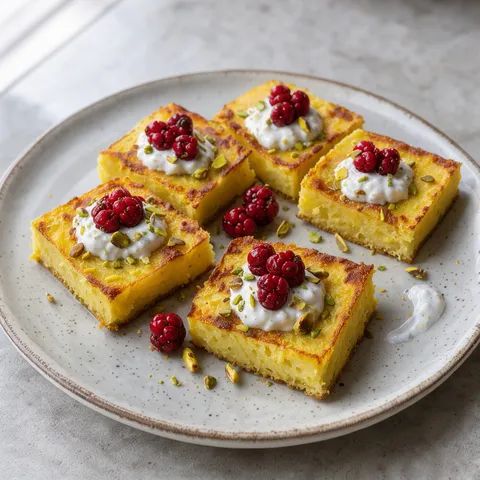 Iranian Potato Squares 5×5 cm1 hr 21 min · Meze