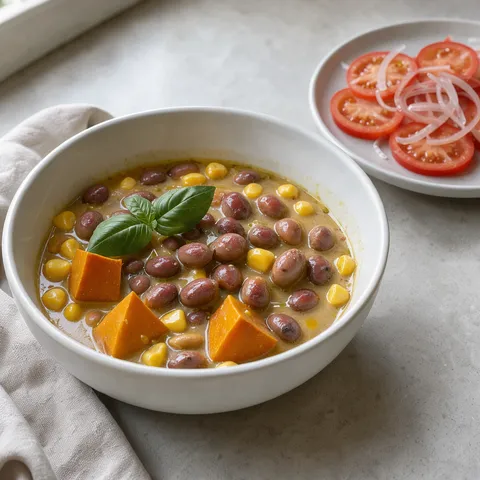
Chilean Summer Bean Stew Porotos Granados
A Chilean main course. Takes 1 hr 25 min, Serves 4. Difficulty: medium.
At a glance
- Total time
- 1 hr 25 min
- Serves
- Serves 4
- Difficulty
- Medium
- Cuisine
- Chilean cuisine
- Dish type
- Main course
- Diet
- Gluten-free
- Allergens
- Fish
Ingredients
Beans
- 500 g shelled fresh borlotti beans (about 1.2 kg in the pod)
Stew
- 3 tbsp sunflower oil
- 1 onion (finely chopped)
- 2 garlic cloves (finely chopped)
- 1 tsp sweet paprika
- 1/2 tsp dried oregano
- 1.2 litres hot water
- 400 g pumpkin (2 cm cubes)
- 3 fresh corn cobs (about 450 g kernels)
- 15-20 basil leaves (albahaca)
- 1.5 tsp salt
- 1/2 tsp black pepper
Ensalada chilena
- 2 ripe tomatoes
- 1/2 onion
- 1 tbsp sunflower oil
- 1 tbsp chopped coriander
- salt
Equipment
- Heavy-based saucepan
- Box grater
- Wooden spoon / spatula
- Chef's knife
- Chopping board
- Mixing bowls
- Food processor (optional)
Method
- Shell the beans: Pod the borlotti beans and rinse. Fresh borlotti need no soaking, which is exactly why this summer dish cooks quickly
- Make the colour: Heat the oil in a heavy-based pan over medium heat, cook the onion for 8 min until soft and golden, add the garlic and stir for 1 min. Turn the heat down, add the paprika and oregano and stir for 20 sec. In Chile this red oil, called color, gives the dish both its colour and its sweetness, and if the paprika burns it turns bitter
- Cook the beans and pumpkin: Add the beans, hot water and half of the pumpkin. Once it boils, skim, then cook on low heat with the lid ajar for 30-35 min, until the beans are tender and starting to break down without their skins splitting. Add the salt after the beans are tender, as early salt toughens the skins. This first pumpkin breaks down and thickens the liquid
- Separate the corn: While the beans cook, grate the corn off the cobs on the coarse side of the grater, or cut the kernels off with a knife, and blitz half in a food processor for 20 sec to a coarse purée. In Chile this purée is called mazamorra, and it makes the stew creamy. Leave the other half as whole kernels
- Add the remaining pumpkin and corn: When the beans are tender, add the remaining pumpkin cubes, the corn purée and the whole kernels, and stir in the salt and pepper. Cook on low heat for 12-15 min, scraping the bottom constantly with a wooden spoon. Corn starch catches on the bottom very quickly. The consistency should be between a thick soup and a stew, and if it thickens too much add hot water
- Add the basil: Take off the heat, tear in the basil leaves by hand, cover and leave to steam for 5 min. Basil is not cooked, it releases its aroma in the heat
- Make the salad: While the stew steams, slice the onion into very fine half-moons (pluma) and rinse in cold water twice to take away the sharpness. Peel the tomatoes and slice thinly, mix with the onion and season with the oil, coriander and salt
- Plate: Put generous amounts of the stew with plenty of pumpkin and corn in deep bowls and place a basil leaf on top. Serve hot with ensalada chilena, and with chilli flakes or merkén for anyone who wants them
Chef's note
Porotos granados is a country dish of Chile's Central Valley, cooked in late summer when the harvest of fresh beans, corn and pumpkin comes at the same time. The fresh beans that Chileans call porotos granados are very close to fresh borlotti beans. The version with corn purée is called con mazamorra, and the one made with fine noodles con pilco or con riendas. It can also be made out of season with frozen borlotti beans and corn.
Frequently asked questions
- Do the borlotti beans for porotos granados need soaking?
- No, fresh borlotti beans are not soaked. That is why the dish cooks quickly.
- Why is the salt added after the beans have softened?
- Salt added early toughens the skins of the beans. In this recipe the salt goes in with the pumpkin and corn once the beans are tender.
- What should I do to stop the stew catching on the bottom?
- Corn starch catches very quickly, so once the corn is in, keep scraping the bottom with a wooden spoon as it cooks. If it gets too thick, add some hot water.
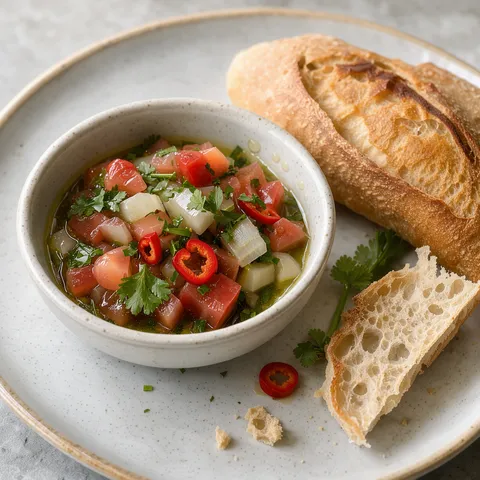 Chilean Tomato and Coriander Salsa20 min · Meze
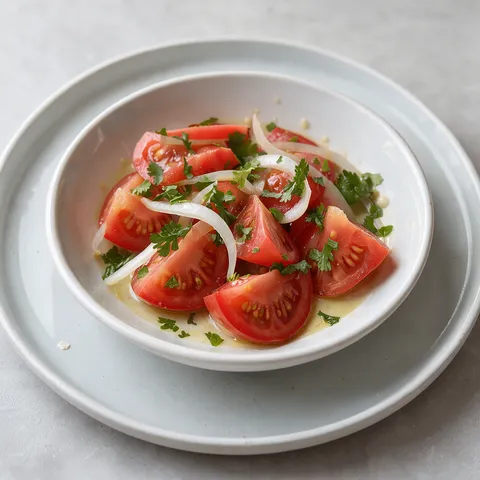 Chilean Tomato and Onion Salad20 min · Salad
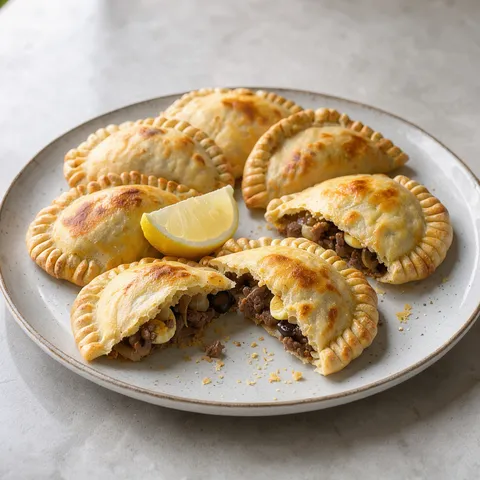 Chilean Beef and Onion Empanadas1 hr 30 min · Meze
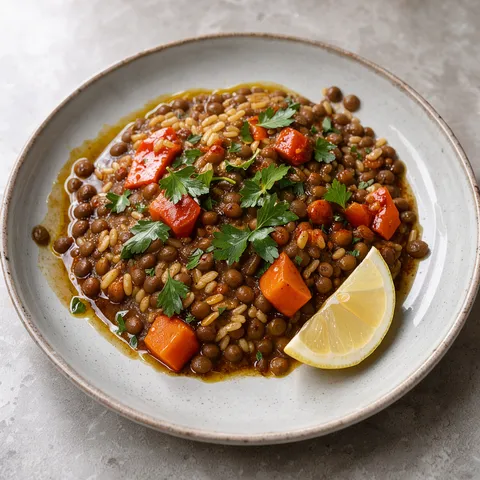 Chilean Lentil and Rice Stew49 min · Main course
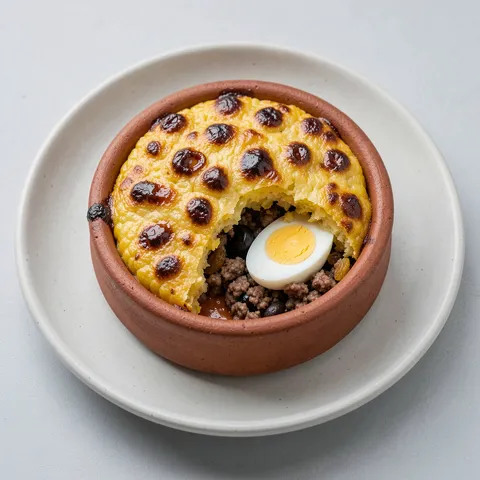 Chilean Beef and Sweetcorn Pie1 hr 40 min · Main course
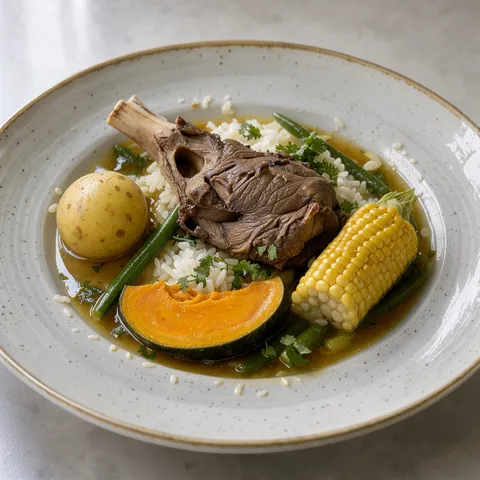 Chilean Beef and Vegetable Soup2 hr · Soup