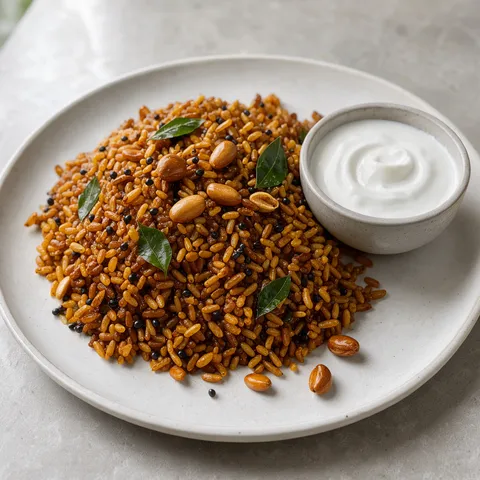
Puliyogare South Indian Tamarind Rice
An Indian main course. Takes 50 min, Serves 4. Difficulty: medium.
At a glance
- Total time
- 50 min
- Serves
- Serves 4
- Difficulty
- Medium
- Cuisine
- Indian cuisine
- Dish type
- Main course
- Diet
- Gluten-free
- Allergens
- Peanuts, Sesame, Soya, Mustard, Sulphites
Ingredients
Rice
- 300 g basmati rice
- 450 ml water
- 1 tsp salt
Tamarind paste
- 40 g tamarind block or 2 tbsp tamarind paste
- 150 ml hot water
- 1 tbsp honey or jaggery
Spice powder
- 1 tbsp chana dal (yellow split peas)
- 1 tbsp urad dal (white lentils)
- 2 dried red chillies
- 1 tsp coriander seeds
- 1/2 tsp mustard seeds
- 1/2 tsp fenugreek seeds
- 1/4 tsp asafoetida
Tempering
- 3 tbsp sesame oil or sunflower oil
- 1 tsp mustard seeds
- 2 tbsp raw peanuts
- 8 curry leaves
- 1/2 tsp turmeric
- 1 tsp salt
Equipment
- Frying pan
- Saucepan
- Mixing bowls
- Pestle and mortar (optional)
Method
- Cook the rice: Wash the basmati 3 times and soak in water for 15 min. Drain, then cook with 450 ml water and the salt, covered, over low heat for 12 min. Take off the heat, rest for 5 min and fluff with a fork. The grains should be separate, as this dish does not work with sticky rice
- Extract the tamarind: Meanwhile soak the tamarind in the hot water for 10 min, crush with your fingers to release the pulp and strain. Discard the seeds and fibres. Add the honey to balance the sourness
- Toast the spice powder: In a dry pan over medium heat, toast the chana dal, urad dal, dried chillies, coriander, mustard and fenugreek seeds for 3 min, stirring constantly, until the dal turns golden and the spices smell fragrant. Cool and grind to a fine powder in a mortar or coffee grinder
- Make the tempering: Heat the sesame oil in a wide pan, add the mustard seeds and wait for 20 sec, until they crackle. Add the peanuts and fry for 2 min, until golden, then add the curry leaves, turmeric and asafoetida and stir for 30 sec
- Cook the sauce: Add the tamarind liquid and spice powder to the pan, add the salt and cook over low heat for 6 min, until the oil rises to the surface and the sauce turns into a dark paste. The sauce should taste intensely sour and spicy, remembering that it will be diluted when mixed with the rice
- Mix with the rice: Put the rice in a large bowl, pour the paste over and mix carefully with a fork for 3 min, without breaking the grains. All the rice should be a dark brown-orange colour
- Rest: Cover and rest for 10 min, so the flavours go into the grains. Serve at room temperature or hot, with yoghurt and papad
Chef's note
In South India puliyogare is a temple dish of tamarind rice, and the sour taste of the dish and the crunch of the peanuts are its character. Tamarind paste is sold ready-made in shops, but home-extracted gives a livelier flavour. Curry leaves and asafoetida are found in Indian grocers, and if curry leaves cannot be found they can be left out, though the taste changes a little. Left overnight, the flavour deepens.
Frequently asked questions
- Which rice suits puliyogare?
- Use basmati. The grains should stay separate, and sticky rice won't do for this dish.
- How do I balance the sourness of the tamarind?
- Soak the tamarind in hot water, crush it and strain it, discarding the seeds. Adding honey balances the sourness.
- Why should the puliyogare paste be thick?
- The paste loosens once mixed with the rice. So cook it until it becomes a thick paste, and it should taste sour and spicy.
 Indian Butter Chicken50 min · Main course
 Spinach with Homemade Paneer45 min · Main course
 Black Lentil and Kidney Bean Stew1 hr 30 min · Main course
 Chicken Dum Biryani1 hr 30 min · Main course
 Indian Potato Pastries1 hr 30 min · Bread & pastry
 Fermented Rice Crêpes with Spiced Potato50 min · Bread & pastry