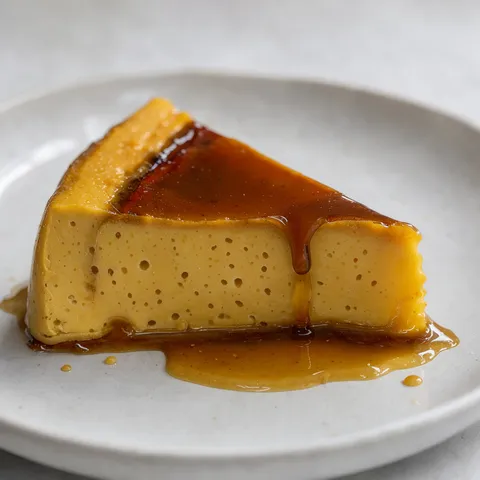
Venezuelan Caramel Egg Pudding Quesillo
A Venezuelan dessert. Takes 1 hr 50 min · +3 hr chilling, 20 cm tin, 8 slices. Difficulty: medium.
At a glance
- Total time
- 1 hr 50 min · +3 hr chilling
- Serves
- 20 cm tin, 8 slices
- Difficulty
- Medium
- Cuisine
- Venezuelan cuisine
- Dish type
- Dessert
- Diet
- Gluten-free
- Allergens
- Milk, Eggs
Ingredients
Homemade thickened milk
- 900 ml whole milk
- 200 g caster sugar
- a pinch of bicarbonate of soda
Caramel
- 150 g caster sugar
- 3 tbsp water
Custard
- 5 eggs (at room temperature)
- 250 ml whole milk
- 1 tsp vanilla extract
- 1 tbsp dark rum (optional)
Water bath
- 1.5 litres boiling water
Equipment
- Heavy-based saucepan
- Saucepan
- Cake tin
- Oven
- Baking tray
- Blender
- Baking paper
Method
- Thicken the milk: Heat the milk, sugar and bicarbonate of soda in a wide, heavy-based saucepan over medium heat, stirring until the sugar dissolves. Once it boils, lower the heat and simmer for 45 min, stirring occasionally, until the milk has reduced by about half, turned light beige and become thick enough to coat the back of a spoon. You should end up with about 420 ml. Take off the heat and leave to cool slightly
- Make the caramel: Meanwhile, heat the sugar and water in a small saucepan over medium heat without stirring, swirling the pan if needed. Cook for 6-8 min, until the sugar melts and turns a deep amber. Under-cooked caramel is tasteless and burnt caramel is bitter
- Coat the tin with caramel: Immediately pour the caramel into a 20 cm round cake tin and, holding the tin with oven gloves, tilt and turn it to coat the base and sides 2-3 cm up. The caramel sets in seconds, so work quickly and set the tin aside
- Preheat the oven: Preheat the oven to 170°C, boil the water and get out a deep roasting tin that the cake tin fits into. The quesillo bakes moist, though not perfectly smooth, thanks to the water bath
- Blend the mixture: Put the cooled thickened milk, eggs, fresh milk, vanilla and rum into a blender and blend for 30 sec. Unlike flan, the mixture is not strained and not skimmed. The small holes in the quesillo that resemble the pores of cheese, and its name, come from this air
- Fill the tin: Pour the mixture into the caramel-lined tin. Cover the tin with baking paper, pressing the paper against the rim so that steam does not drip onto the surface
- Bake in a water bath: Put the tin in the deep roasting tin, pour boiling water into the roasting tin to come halfway up the cake tin and bake for 50-55 min. The edges should be set with a slight wobble in the centre, and a thin knife inserted in the centre should come out clean. Overbaked quesillo turns watery and develops large holes at the edges
- Chill: Lift the tin out of the water, let it cool slightly at room temperature for 30 min, then chill in the fridge for at least 3 hr. Cold quesillo turns out cleanly, and the caramel liquefies into a sauce in this time
- Unmould: Run a thin knife around the edge of the tin, place a rimmed serving plate over the top and invert in one movement. Leave the tin in place for a few seconds, so the liquid caramel runs over the quesillo onto the plate
- Serve: Cut into 8 slices and place on each plate with plenty of caramel sauce. The cross-section should show a moist, pale yellow texture with small pores, topped with dark amber caramel. Serve cold
Chef's note
In Venezuela, quesillo is traditionally made with sweetened condensed milk (leche condensada). Here the milk is thickened at home with milk and sugar instead. Its name comes not from any cheese in it but from the cross-section, whose pores resemble fresh cheese. It keeps for 3 days in a covered container in the fridge.
Frequently asked questions
- Why isn't the quesillo mixture strained?
- Unlike flan, the mixture isn't strained and the foam isn't skimmed. The small holes that look like cheese pores, and the name of the dish, come from this air.
- What should the caramel look like?
- Cook the sugar without stirring until it is a deep amber. Caramel that stays pale is flavourless and caramel that goes dark is bitter.
- How do I unmould quesillo?
- Cool it at room temperature for 30 minutes first, then chill in the fridge for at least 3 hours. Cold quesillo comes out of the mould cleanly. Run a thin knife around the edge and turn it out in one movement.
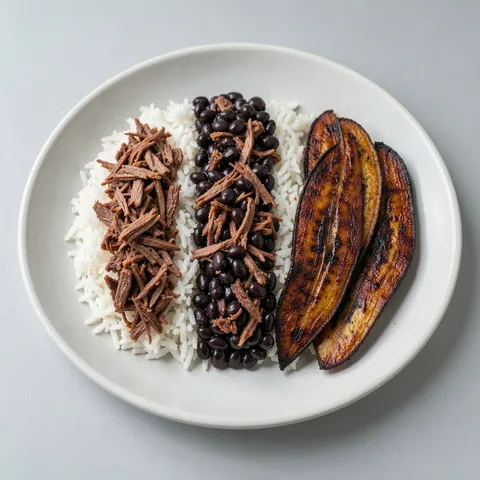 Shredded Beef, Beans and Rice2 hr 30 min · Main course
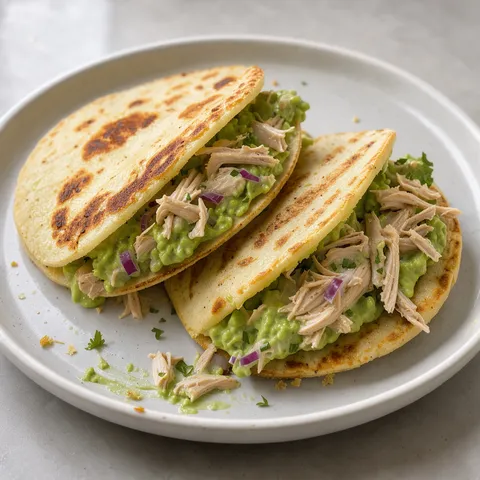 Chicken and Avocado Arepa1 hr 20 min · Bread & pastry
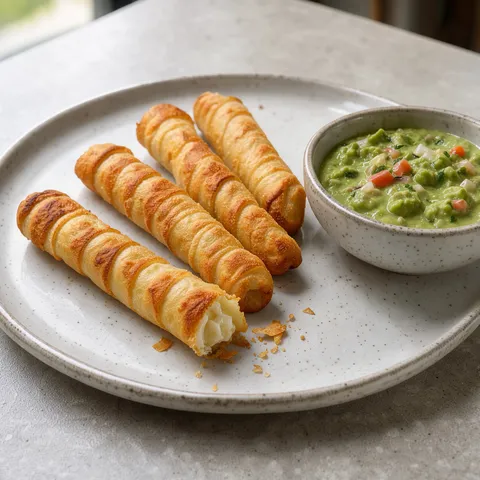 Tequeños with Guasacaca1 hr 45 min · Meze
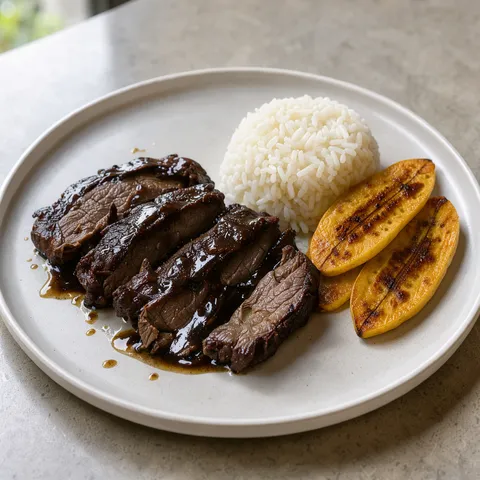 Beef in Dark Caramel Sauce2 hr · Main course
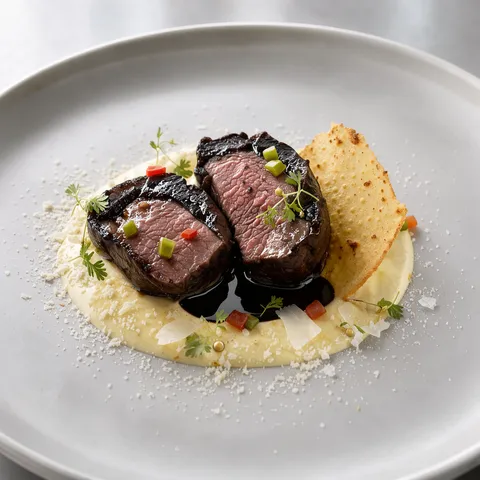 Asado Negro 2.01 hr 20 min · Main course
 Venezuelan Fresh Corn Pancakes28 min · Bread & pastry