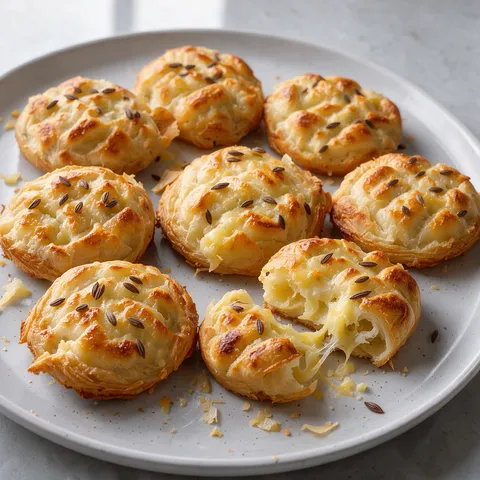
Hungarian Mini Cheese Scones Sajtos Pogácsa
A Hungarian meze. Takes 1 hr 9 min · +30 min chilling in the fridge, +20 min rising, Makes 30. Difficulty: medium.
At a glance
- Total time
- 1 hr 9 min · +30 min chilling in the fridge, +20 min rising
- Serves
- Makes 30
- Difficulty
- Medium
- Cuisine
- Hungarian cuisine
- Dish type
- Meze
- Diet
- Vegetarian
- Allergens
- Gluten, Milk, Eggs
Ingredients
- Dough (30 pieces, 28 g each): 400 g plain flour
- 200 g cold butter (cubed)
- 1 egg
- 1 egg yolk
- 120 g Crème Fraîche (Basics)
- 5 g fast-action dried yeast
- 8 g fine salt
- 100 g grated aged mild semi-hard cheese
Topping
- 1 egg yolk
- 1 tbsp milk
- 30 g grated aged semi-hard cheese
- 1 tsp caraway seeds
Equipment
- Oven
- Baking tray
- Baking paper
- Mixing bowls
- Rolling pin / oklava
- Pastry brush
- Chef's knife
- Cake ring / food ring
Method
- Make the dough: Mix the flour, yeast and salt in a bowl. Rub the cold butter cubes into the flour with your fingertips for 3 min, until you have coarse crumbs. Add the egg, egg yolk, crème fraîche and semi-hard cheese and bring the dough together quickly, in 3 min. Over-kneading activates the gluten and makes the dough tough, so pieces of butter should stay visible. Shape the dough into a flat block and go straight on to folding
- Fold and rest: Roll the dough out with a rolling pin into a rectangle 1.5 cm thick, fold it in thirds (a letter fold) and turn it 90°. Repeat for 3 turns in total, resting the dough in the fridge for 10 min after each turn. Folding creates layers of butter that turn to steam in the oven, making the pogácsa puffy and flaky. If the dough gets sticky, dust the worktop with a very little flour, but too much makes it dry
- Cut: Roll the dough out one last time to 1.8 cm thick (about 22×24 cm). Cut 30 rounds, about 28 g each, with a 4.5 cm pastry ring. Press the cutter straight down, as twisting seals the edges and stops the dough rising. Gather the trimmings lightly and roll out once more. Arrange on a tray lined with baking paper, 3 cm apart
- Glaze and score: Whisk the egg yolk with the milk and brush it over the tops only, without letting it run down the sides, or the layers will stick together. Score a diamond pattern across the top with the back of a knife (3 mm deep). Sprinkle over the semi-hard cheese and caraway
- Prove: Rest the tray at 30°C in a humid place for 20 min. The pogácsa puff up slightly. Meanwhile preheat the oven to 200°C
- Bake: Bake the trays on the middle shelf at 200°C for 20 min, until the tops are deep golden, the cheese is browned and the sides are puffed. Turn the tray around at the 10th min. The high heat turns the butter to steam in the first minutes and makes the dough rise. They are ready when they smell of butter and caraway
- Serve: Rest the pogácsa on a wire rack for 5 min and serve warm. Thin layers should show where they are cut. The caraway and semi-hard cheese flavours stand out on the plate
Chef's note
Serve hot to warm. Allow 3 per person, for 100 people ×10 (300 pieces). The shaped dough can be frozen: it is baked straight from frozen at 200°C for 24 min. Baked pogácsa keep for 1 day and are refreshed at 170°C for 5 min. In Hungary pogácsa is on the celebration table, and here the classic version with semi-hard cheese and caraway was chosen. It shares a similar name with Pogaca (Cheese-Filled Savoury Buns), but the dough and the folding technique are completely different.
Frequently asked questions
- Why is Sajtos Pogácsa dough not kneaded for long?
- Overkneading develops the gluten and makes the scones tough. The dough should come together quickly and the pieces of butter should still be visible.
- Why is the dough folded?
- Folding creates layers of butter that turn to steam in the oven, making the scones tall and flaky. Give the dough letter folds and rest it in the fridge after each turn.
- What should I watch for when cutting the scones?
- Press the cutter straight down without twisting, as twisting seals the edges and stops the scones rising. Gently bring the offcuts together and roll them out once more.
 Hungarian Goulash Soup2 hr 5 min · Soup
 Csirkepaprikás with Nokedli1 hr 25 min · Main course
 Hungarian Fried Flatbread1 hr 15 min · Bread & pastry
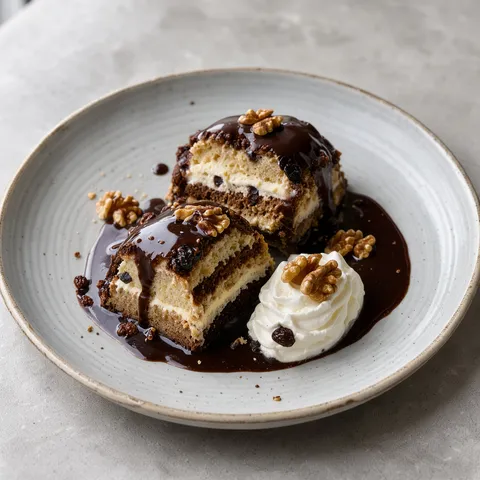 Hungarian Layered Sponge Trifle1 hr 30 min · Dessert
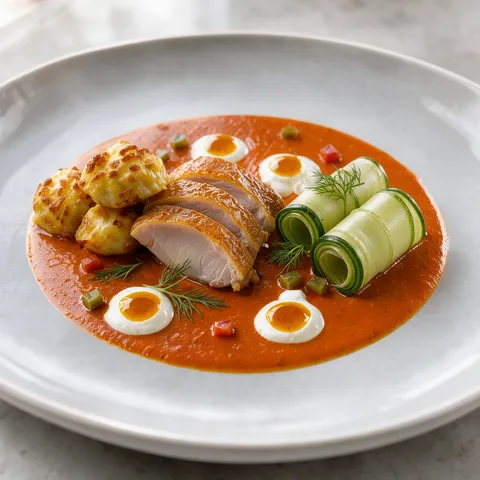 Csirkepaprikás 2.01 hr 25 min · Main course
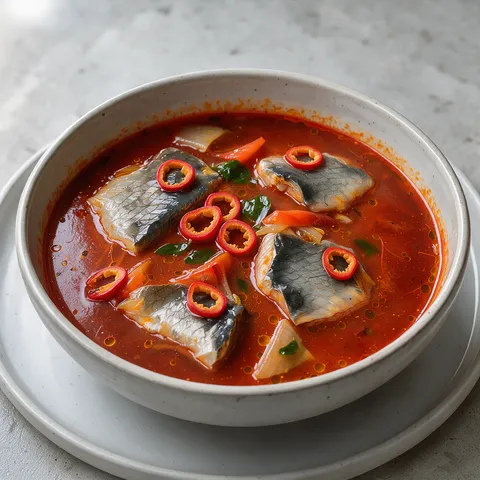 Hungarian Fisherman's Soup with Paprika1 hr 40 min · Soup