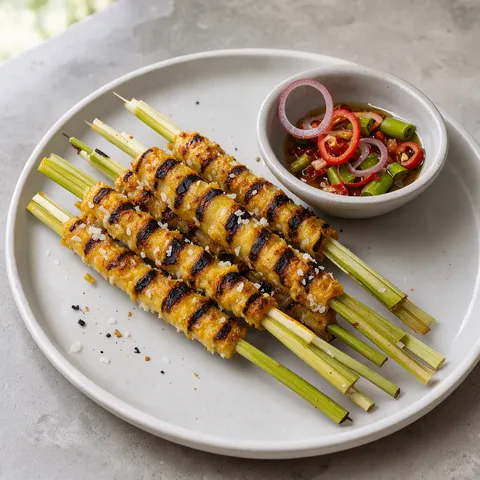
Balinese Coconut Fish Skewers Sate Lilit
An Indonesian meze. Takes 1 hr 25 min, Serves 4. Difficulty: medium.
At a glance
- Total time
- 1 hr 25 min
- Serves
- Serves 4
- Difficulty
- Medium
- Cuisine
- Indonesian cuisine
- Dish type
- Meze
- Diet
- Gluten-free
- Allergens
- Fish, Crustaceans, Tree nuts
Ingredients
Spice paste (base genep)
- 5 shallots (about 75 g)
- 4 garlic cloves
- 2 long red chillies (deseeded)
- 2 cm piece of ginger
- 2 cm galangal (or ginger if unavailable)
- 2 cm fresh turmeric or 1 tsp ground turmeric
- 4 raw macadamias or 5 cashews (instead of candlenuts)
- 1 tsp coriander seeds
- 1/2 tsp black pepper
- 1 tsp shrimp paste (terasi, toasted)
- 2 tbsp coconut oil
Skewer mixture
- 600 g skinless white fish fillet (sea bass, whiting or cod)
- 80 g desiccated coconut
- 60 ml hot water
- 3 makrut lime leaves (finely shredded)
- 1 tbsp palm sugar or light brown sugar
- 1 tsp salt
Skewers
- 16 lemongrass stalks (about 20 cm, outer leaves removed)
- 1 tbsp coconut oil (for griddling)
Sambal matah
- 6 shallots (thinly sliced into rings)
- 2 lemongrass stalks (white part only, thinly sliced into rings)
- 3 red chillies (thinly sliced into rings)
- 2 makrut lime leaves (shredded hair-thin)
- 1/2 tsp shrimp paste (toasted)
- juice of 1 lime
- 1/2 tsp salt
- 3 tbsp coconut oil
Equipment
- Mixing bowls
- Frying pan
- Food processor
- Chef's knife
- Baking tray
- Baking paper
- Griddle pan
- Probe thermometer (optional)
Method
- Moisten the coconut: Mix the desiccated coconut with the 60 ml hot water in a bowl and leave for 10 min. This is how dried coconut regains the moisture of freshly grated coconut, so the mixture does not dry out on the griddle
- Toast the shrimp paste: Wrap the total 1.5 tsp shrimp paste in foil and toast it in a dry frying pan over medium heat for 1 min on each side. The paste dries out and darkens, its pungent smell mellows and it takes on a roasted flavour. Set aside 1 tsp for the spice paste and 1/2 tsp for the sambal
- Make the base genep: Blitz the shallots, garlic, chillies, ginger, galangal, turmeric, macadamias, coriander seeds, black pepper and the 1 tsp shrimp paste in a food processor for 1-2 min. Heat the 2 tbsp coconut oil in the same frying pan and fry the paste over medium heat for 6-7 min, until the oil separates and it takes on an orange sheen. Spread it on a plate and leave to cool for 10 min: hot paste would start cooking the fish protein too early
- Blitz the fish: Check the fillets for pin bones with your fingertips and cut into 3 cm pieces. Put the fish in the cleaned food processor and blitz for 20-30 sec to a sticky paste. Add the cooled spice paste, coconut, lime leaves, sugar and 1 tsp salt and blitz for another 10-15 sec. The mixture should stick to your hands but hold its shape. Overprocessed, it warms up and turns rubbery
- Wrap onto the stalks: Lightly crush the thick ends of the lemongrass stalks with the back of a knife to release their aroma. Wet your hands, take about 45 g of the mixture and press it with your palm around the bottom 10 cm of the thick end of a stalk, shaping it into a long cigar 2 cm in diameter. Arrange the 16 skewers on a tray lined with baking paper and chill in the fridge for 15 min to set their shape
- Make the sambal matah: Meanwhile, put the shallots, lemongrass, chillies and lime leaves in a bowl. Crumble in the remaining shrimp paste and the salt with your fingertips and pour over the lime juice. Heat the coconut oil in a small frying pan until it just begins to smoke, pour it over and stir. The hot oil softens the shallots slightly but keeps their raw crunch
- Griddle: Heat a cast-iron griddle pan (about 26 cm) over high heat for 4-5 min and brush with the 1 tbsp coconut oil. Cook 8 skewers at a time, in two batches. Cook for 2-3 min on each side, 8-10 min in total, turning: they should be golden brown and charred in places outside, white and firm in the middle. The fish is done when the internal temperature reaches 63°C. Keep the first batch covered on a warm plate
- Serve: Arrange the skewers on a large platter and serve the sambal matah in a bowl at the side. Eat hot or at room temperature
Chef's note
Sate lilit is considered Balinese. "Lilit" means to wrap: the mixture is not threaded onto a skewer but wrapped around the stalk. In Bali it also appears at ceremonial meals and is made with chicken or duck too. Lemongrass, galangal, makrut lime leaves and shrimp paste are easy to find in Asian supermarkets. If you cannot find lemongrass stalks, use flat wooden skewers and add 1 finely chopped lemongrass stalk to the mixture. If you would rather not use shrimp paste, increase the salt by 1/2 tsp: the flavour will be a little flatter.
Frequently asked questions
- Why can the sate lilit mixture turn rubbery?
- If you blitz the fish too much in the food processor, it heats up and turns rubbery. First blitz the fish for 20-30 seconds, then add the cooled spice paste and the other ingredients and blitz for another 10-15 seconds.
- Why is the spice paste added to the fish after cooling?
- The fried paste is cooled on a plate for 10 minutes, because hot paste cooks the protein of the fish too early.
- How is the mixture wrapped onto the lemongrass stalk?
- Lightly crush the thick end of the stalks with the back of a knife. With wet hands, press about 45 g of the mixture around a 10 cm length of the stalk with your palm, then rest the skewers in the fridge for 15 minutes.
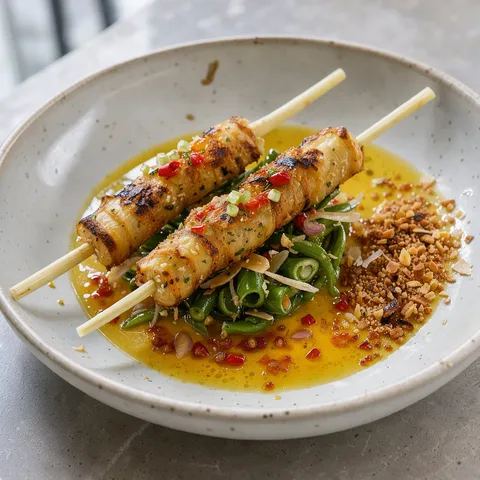 Sate Lilit 2.01 hr 25 min · Starter
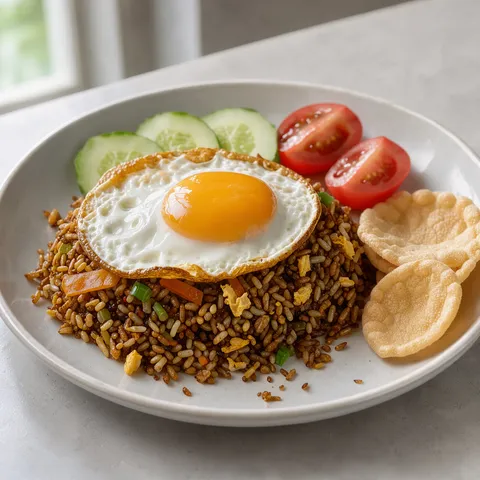 Nasi Goreng25 min · Main course
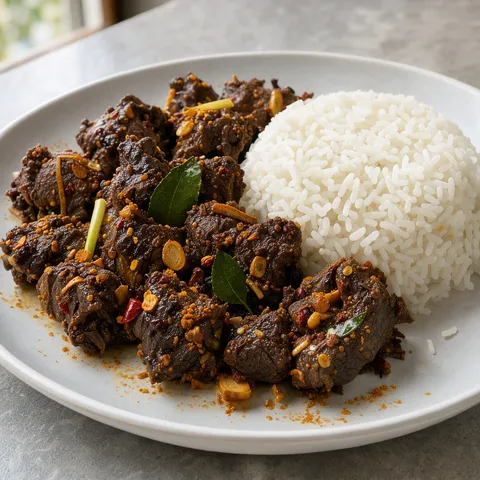 Beef Rendang1 hr 45 min · Main course
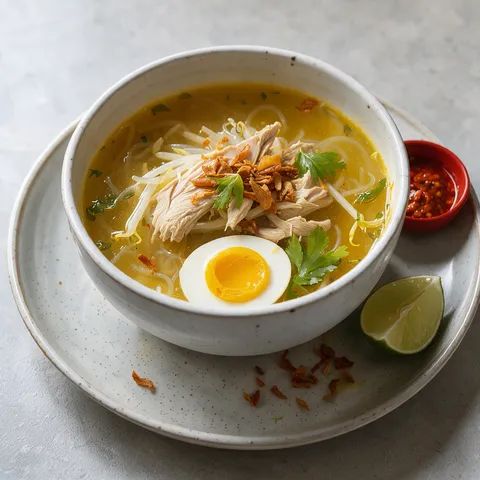 Indonesian Yellow Chicken Soup1 hr · Soup
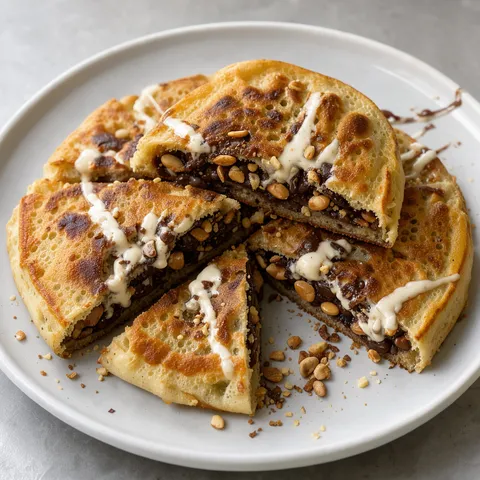 Indonesian Sweet Honeycomb Pancake35 min · Bread & pastry
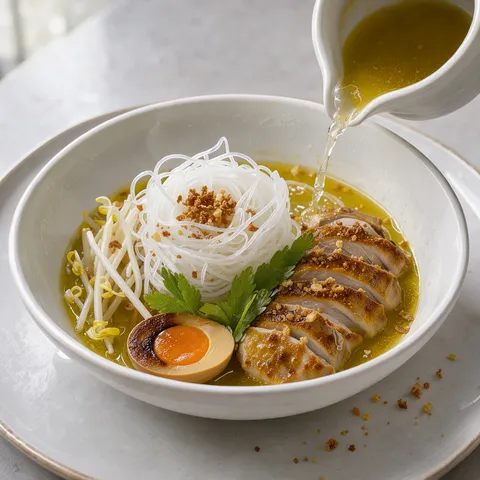 Soto Ayam 2.01 hr 20 min · Soup
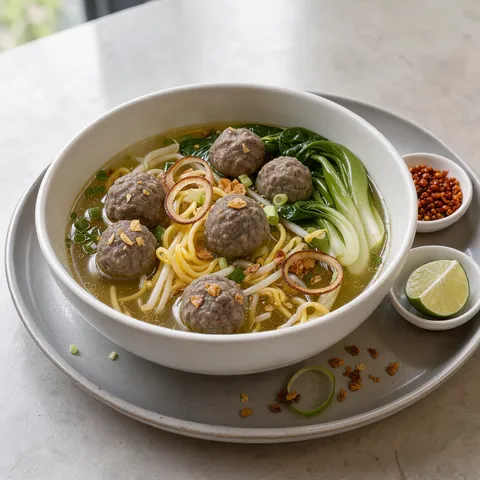 Indonesian Beef Meatball Soup2 hr 50 min · Soup