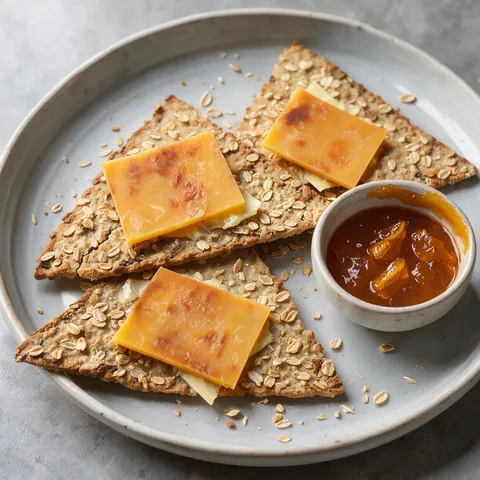
Scottish Oatcakes
A Scottish bread & pastry. Takes 1 hr 20 min, about 16 pieces. Difficulty: medium.
At a glance
- Total time
- 1 hr 20 min
- Serves
- about 16 pieces
- Difficulty
- Medium
- Cuisine
- Scottish cuisine
- Dish type
- Bread & pastry
- Diet
- Vegetarian
- Allergens
- Gluten, Milk
Ingredients
Dough
- 225 g rolled oats (half ground to a fine flour in a food processor, half to a medium grind)
- 1/2 tsp salt
- 1/4 tsp bicarbonate of soda
- 40 g butter (melted)
- about 100 ml very hot water
For the work surface
- 2 tbsp oat flour
To serve
- 120 g mature Cheddar or aged semi-hard cheese (thinly sliced)
- 4 tbsp homemade Seville orange or apple marmalade
- 20 g butter
Equipment
- Oven
- Baking tray
- Baking paper
- Food processor
- Mixing bowls
- Wooden spoon / spatula
- Rolling pin / oklava
- Chef's knife
- Silicone spatula
- Saj (optional)
Method
- Preheat the oven and grind the oats: Preheat the oven to 180°C and line a baking tray with baking paper. Grind half the oats in a food processor for 1 min to a fine flour and the other half for 10 sec so they stay coarsely broken. The two different textures make the oatcakes hold together and give them a grainy, nutty texture in the mouth. This takes 10 min
- Mix the dry ingredients: Mix both oats, the salt and the bicarbonate of soda in a bowl. The bicarbonate makes the oatcakes rise slightly and turn crisp and brittle, while baking powder doesn't have the same effect in such a dry dough. This takes 2 min
- Bring the dough together: Add the melted butter, then pour in the very hot water a little at a time, stirring with a wooden spoon. The hot water softens the starch in the oats and turns the dough into a sticky whole. The dough should be moist but not stick to your hands, and should form a ball easily. This takes 3 min
- Rest: Cover the dough in the bowl and rest for 5 min. In this time the oats absorb the water, so the dough doesn't crack when rolled. Left longer, the dough dries out, so 5 min is enough
- Roll out and cut: Dust the work surface with oat flour and divide the dough in half. Roll each half with a rolling pin into a 20 cm circle, 3-4 mm thick, pressing any cracks at the edges together with your fingers. Traditionally each circle is cut with a knife into 8 triangular wedges (farls), or you can cut rounds with a 6 cm cutter. Transfer to the tray with a spatula. This takes 10 min
- Bake: Bake on the middle shelf at 180°C for 25-30 min. The oatcakes should turn light golden and dry at the edges and move freely when you shake the tray. The centre still looks slightly soft but crisps up as it cools. They are also traditionally cooked on a griddle, in which case they are cooked over low heat for 6-7 min on each side
- Cool: Cool the oatcakes on the tray for 5 min, then completely on a wire rack for 10 min. They are fragile while hot and harden and crisp up as they cool
- Plate: Arrange 4 oatcakes on a wooden board or flat plate and spread each thinly with butter. Top with slices of Cheddar and put a small bowl of marmalade alongside. Store the rest in an airtight jar. This takes 3 min
Chef's note
Oatcakes have been a staple in Scotland for centuries and were once cooked on an iron griddle (girdle) by the hearth. Animal fat is traditionally used; here butter is preferred. They are served with cheese, smoked fish, soups and stovies. They stay crisp for 2 weeks in an airtight container, and if they soften, 5 min in a 150°C oven refreshes them. Makes about 16 oatcakes.
Frequently asked questions
- Why is bicarbonate of soda used in the oatcake dough?
- Bicarbonate of soda makes the oatcake rise slightly and turn crisp and brittle. Baking powder does not give the same effect in such a dry dough.
- What if the dough cracks as it is rolled out?
- Press the cracks at the edges closed with your fingers. Rest the dough for 5 minutes before rolling so the oats absorb the water and it does not crack.
- How are oatcakes stored?
- Store them in an airtight jar once cool. They are fragile when hot and firm up and turn crisp as they cool.
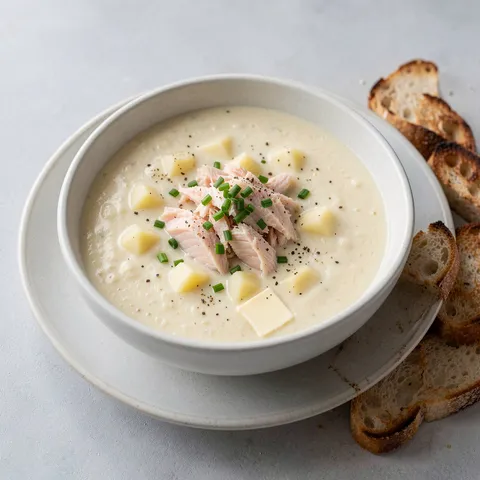 Scottish Smoked Haddock and Potato Soup50 min · Soup
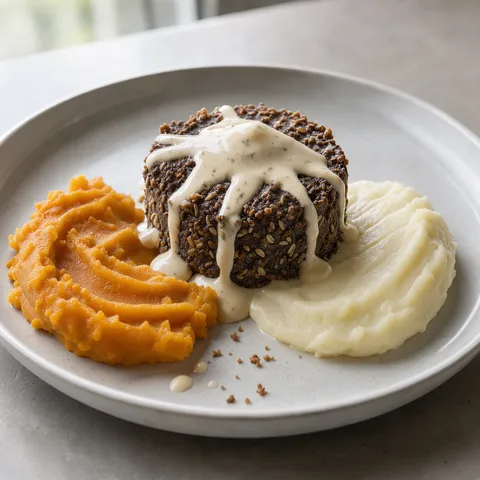 Haggis with Mashed Swede3 hr 30 min · Main course
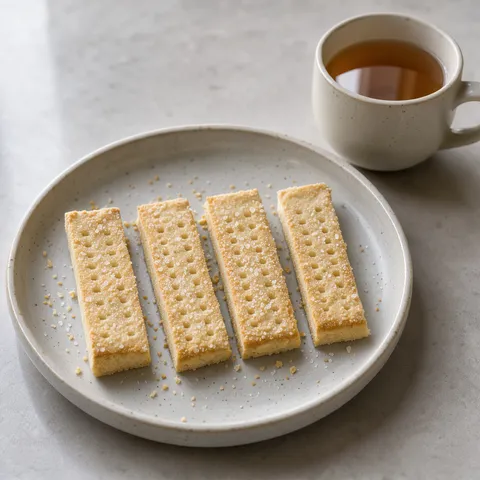 Shortbread1 hr 25 min · Patisserie
 Cranachan30 min · Dessert
 Cullen Skink 2.01 hr 10 min · Soup
 Scottish Chicken, Leek and Prune Soup1 hr 55 min · Soup