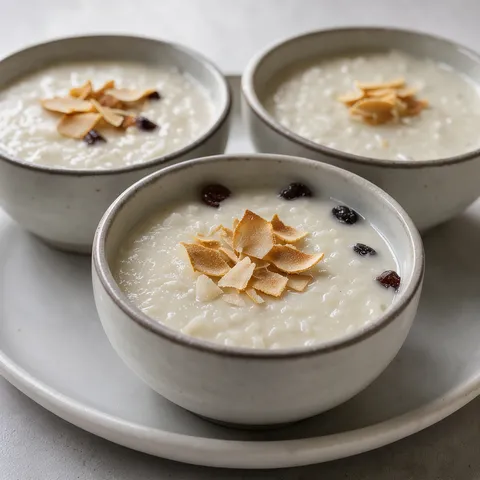
Senegalese Coconut Rice Pudding Sombi
A Senegalese dessert. Takes 55 min (+optional 1 hr chilling), Serves 4. Difficulty: medium.
At a glance
- Total time
- 55 min (+optional 1 hr chilling)
- Serves
- Serves 4
- Difficulty
- Medium
- Cuisine
- Senegalese cuisine
- Dish type
- Dessert
- Diet
- Gluten-free
- Allergens
- Milk, Tree nuts
Ingredients
Coconut milk
- 200 g unsweetened desiccated coconut
- 900 ml hot water (about 80°C)
Pudding
- 200 g broken rice (or jasmine rice crumbled by hand)
- 500 ml water
- 120 g sugar
- a pinch of salt
- 1 vanilla pod (or 1 tsp vanilla extract)
- 40 g raisins
- 1/4 tsp freshly grated nutmeg
- 20 g butter
Topping
- 20 g desiccated coconut (separate)
Equipment
- Blender
- Muslin
- Heavy-based saucepan
- Wooden spoon / spatula
- Frying pan
- Mixing bowls
- Pestle and mortar (optional)
Method
- Make the milk: Put the 200 g coconut in a blender, pour over the 900 ml hot water and leave for 5 min. Then blend on high for 2 min. Pour the mixture into a sieve lined with muslin, gather up the muslin and squeeze hard with your palms. The pulp holds about 30% of the water, and you get about 650 ml of white, rich milk. Set aside 500 ml for cooking and 150 ml for adjusting the consistency. Discard the pulp or dry it and use it for something else
- Prepare the rice: If you cannot find broken rice, break up jasmine rice a few times in a mortar, as broken grains release more starch and give the pudding a creamy texture. Wash the rice quickly once, so most of the starch stays
- Boil the rice: Bring 500 ml water to the boil in a heavy-based pan and add the rice. Cook over medium-low heat for 10 min, stirring now and then, until nearly all the water is absorbed and the grains swell. Cooking first in water lets the grains soften in the coconut milk without sticking to the bottom
- Cook with the milk: Add the reserved 500 ml coconut milk, the sugar, salt and raisins. Split the vanilla pod lengthways, scrape out the seeds with the tip of a knife and add both the seeds and the pod to the pan. Cook for 20-25 min over low heat, barely simmering without boiling, scraping the bottom often with a wooden spoon. It is ready when the rice is completely soft and the mixture is thick enough to leave a trail when drawn through with a spoon. Vigorously boiling coconut milk separates its fat
- Adjust the consistency: Remove the vanilla pod. Stir in the reserved 150 ml milk, the nutmeg and the butter and heat for 2 more min, stirring. The pudding thickens noticeably as it cools, so take it off the heat at a slightly loose consistency that runs slowly from the spoon
- Toast the topping: Toast the separate 20 g coconut in a dry pan over medium-low heat, stirring constantly, for 2-3 min until light golden and fragrant. Transfer straight to a plate, as it darkens if left in the pan
- Rest: Divide the pudding between bowls and, if serving warm, leave for 10 min. If you like it cold, press cling film onto the surface to stop a skin forming and chill in the fridge for 1 hr
- Plate: Divide the pudding between small deep bowls and level the surface with the back of a spoon. Sprinkle a pinch of toasted coconut in the centre and leave a few raisins visible at the edge. Serve warm or cold
Chef's note
Sombi is a rice pudding made with milk or coconut milk, prepared in Senegal at suhoor and iftar during Ramadan and on festivals such as Tamkharit (Ashura day). On the coast it is made with coconut, and inland with cow's milk. Here home-pressed milk is used instead of tinned coconut milk, which gives a lighter, cleaner flavour. Some families add a spoonful of orange blossom water or slices of banana at the end.
Frequently asked questions
- Why isn't the coconut milk boiled in sombi?
- Vigorously boiling coconut milk separates its fat. So cook the pudding over low heat at a gentle bubble.
- What if I can't find broken rice?
- Crumble jasmine rice a few times in a mortar, as broken grains release more starch and give the pudding a creamy texture. Rinse the rice only once, quickly, so its starch stays.
- Is sombi eaten hot or cold?
- Serve warm or cold. As it thickens noticeably when cooled, take it off the heat a little loose. For cold, press cling film onto the surface and chill in the fridge.
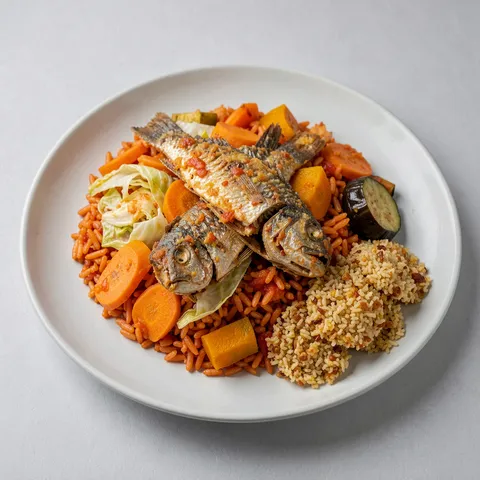 Thiéboudienne1 hr 45 min · Main course
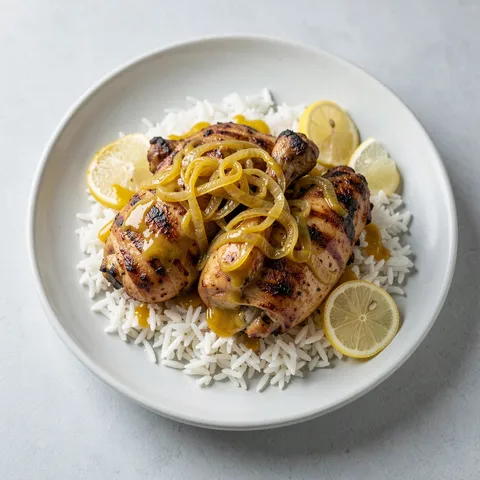 Chicken with Lemon and Onions1 hr 10 min · Main course
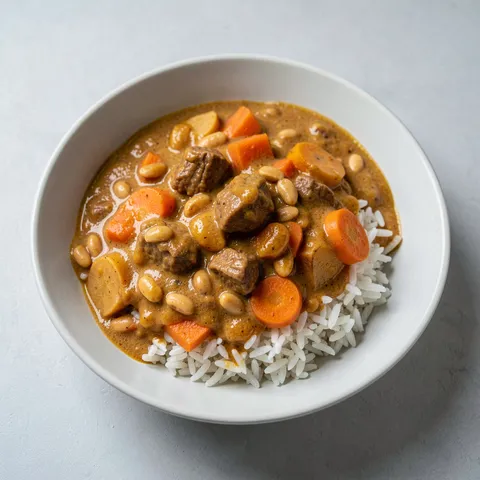 Senegalese Lamb and Peanut Stew2 hr · Main course
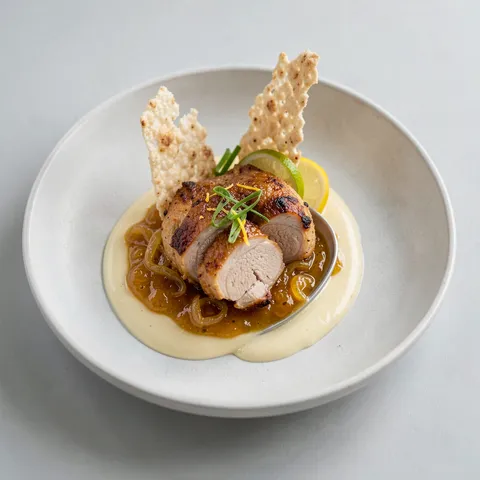 Yassa 2.01 hr 20 min · Main course
 Fried Pastries with Spiced Beef1 hr 30 min · Bread & pastry
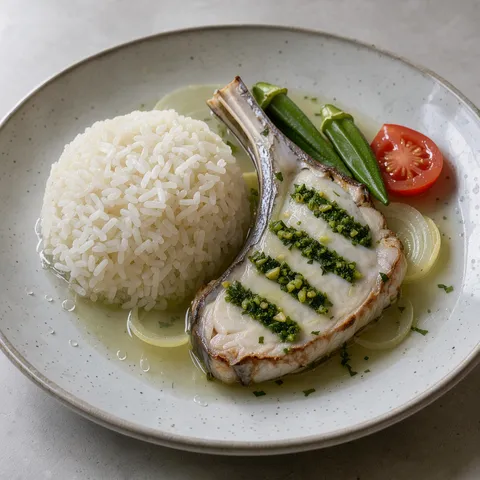 Lemon and Onion Poached Fish50 min · Main course