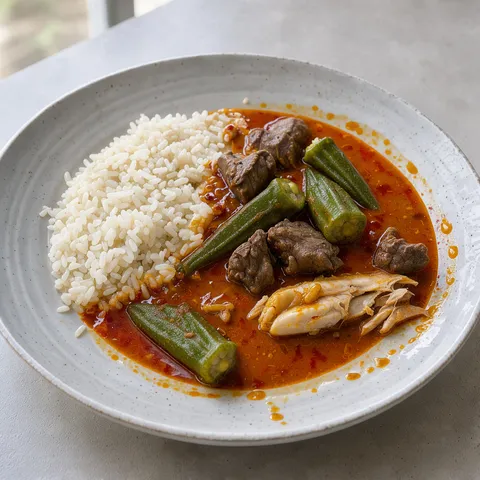
Okra, Meat and Fish Stew Soupou Kandja
A Senegalese main course. Takes 1 hr 40 min (pressure cooker: ~1 hr 15 min), Serves 4. Difficulty: medium.
At a glance
- Total time
- 1 hr 40 min (pressure cooker: ~1 hr 15 min)
- Serves
- Serves 4
- Difficulty
- Medium
- Cuisine
- Senegalese cuisine
- Dish type
- Main course
- Diet
- Gluten-free
- Allergens
- Fish, Celery
Ingredients
Meat
- 500 g beef brisket or chuck (2.5 cm cubes)
- 1 litre cold water
- 1 tsp salt
Stew
- 120 ml red palm oil (if unavailable use 120 ml sunflower oil + 1 tsp sweet paprika)
- 2 onions (finely chopped, about 250 g)
- 4 garlic cloves (finely chopped)
- 1 scotch bonnet chilli (whole, or substitute 1 habanero or 1-2 dried hot red chillies)
- 1 small aubergine (about 250 g, 3 cm cubes)
- 500 g fresh okra
- 400 g white fish fillet (cod, sea bass or whiting, 4 pieces)
- 1/2 tsp salt (for the fish)
- 100 g smoked mackerel (boned, optional)
- 1/2 tsp black pepper
Rice
- 300 g broken or jasmine rice
- 450 ml water
- 1/2 tsp salt
Equipment
- Heavy-based saucepan
- Saucepan
- Chef's knife
- Chopping board
- Ladle
- Wooden spoon / spatula
- Pressure cooker (optional)
- Pestle and mortar (optional)
Method
- Boil the meat: Put the meat and 1 litre cold water in a heavy-based pan, bring to the boil over medium heat and skim the grey scum from the surface with a ladle. Add the salt, lower the heat and cook with the lid ajar for 1 hr, until the meat is easily pierced with a fork. In a pressure cooker, 25 min is enough after steam appears. Measure the liquid: about 700 ml should remain, and top up with water if short
- Prepare the okra: While the meat cooks, wash the okra and dry thoroughly, as wet okra sticks to the knife. Cut off the stalks. Slice 400 g into 3-4 mm rings, then crush the rings coarsely on a chopping board with the flat of a knife or in a mortar. Crushed okra releases its slime and gives the stew its distinctive silky, dark texture. Leave the remaining 100 g whole, so it stays visible on the plate
- Cook the onion in the palm oil: For the last 10 min of the meat, melt 80 ml of the palm oil in a separate large pan over medium heat and heat it, but not until it smokes: overheated palm oil loses its red colour and turns bitter. If you cannot find palm oil, use the same amount of sunflower oil and stir 1 tsp sweet paprika in the oil with the onion (for the colour). Turn the onion for 6-7 min, until soft and golden, add the garlic and cook for 1 min
- Turn the aubergine: Add the aubergine cubes and turn for 5 min, until they have taken up the oil and the edges are soft. The aubergine will fall apart as it cooks and thicken the sauce
- Bind with the okra: Add the crushed and whole okra, the boiled meat and the reserved 700 ml stock. Leave the whole chilli on top without piercing it (habanero or 1-2 dried hot red chillies also work). Once boiling, lower the heat and cook uncovered for 20 min, scraping the bottom now and then. It is ready when the aubergine begins to fall apart and the liquid is a thick, silky consistency that clings to the spoon. If it thickens too much, add 100 ml hot water
- Cook the rice: While the stew cooks, wash the rice 3-4 times. Bring 450 ml water to the boil with the salt, add the rice, and once it returns to the boil cook covered over the lowest heat for 12 min, then turn off the heat and leave to steam for 10 min. The rice should have separate grains and a dry bottom
- Add the fish: Season the pieces of fish with 1/2 tsp salt and lay them on top of the stew. If using smoked mackerel, arrange it in large pieces between them. Cover and cook over low heat for 8-10 min, until the fish is opaque and flakes with a fork (internal temperature 60°C). Do not stir at this stage, as the fish would fall apart. Drizzle the remaining 40 ml palm oil over the surface, add the black pepper and check the salt
- Plate: Spread the rice on one side of a deep plate. Ladle two ladlefuls of the stew beside it, showing the pieces of meat, whole okra and a piece of fish. The orange-red palm oil should shine on the surface. Leave the whole chilli in the shared pan, and anyone who likes heat can crush a piece on their own plate
Chef's note
Soupou kandja (kandja means okra in Wolof) is in fact not a soup but a thick stew eaten with rice. In Senegal it traditionally gains a deep, sharp flavour from guedj (dried fermented fish) and netetou (fermented locust bean seeds). These ingredients are bought ready-made from African food shops, and if you find them they can be added, a tablespoon of each, with the onion. Here they are left out to keep the dish easy to shop for. Red palm oil and smoked mackerel are also ready-made products. If you do not use smoked mackerel, add extra salt to the stew to balance it. If you cannot find palm oil, add 1 tsp sweet paprika to 120 ml sunflower oil for colour, though the flavour will be milder, and use habanero or 1-2 dried hot red chillies instead of scotch bonnet.
Frequently asked questions
- Why is okra crushed in Soupou Kandja?
- Chopped okra rings release their mucilage when roughly crushed and give the stew its characteristic silky, thick texture. Some okra is left whole so it shows on the plate.
- What if I can't find palm oil?
- Use the same amount of sunflower oil and fry 1 tsp sweet paprika in it with the onion for colour. Palm oil isn't heated until smoking either, as it loses its colour and turns bitter.
- Why isn't the fish stirred after adding it to the stew?
- The fish breaks up. Lay the pieces on top of the stew and cook covered until opaque and flaking with a fork (internal temperature 60°C).
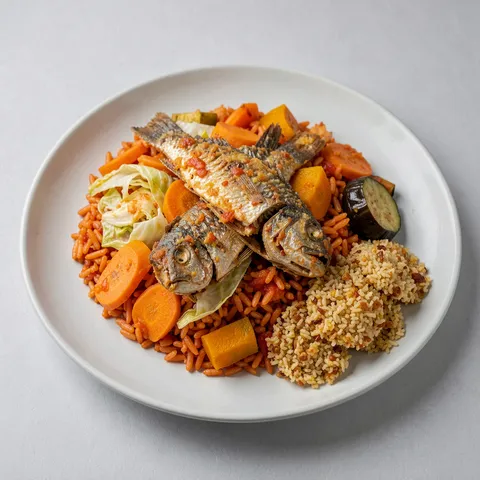 Thiéboudienne1 hr 45 min · Main course
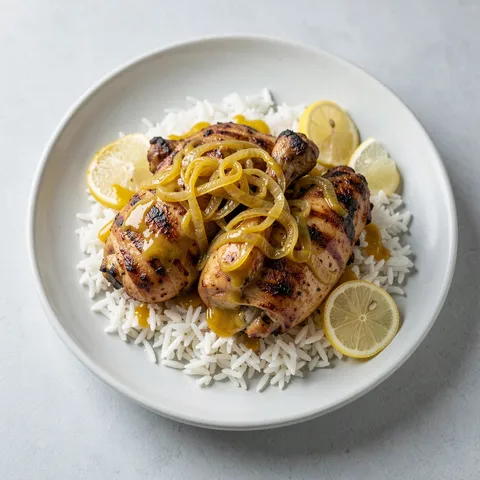 Chicken with Lemon and Onions1 hr 10 min · Main course
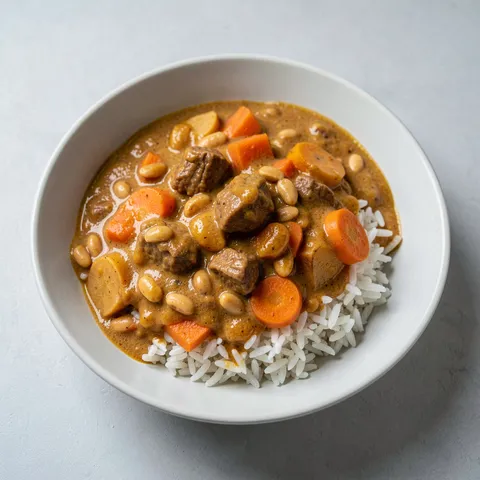 Senegalese Lamb and Peanut Stew2 hr · Main course
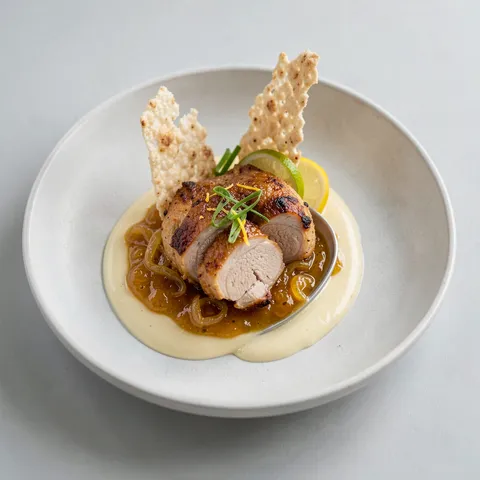 Yassa 2.01 hr 20 min · Main course
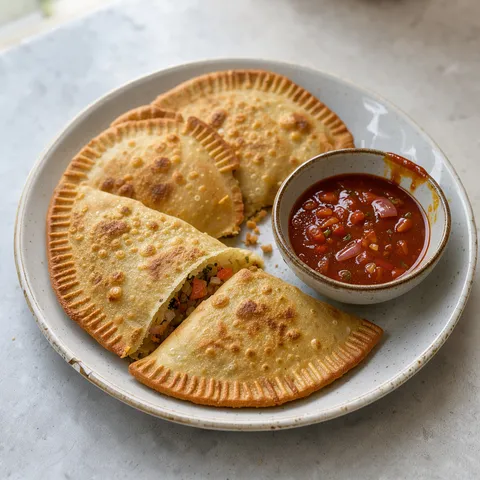 Fried Pastries with Spiced Beef1 hr 30 min · Bread & pastry
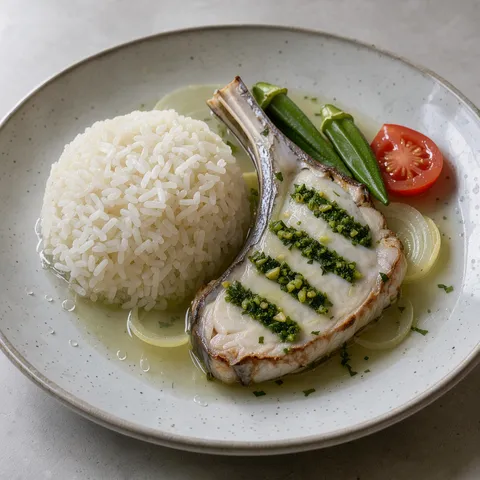 Lemon and Onion Poached Fish50 min · Main course