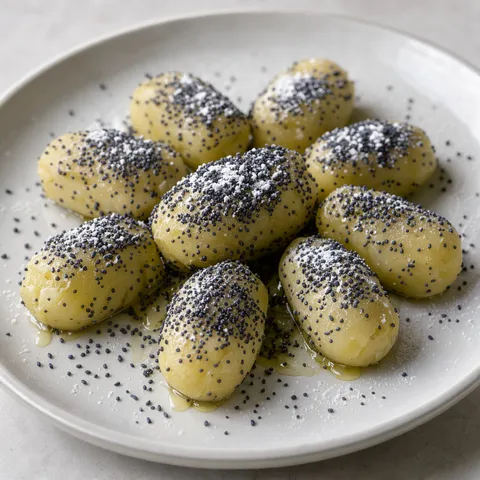
Slovak Potato Fingers and Poppy Seeds Šúľance s Makom
A Slovak dessert. Takes 1 hr 20 min, Serves 4. Difficulty: medium.
At a glance
- Total time
- 1 hr 20 min
- Serves
- Serves 4
- Difficulty
- Medium
- Cuisine
- Slovak cuisine
- Dish type
- Dessert
- Diet
- Vegetarian
- Allergens
- Gluten, Milk, Eggs
Ingredients
Potato dough
- 800 g floury potatoes (unpeeled)
- 230 g plain flour (plus 2 tbsp for rolling)
- 1 egg
- 1/2 tsp salt
For boiling
- 3 litres water
- 1 tbsp salt
To serve
- 80 g butter
- 80 g blue poppy seeds
- 60 g icing sugar
Equipment
- Saucepan
- Paring knife
- Potato ricer
- Baking tray
- Pestle and mortar
- Mixing bowls
- Dough scraper
- Wooden spoon / spatula
- Colander
- Frying pan
- Box grater (optional)
Method
- Boil the potatoes: Put the potatoes in their skins in a saucepan and cover with cold water by 2 finger-widths. When it boils, cook over medium heat for 25-30 min, until a knife slides easily into the centre. Boiling them in their skins stops the potatoes absorbing water. Wet potato needs too much flour and the fingers turn out tough. 30 min
- Peel and mash: Drain the potatoes, hold each one on a fork so you do not burn your hand and peel while hot with a paring knife. Pass through a potato ricer or grate on the fine side of the grater and spread out in a thin layer on a tray. 5 min
- Steam off: Leave the potatoes uncovered for 15 min, until all the steam has escaped and they are lukewarm. If flour is added to hot potato, the dough turns sticky. Prepare the poppy seeds meanwhile. 15 min
- Grind the poppy seeds (at the same time as step 3): Pound the poppy seeds in a pestle and mortar for 4-5 min, until the seeds break down into a moist, oily powder. Whole seeds crunch in the mouth but give no flavour, while ground seeds release their nutty, slightly bitter taste. Mix with the icing sugar in a bowl
- Knead the dough: Make a well in the centre of the potato and add the egg, salt and 200 g of the flour. Mix by folding with a dough scraper for 1-2 min, just until the flour disappears and the dough comes together. If it is very sticky, gradually add the remaining 30 g of flour. Long kneading develops the potato starch and makes the fingers rubbery. 3 min
- Shape the fingers: Divide the dough into 4 pieces. On a lightly floured work surface, roll each piece into a 2 cm thick log and cut it into 10 pieces, about 40 in all, each 25 g. Roll each piece back and forth between your palms into a 7-8 cm finger, thick in the middle and pointed at both ends, and arrange on a floured tray. 15 min
- Boil: Bring the 3 litres water to the boil with 1 tbsp salt in a wide saucepan. Drop in the fingers in two batches and stir once gently with a wooden spoon so they do not stick together. Once they rise to the surface, boil for 2 min more, about 5 min per batch. Lift out with a slotted spoon and drain. 10 min
- Toss in butter: Melt the butter in a wide frying pan over medium heat until lightly foaming, add the drained fingers and shake the pan for 1-2 min to glaze them with butter. The butter helps the poppy seeds cling to the fingers. 2 min
- Coat in poppy seeds and plate: Sprinkle half the poppy seed sugar into the pan and turn the fingers gently. Divide them among warm plates, 10 fingers each, sprinkle generously with the remaining poppy seed sugar and drizzle over the butter left in the pan. Serve hot
Chef's note
In Slovakia šúľance are the sweet main course of Fridays and fasting days, and the name is said to come from a verb meaning to roll between the palms. As well as poppy seeds, there are versions made with toasted walnuts or with dried breadcrumbs toasted in butter. The Czech Švestkové Knedlíky (Plum Dumplings with Poppy Seeds) on the site also pair potato dough with poppy seeds, but those are large plum-filled dumplings, while šúľance are unfilled, thin, finger-shaped dumplings. Blue poppy seeds are sold by spice merchants in Türkiye. If unavailable, Turkish poppy seeds are lighter in colour but can be used in the same way.
Frequently asked questions
- Why are the potatoes boiled in their skins?
- Boiling in the skins stops the potatoes taking on water. Watery potato dough needs too much flour and the fingers turn tough.
- How do you stop the potato fingers from turning rubbery?
- Mix the dough only until the flour disappears and it comes together. Long kneading releases the potato starch and the fingers turn rubbery.
- Why are the poppy seeds ground in a mortar?
- Whole seeds crunch in the mouth but add no flavour. Once ground, their nutty, slightly bitter taste opens up.
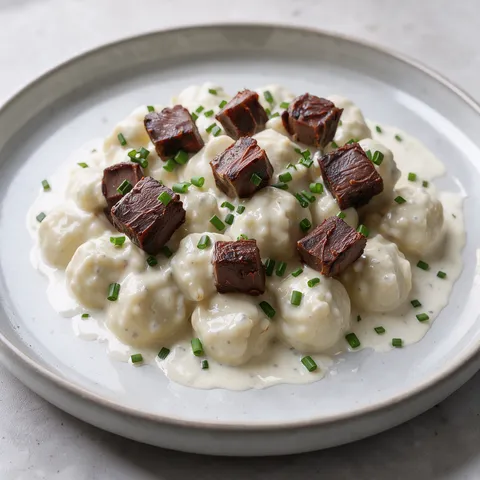 Slovak Potato Dumplings55 min · Main course
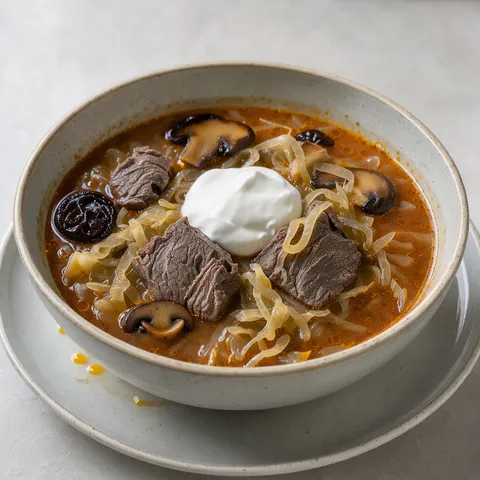 Slovak Sauerkraut Soup2 hr 10 min · Soup
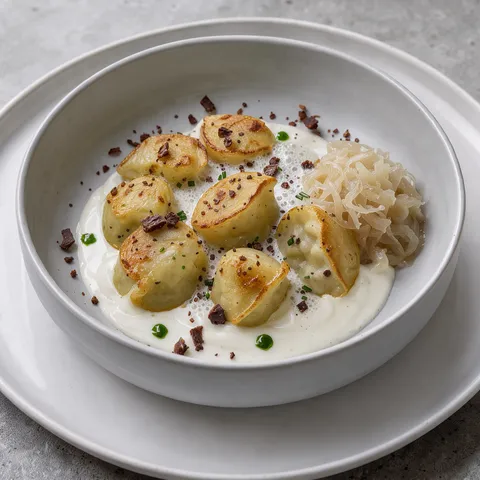 Bryndzové Halušky 2.01 hr 15 min · Starter
 Liptov-Style Bryndza and Potato Soup45 min · Soup
 Slovak Garlic and Potato Soup40 min · Soup
 Slovak Sour Lentil Stew with a Fried Egg55 min · Main course