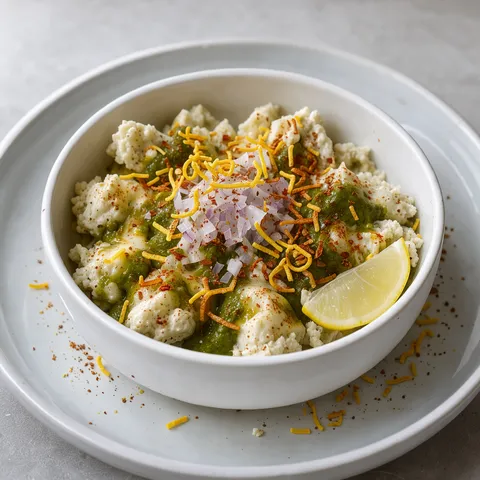
Surti Locho Surat Soft Steamed Gram Flour with Butter and Sev
An Indian meze. Takes 28 min, Serves 4. Difficulty: easy.
At a glance
- Total time
- 28 min
- Serves
- Serves 4
- Difficulty
- Easy
- Cuisine
- Indian cuisine
- Dish type
- Meze
- Diet
- Vegetarian
- Allergens
- Gluten, Milk, Eggs, Mustard, Sulphites
Ingredients
Locho
- 200 g gram flour
- 100 g plain whole-milk yoghurt
- 400 ml water
- 1 tsp ginger and green chilli paste
- 1 tsp salt
- 1 tsp sugar
- 1/4 tsp turmeric
- 1 tsp fruit salt (Eno) or 1/2 tsp bicarbonate of soda
- 1 tbsp lemon juice
Tadka
- 2 tbsp neutral oil
- 1 tsp mustard seeds
- 8 curry leaves
- 1/4 tsp asafoetida
To serve
- 4 tbsp butter
- 4 tbsp fine gram flour noodles (sev) (homemade or traditional ready-made)
- 1 small finely chopped onion
- 4 tbsp green chutney (from the Chutney group below)
- 1 tsp chaat masala
- 1 tsp chilli powder
- lemon wedges
Chutney
- 1 small bunch of fresh mint leaves
- 1/2 bunch of coriander
- 2 green chillies
- 1 tbsp lemon juice
- 1/2 tsp salt
- 1/2 tsp sugar
- 2 tbsp water
Equipment
- Steamer basket
- Balloon whisk
- Frying pan
- Mixing bowls
- Blender
- Chef's knife (optional)
Method
- Whisk the batter: Whisk the gram flour, yoghurt, water, paste, salt, sugar and turmeric in a large bowl for 3 min, until lump-free and smooth. The batter should be a little runnier than crêpe batter. Batter with air in it comes out soft and smooth when steamed (~4 min)
- Leaven the batter: Add the lemon juice and bicarbonate to the batter and mix gently with the whisk for 15 sec. The batter foams immediately and increases in volume, and this reaction makes soft pores when steamed. Immediately pour it into a greased wide plate to 1.5 cm thick (~2 min)
- Steam: Place the plate over boiling water and steam covered for 12-14 min. A skewer should come out clean and the surface should be glossy and plump like a sponge. Do not open the lid for the first 8 min, otherwise the rise collapses (~12 min)
- Break up: Take the locho out of the steamer and rest for 3 min. Break it into large pieces with a fork or spoon and do not cut it, as locho is not cut but crumbled apart. The pieces should stay moist and soft (~3 min)
- Make the tadka: Heat the oil in a small pan, crackle the mustard seeds, add the curry leaves and asafoetida, and after 15 sec pour the tadka over the broken-up locho. The oil moistens the surface of the locho (~3 min)
- Blend the green chutney while it steams: Blend the mint, coriander, chillies, lemon juice, salt, sugar and water in a blender for 1 min, until smooth and bright green. Transfer the chutney to a small bowl. It is made just before serving so that the fresh greens do not lose their colour, and the lemon protects it with its acid (~2 min)
- Layer it up: Finely chop the onion. Put the locho pieces in the bottom of the bowl, drizzle over 1 tbsp butter and the chutney, and sprinkle with the chaat masala and chilli powder. Add plenty of the chopped onion and sev. Add the sev last so that it stays crisp (~2 min)
- Serve: Serve the bowl immediately with a lemon wedge. The locho should be hot, the butter melting and the sev crisp. Eat it mixed, diving down to the bottom with a spoon (~2 min)
Chef's note
Surti locho is a Surat street breakfast: a soft, steamed version of gram flour batter, broken up and eaten with butter and crisp sev. Sev is traditionally a ready-made thin gram flour noodle, and if you like you can make it yourself with 100 g gram flour, salt and water. If you use fruit salt instead of bicarbonate, it rises faster.
Frequently asked questions
- Why does Surti locho collapse when steamed?
- The rise is set in the first few minutes. Don't lift the lid for the first 8 minutes, or the rise will collapse. When done, a skewer comes out clean and the surface is glossy and plump like a sponge.
- Is locho cut with a knife?
- No, break it into large pieces with a fork or spoon. The pieces stay moist and soft. When the tadka is poured over, the oil moistens the surface of the locho.
- Why is the sev added last when serving?
- The sev goes on last so it stays crisp. The green chutney is also made just before serving so its colour doesn't fade, and the lemon protects its acidity.
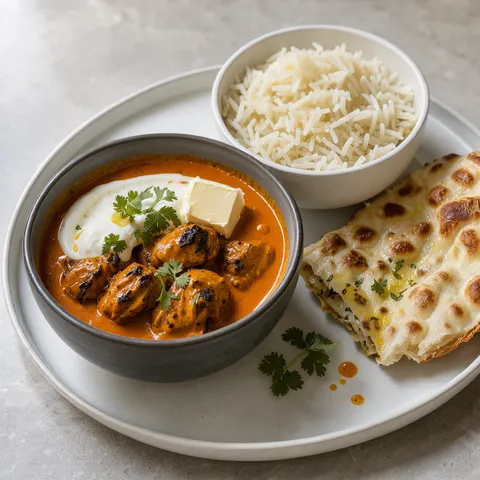 Indian Butter Chicken50 min · Main course
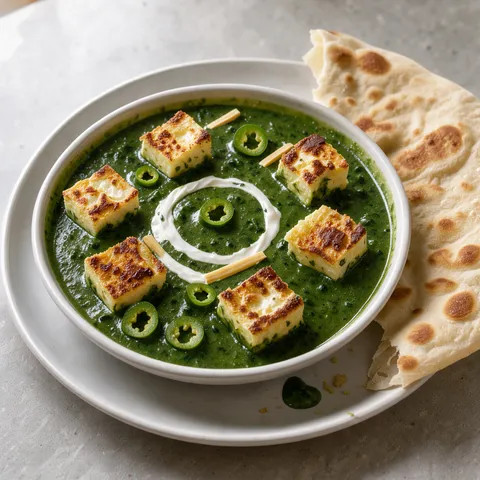 Spinach with Homemade Paneer45 min · Main course
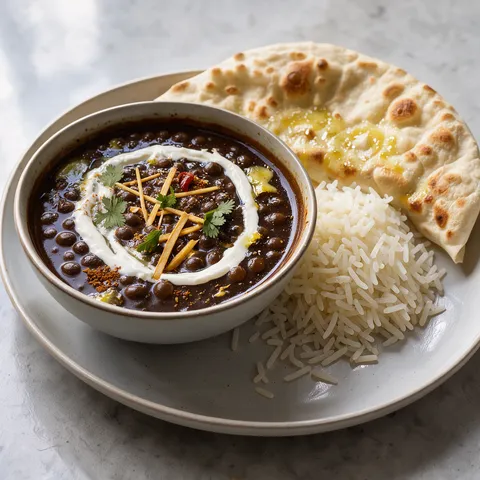 Black Lentil and Kidney Bean Stew1 hr 30 min · Main course
 Chicken Dum Biryani1 hr 30 min · Main course
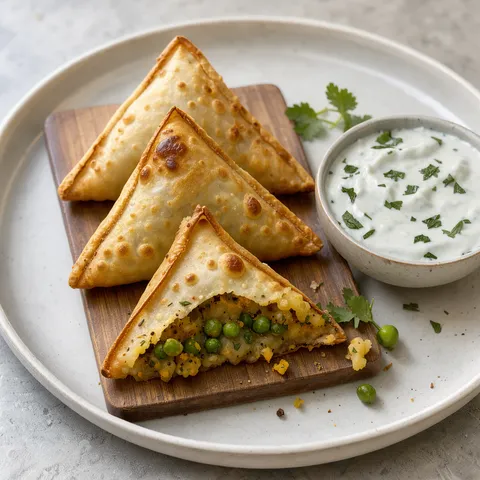 Indian Potato Pastries1 hr 30 min · Bread & pastry
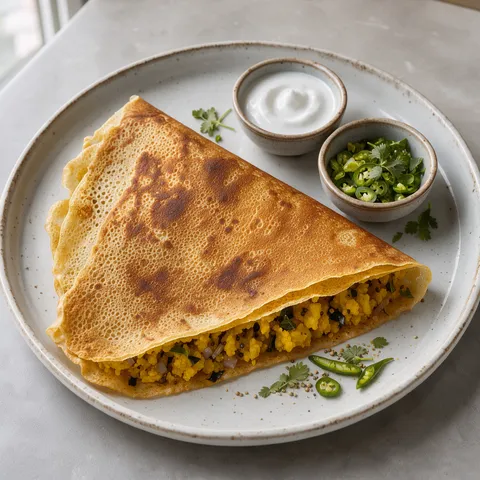 Fermented Rice Crêpes with Spiced Potato50 min · Bread & pastry