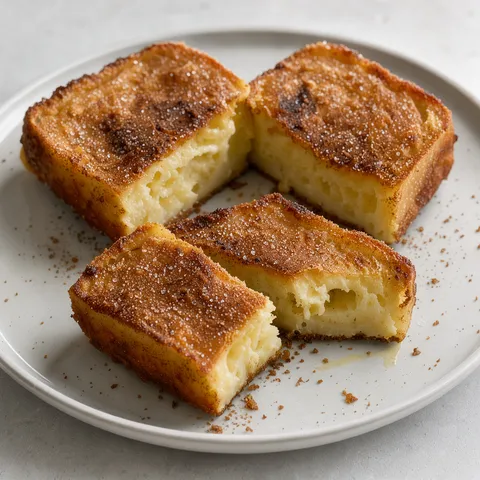
Castilian Fried Bread Soaked in Cinnamon Milk Torrijas
A Spanish dessert. Takes 55 min, Serves 4. Difficulty: medium.
At a glance
- Total time
- 55 min
- Serves
- Serves 4
- Difficulty
- Medium
- Cuisine
- Spanish cuisine
- Dish type
- Dessert
- Diet
- Vegetarian
- Allergens
- Gluten, Milk, Eggs, Soya
Ingredients
Bread
- 8 slices day-old white bread from a loaf (2-3 days old, each 2 cm thick, about 300 g in total)
Milk
- 500 ml milk
- 80 g caster sugar
- 1 cinnamon stick
- pared zest of 1 lemon (in strips with a peeler, without the white pith)
Coating
- 3 eggs
For frying
- 500 ml sunflower oil
Cinnamon sugar
- 100 g caster sugar
- 2 tsp ground cinnamon
Equipment
- Saucepan
- Vegetable peeler
- Bread knife
- Chopping board
- Baking tray
- Silicone spatula
- Mixing bowls
- Frying pan
- Probe thermometer
- Colander
Method
- Infuse the milk: Put the milk, 80 g sugar, cinnamon stick and lemon zest in a saucepan and bring to the boil over medium heat, stirring. Turn off the heat, cover and leave to infuse for 15 min so the cinnamon and lemon flavour the milk. Then leave the milk until it cools to about 40°C, warm but not hot enough to burn your finger. Hot milk makes the bread fall apart
- Cut the bread: Cut the stale bread into 8 slices, 2 cm thick, with a bread knife. Fresh bread falls apart as it soaks up the milk, so use bread at least two days old. Arrange the slices in a single layer in a shallow tray
- Soak: Remove the cinnamon stick and lemon zest and pour the warm milk evenly over the bread. Leave for 5 min, turn the slices with a spatula and leave for another 5 min. The slices should soak up the milk right to the centre and soften, but not fall apart when lifted
- Beat the eggs and heat the oil: Beat the eggs with a fork in a wide bowl for 1 min. Put the oil in a 26 cm frying pan (500 ml gives a depth of about 1 cm) and heat over medium heat to 170°C on a thermometer, about 6 min. At a higher temperature the outside burns before the milk in the centre warms through
- Fry: Lift the slices out of the milk one at a time with a spatula, let them drain on the tray for a few seconds, coat both sides in egg and slide into the oil. Fry in 2 batches of 4 for 2 min on each side, until deep golden. The egg crust holds the slice together and the milk inside cooks like a custard
- Drain: Lift the fried slices with a slotted spoon onto a tray lined with kitchen paper and drain for 1 min. Let the oil return to 170°C between batches
- Coat in sugar: Mix the 100 g sugar with the ground cinnamon on a large plate. Press both sides of the hot torrijas into the mixture. The hot surface holds the sugar, which won't stick once they have cooled
- Serve: Arrange the torrijas on a plate. Serve warm or at room temperature: the outside should be sugary and slightly crisp and the inside creamy
Chef's note
In Spain torrijas are the sweet of Holy Week before Easter, made in large quantities in bakeries and homes at this time. As an old way of using up stale bread, they have relatives elsewhere in Europe too. In some regions they are soaked in wine and honey rather than milk, and in some homes they are served with a honey syrup instead of being coated in sugar. A crusty baguette works instead of a loaf: in that case, cut the soaking time to 3-4 min.
Frequently asked questions
- Which bread is used for torrijas?
- Use white loaf bread that is at least 2-3 days old. Fresh bread falls apart once it has soaked up the milk.
- Why should the milk be lukewarm?
- Hot milk breaks the bread up. After infusing, let the milk cool to about 40°C, warm enough not to burn a finger.
- When is the sugar coated on?
- Coat the torrijas in cinnamon sugar while hot. The hot surface holds the sugar, and once cooled the sugar does not stick.
 Torrijas 2.01 hr 15 min · Dessert
 Cold Córdoba Tomato and Bread Soup25 min · Soup
 Spanish Potato Omelette1 hr 5 min · Main course
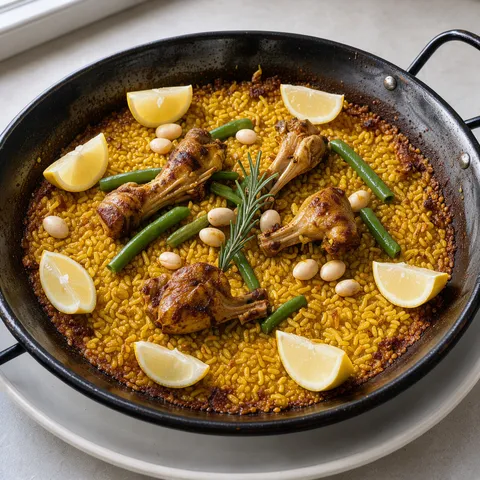 Paella Valenciana1 hr 20 min · Main course
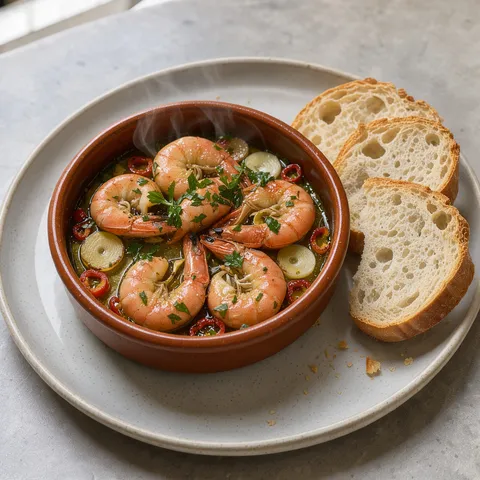 Sizzling Garlic Prawns20 min · Starter
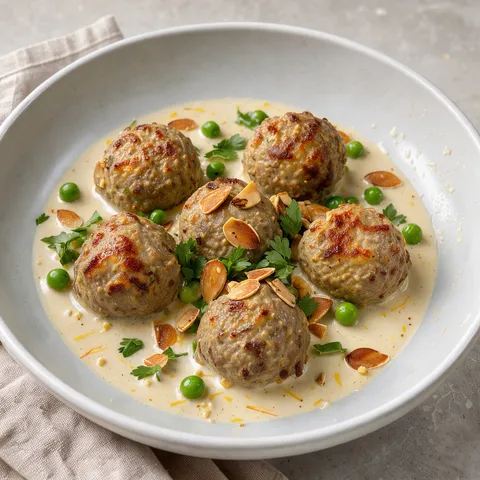 Meatballs in Almond Sauce1 hr 10 min · Main course
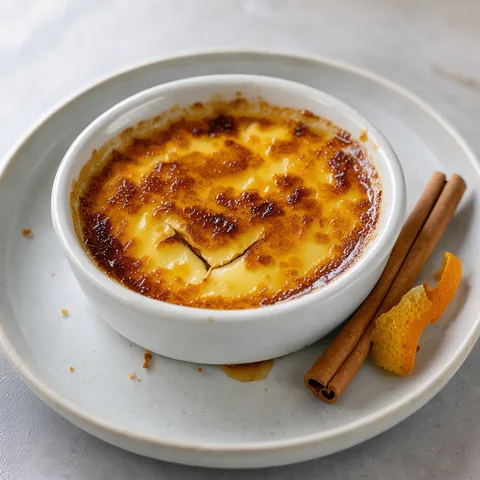 Catalan Burnt Cream35 min · Dessert