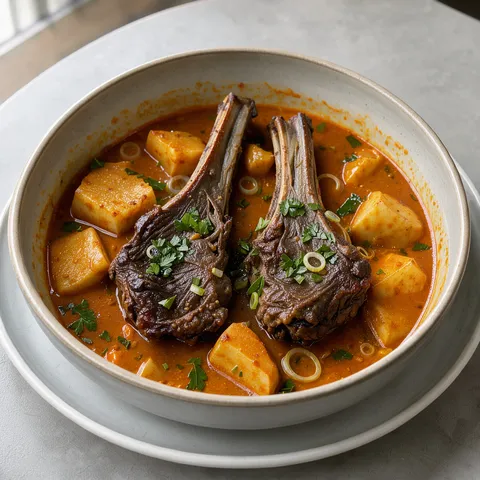
Beef Rib and Cassava Stew Vaca Atolada
A Brazilian main course. Takes 3 hr 35 min (pressure cooker: ~2 hr 35 min), Serves 4. Difficulty: medium.
At a glance
- Total time
- 3 hr 35 min (pressure cooker: ~2 hr 35 min)
- Serves
- Serves 4
- Difficulty
- Medium
- Cuisine
- Brazilian cuisine
- Dish type
- Main course
- Diet
- Gluten-free
- Allergens
- Contains none of the 14 listed allergens
Ingredients
Meat
- 1.5 kg bone-in beef ribs (ask the butcher to cut into 6-7 cm pieces, about 900 g boneless meat)
- 4 garlic cloves (crushed)
- juice of 1 lemon
- 2 tsp salt
- 1 tsp black pepper
Stew
- 3 tbsp sunflower oil
- 2 onions (finely chopped)
- 1 green pepper (diced)
- 3 ripe tomatoes (grated)
- 1 tbsp tomato paste
- 1 tsp sweet paprika
- 2 bay leaves
- 1.5 litres boiling water
Cassava
- 1 kg fresh cassava (peeled, or frozen)
To finish
- 1/2 bunch flat-leaf parsley
- 4 spring onions (finely chopped)
- 1 fresh chilli (optional)
- salt
Equipment
- Cast-iron casserole
- Wooden spoon / spatula
- Ladle
- Chef's knife
- Chopping board
- Mixing bowls
- Pressure cooker (optional)
Method
- Marinate: Pat the ribs dry with kitchen paper. Rub with the garlic, lemon juice, salt and pepper and leave for 20 min. Chop the onion and pepper and grate the tomatoes in the meantime. The lemon and salt work down to the bone and carry the flavour of the ribs into the stew
- Sear: Heat the oil in a cast-iron casserole over high heat. Take the ribs out of the marinade and pat dry, and sear them in two batches without crowding the pot, 3-4 min on each side, until deep brown, about 15 min in total. In a crowded pot the meat does not brown but boils, and the stew stays pale. Transfer the meat to a plate
- Start the sauce: In the same oil, soften the onion over medium heat for 6 min, scraping up the brown residue on the bottom with a wooden spoon. Add the pepper and cook for 2 min, then add the tomato paste and paprika and fry for 1 min. Add the grated tomatoes and cook for 3 min, until the liquid has evaporated
- Cook the ribs: Return the meat and the marinade juices to the pot, add the bay leaves and boiling water. When it comes to the boil, skim off the foam, reduce the heat to the lowest setting and cook with the lid slightly ajar for 2 hr, until the meat starts to fall off the bone by itself. Stir now and then, and if the liquid drops too far below the meat, add 200 ml boiling water. In a pressure cooker this drops to 45 min under pressure and 10 min of natural pressure release
- Prepare the cassava: While the ribs cook, cut the cassava into 4-5 cm pieces and remove the fibrous core. If you leave them in cold water, they do not discolour
- Add the cassava: Once the ribs are tender, nestle the cassava pieces among the meat, adding boiling water if needed until the liquid comes level with the cassava. Cook over low heat with the lid ajar for 30-35 min. When the cassava is completely soft and the edges break down, its starch thickens the sauce, and the swamp (atolada) in the name of the dish is this consistency. From this point scrape the bottom of the pot often, as the starch catches on the bottom
- Adjust the consistency: The sauce should be like a thick, chunky purée that coats the spoon. If it is too thick, add a few spoonfuls of hot water, and if it is too runny, mash a few pieces of cassava with a spoon against the side of the pot. Adjust the salt and remove the bay leaves
- Finish: Take off the heat, fold in half of the parsley, the spring onions and, if you like, the chilli, and rest with the lid on for 5 min
- Plate: Put a ladleful of the cassava sauce in the bottom of a deep plate, place two pieces of rib on top with the bones pointing up and arrange the cassava pieces around them. Scatter over the remaining parsley and serve hot, with white rice or just with a spoon
Chef's note
The name vaca atolada (cow stuck in the swamp) comes from the ribs sitting in the thick cassava sauce. It is described as a dish the tropeiros, the muleteers of Minas Gerais, cooked on the road. Cassava spoils quickly in the fridge, so cook it the day you buy it or peel and freeze it. Beef shin can be used instead of ribs, and the cooking time is the same.
Frequently asked questions
- How did vaca atolada get its name?
- Once the cassava is completely soft and its edges break down, the starch thickens the sauce. The name means bogged cow, and that thick, swampy texture is exactly what it refers to.
- Does the stew catch on the bottom once the cassava goes in?
- Yes, the starch sticks to the bottom. After this stage, scrape the base of the pot often.
- Why is the cassava soaked in cold water?
- Chopped cassava does not discolour if it is kept in cold water. Remove the woody fibre in the centre first.
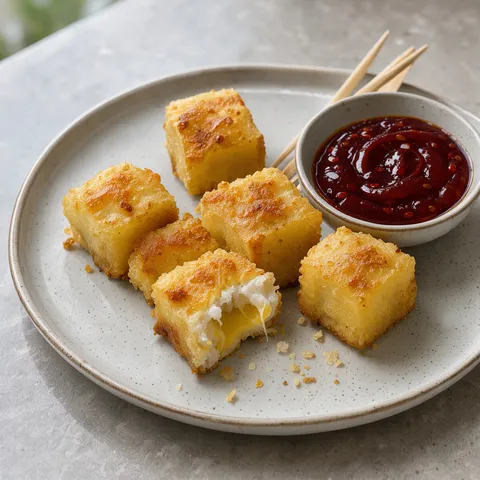 Brazilian Fried Tapioca Cheese Cubes1 hr 5 min · Meze
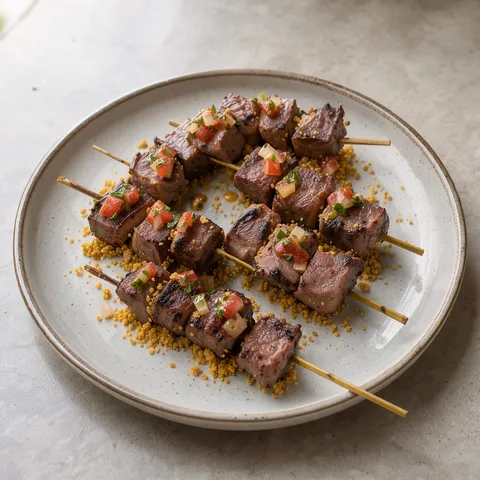 Brazilian Street Picanha Skewers1 hr 2 min · Meze
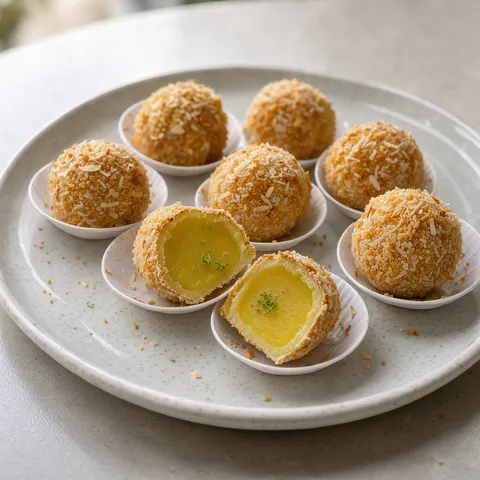 Brazilian Coconut Condensed Milk Balls1 hr 19 min · Meze
 Brazilian Cachaça and Lime Cocktail12 min · Drink
 Bolo de Laranja1 hr 10 min · Patisserie
 Tutu de Feijão1 hr 5 min · Main course