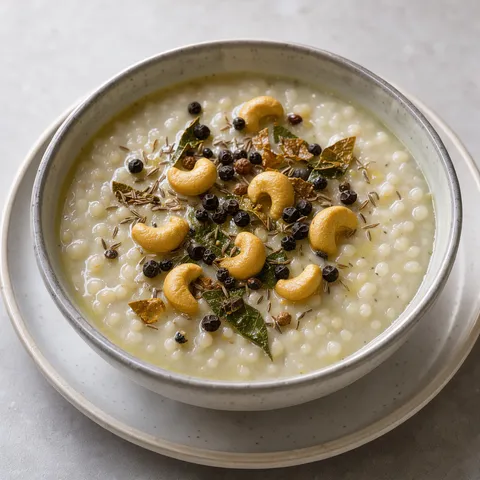
Tamil Rice and Mung Dal Porridge Ven Pongal
An Indian main course. Takes 50 min, Serves 4. Difficulty: medium.
At a glance
- Total time
- 50 min
- Serves
- Serves 4
- Difficulty
- Medium
- Cuisine
- Indian cuisine
- Dish type
- Main course
- Diet
- Vegetarian, Gluten-free
- Allergens
- Milk, Tree nuts
Ingredients
Porridge
- 200 g short- or medium-grain rice (baldo works)
- 80 g yellow mung dal (moong dal, skinned and split, or red lentils if unavailable)
- 1 litre water
- 1 tsp salt
- 150 ml hot water (to finish)
Tadka
- 60 g Clarified Butter (Ghee) (Basics)
- 15 raw cashews (halved)
- 1 tsp black peppercorns (coarsely crushed in a mortar)
- 1 tsp cumin seeds
- 2 cm piece of fresh ginger (finely chopped)
- 12 curry leaves (optional)
- a pinch of asafoetida (optional)
Equipment
- Frying pan
- Mixing bowls
- Colander
- Pressure cooker
- Wooden spoon / spatula
- Pestle and mortar
- Saucepan (optional)
- Potato masher (optional)
Method
- Toast the mung dal: In a dry 20 cm frying pan, toast the mung dal over medium-low heat for 3 min, stirring constantly, until lightly fragrant and a shade more golden. Toasting gives the dal a nutty flavour and leaves no raw pulse smell in the porridge
- Rinse: Rinse the rice and dal together in a bowl 3 times, until the water runs fairly clear, and drain in a colander
- Pressure-cook: Put the rice and dal in a 4-5 litre pressure cooker and add 1 litre water and 1 tsp salt, so it is no more than half full. Close the lid and, once it reaches pressure, cook over medium-low heat for 15 min, then let the pressure release naturally for 10 min. In an ordinary pan, with the lid ajar and stirring often, it takes 35 min. For pongal the rice must be completely soft, which is why far more water is used than for a pilaf
- Mash the porridge: Open the lid and roughly mash the rice and dal with a wooden spoon or potato masher. Add the 150 ml hot water and stir over low heat for 2 min. It should have the consistency of a loose risotto, as pongal thickens quickly as it cools
- Fry the cashews: Heat the ghee in a small frying pan over medium heat. Stir the cashews for 1-2 min until golden and lift them out with a slotted spoon. Cashews burn very easily, so take them out as soon as they start to colour
- Make the tadka: Add the crushed pepper and cumin to the same ghee and stir for 20-30 sec, until the cumin darkens and the pepper is fragrant. Add the ginger and curry leaves and stir for 20 sec, until the leaves are crisp, then add the asafoetida and take off the heat. Black pepper is the main spice of pongal, and frying it in ghee softens its sharpness
- Combine: Pour the tadka with its ghee over the porridge, add half the cashews and stir well. Cover and leave to infuse for 3 min
- Serve: Divide the pongal between bowls and scatter the remaining cashews on top. Serve hot
Chef's note
Ven ("white") pongal is one of Tamil Nadu's best-loved breakfasts and is also cooked in temples during the Pongal harvest festival. It is eaten with coconut chutney and the site's Sambar. Yellow mung dal is available in Indian and organic shops. Red lentils break down faster but do not change the cooking time. If you have no curry leaves or asafoetida, leave them out.
Frequently asked questions
- Why is the mung dal toasted for ven pongal?
- Toasting gives the dal a nutty flavour and leaves no raw pulse smell in the porridge. 3 minutes in a dry 20 cm pan over a medium-low heat is enough.
- Why does pongal thicken as it cools?
- The starch from the rice and dal thickens as it cools. So after mashing, add 150 ml hot water and leave the consistency loose, like a flowing risotto.
- How do I stop the cashews burning in the tadka?
- Cashews burn very easily. Stir them in plain ghee for 1-2 minutes and lift them out with a slotted spoon as soon as they start to colour.
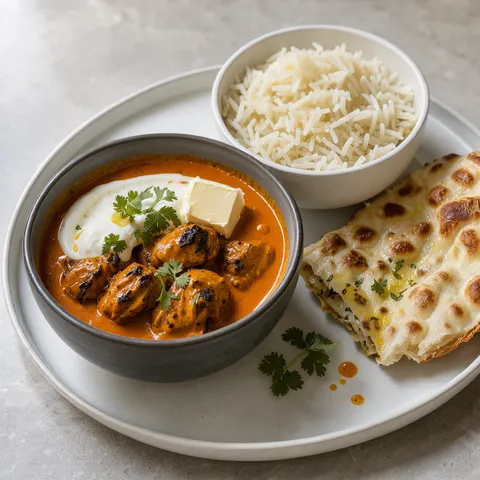 Indian Butter Chicken50 min · Main course
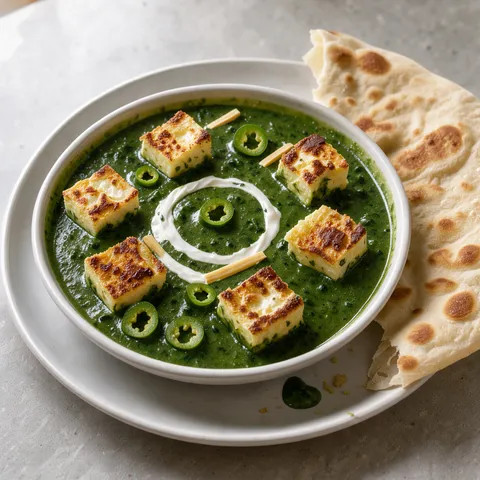 Spinach with Homemade Paneer45 min · Main course
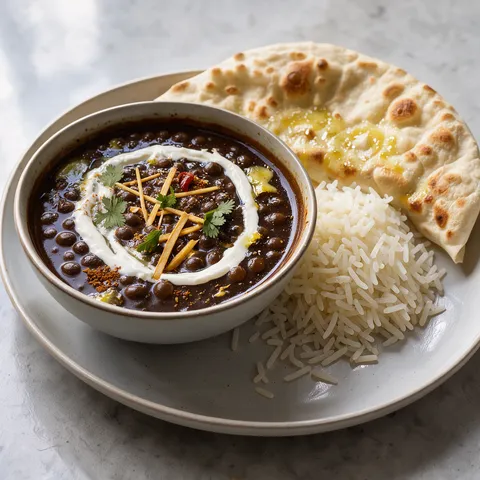 Black Lentil and Kidney Bean Stew1 hr 30 min · Main course
 Chicken Dum Biryani1 hr 30 min · Main course
 Indian Potato Pastries1 hr 30 min · Bread & pastry
 Fermented Rice Crêpes with Spiced Potato50 min · Bread & pastry