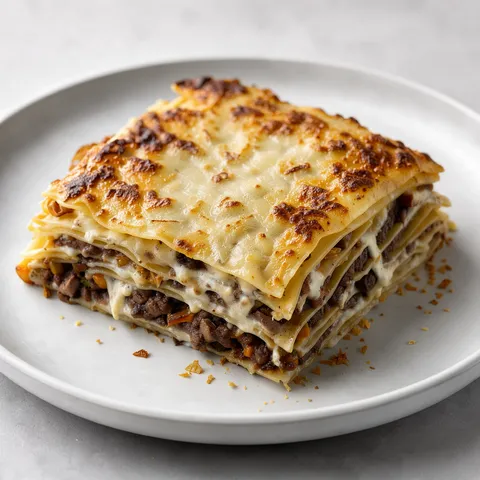
Vincisgrassi Marche Lasagne with Beef Ragù
An Italian main course. Takes 3 hr 11 min, Serves 4. Difficulty: medium.
At a glance
- Total time
- 3 hr 11 min
- Serves
- Serves 4
- Difficulty
- Medium
- Cuisine
- Italian cuisine
- Dish type
- Main course
- Allergens
- Gluten, Milk, Eggs, Celery, Sulphites
Ingredients
Pasta
- 300 g plain flour
- 3 eggs
- 1 tbsp Marsala
- 1/2 tsp salt
Ragù
- 400 g beef mince
- 150 g chicken livers (finely chopped)
- 1 onion
- 1 carrot
- 1 celery stick (finely chopped)
- 3 tbsp olive oil
- 20 g butter
- 100 ml white wine
- 2 tbsp tomato paste
- 200 ml hot water
- 1 bay leaf
- salt
- black pepper
Béchamel
- 60 g butter
- 60 g plain flour
- 800 ml milk
- 1/4 tsp nutmeg
- 1 tsp salt
Layering
- 100 g Parmigiano Reggiano
- 30 g butter
Equipment
- Oven
- Saucepan
- Frying pan
- Rolling pin / oklava
- Mixing bowls
- Chopping board
- Balloon whisk
- Box grater
Method
- Knead the pasta dough: Knead the flour, eggs, Marsala and salt for 8 min and rest for 30 min. Marsala gives the dough the sweetish aroma of the Marche tradition and softens it (~38 min)
- Sauté the vegetables: Sauté the onion, carrot and celery in the olive oil and butter in a wide pan over medium heat for 8 min until sweet. The vegetables are the sweet foundation of the ragù, and if they burn they turn bitter (~8 min)
- Cook the meat and livers: Add the mince, crumble it and cook, stirring, for 8 min until its liquid has been absorbed and it has taken colour. Add the chicken livers and cook for 3 more min. The liver adds the deep flavour characteristic of vincisgrassi, and if overcooked it turns dry and tough (~11 min)
- Simmer the ragù: Add the tomato paste and stir for 1 min, pour in the wine and hot water and simmer with the bay and salt for 45 min over the lowest heat with the lid ajar. The ragù should be thick with the fat risen to the surface, and if it is watery it loosens the lasagne. In a pressure cooker this drops to 18 min (~47 min)
- Cook the béchamel: Melt the butter, add the flour and whisk for 2 min so the raw flour smell goes. Add the milk in a thin stream, whisking, and cook over low heat for 8 min until it coats the spoon. Stir in the salt and nutmeg (~12 min)
- Roll out and boil the pasta: Roll out the dough to 1 mm thick and cut 12 sheets of 12×20 cm. Boil in boiling salted water for 40 sec, move to a bowl of iced water and pat dry on a clean tea towel. Boiling stops the sheets sticking together (~20 min)
- Layer: Preheat the oven to 190°C. Spread a thin layer of béchamel on the bottom of a 20×25 cm ovenproof dish, lay a layer of pasta over it, then ragù and béchamel, and grate over Parmigiano. Repeat in this way for 5-6 layers, spread béchamel and the remaining Parmigiano on the top and dot with pieces of butter (~15 min)
- Bake: Bake in the 190°C oven for 30 min until the top is golden and the edges are bubbling. Do not cover with a lid, as a crust should form (~30 min)
- Rest and serve: Take out of the oven and rest for 10 min so the slices can be cut without falling apart. Serve hot (~10 min)
Chef's note
Vincisgrassi is the famous baked pasta of Marche, and its original ragù contains beef and chicken offal. The original recipe uses pork prosciutto; here it is made with beef mince and chicken livers. Those who do not like liver can add more beef mince instead.
Frequently asked questions
- How does vincisgrassi differ from lasagne?
- Vincisgrassi comes from Marche, with offal in the ragù and Marsala in the pasta dough. The layers are thin and numerous.
- Where does the name vincisgrassi come from?
- The story goes that it is named after the Austrian general Windisch-Graetz, who was in Ancona in the early 1800s. This rests on oral tradition.
- Can it be made without chicken livers?
- Yes, you can use more beef mince, but the dish loses the depth that the livers give.
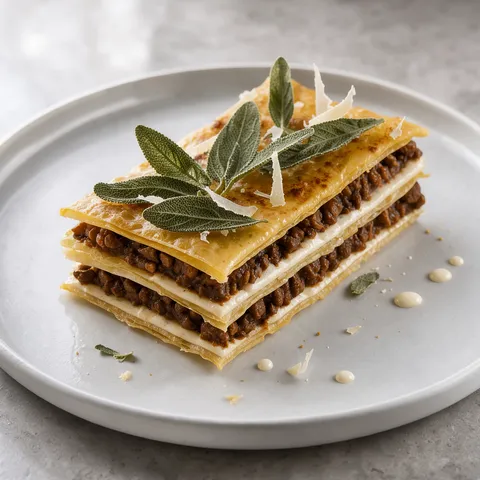 Vincisgrassi 2.01 hr 27 min · Main course
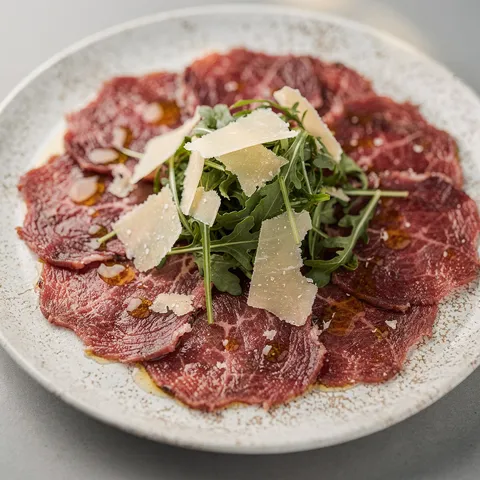 Beef Carpaccio, Mini Hunkar Begendi Croquettes, Parmesan Cream1 hr 30 min · Starter
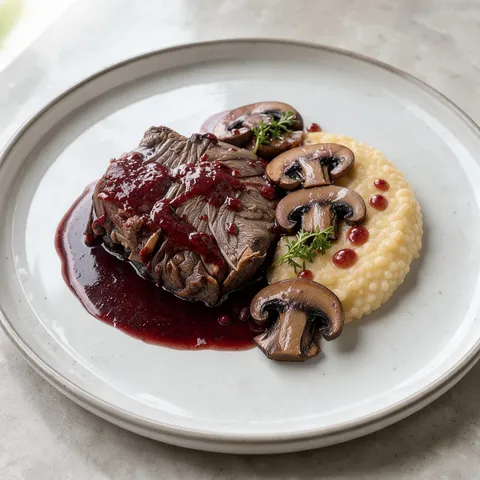 Beef Cheeks, Red Wine, Mushrooms, Polenta2 hr · Main course
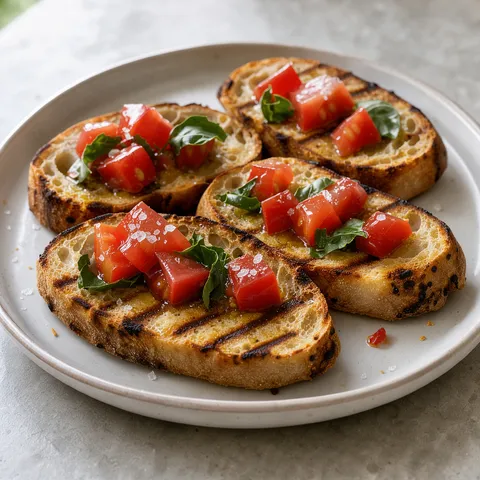 Bruschetta al Pomodoro25 min · Starter
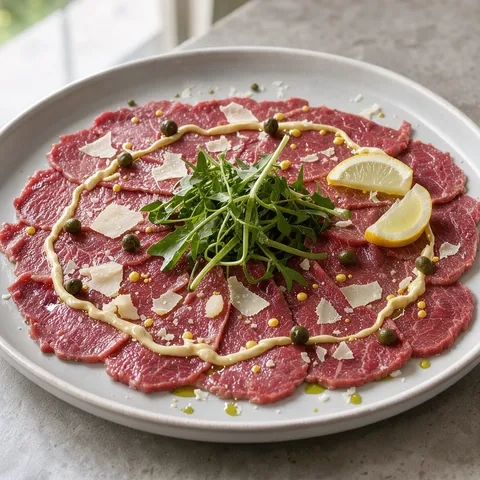 Carpaccio di Manzo30 min · Starter
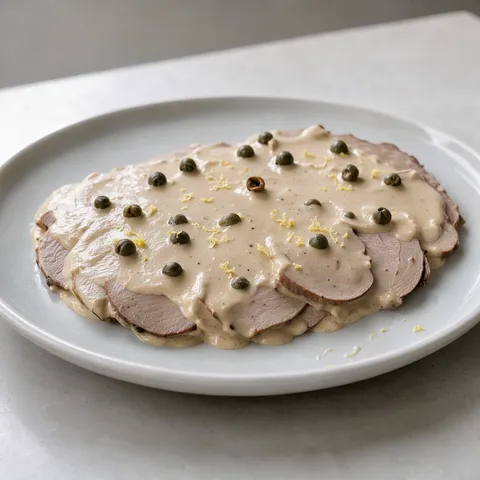 Vitello Tonnato1 hr 30 min · Starter
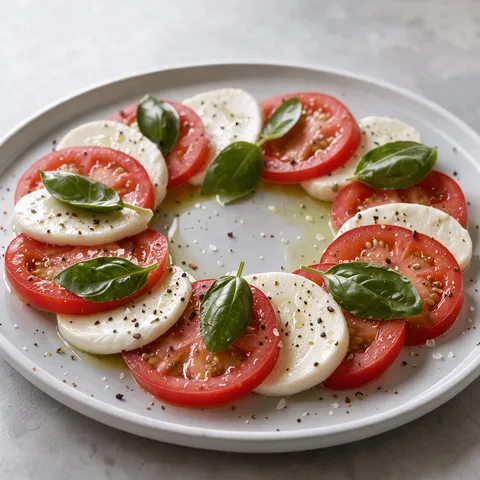 Insalata Caprese10 min · Starter