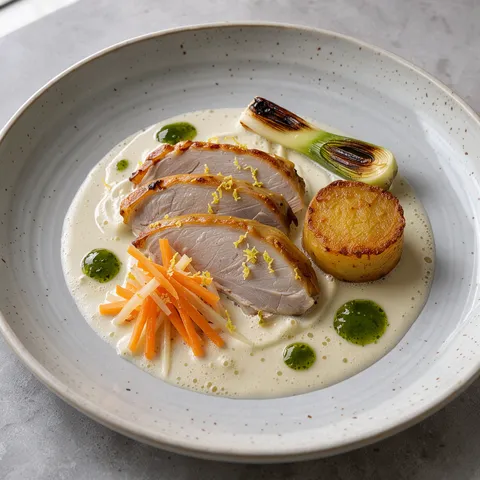
Waterzooi 2.0
A Belgian main course. Takes 1 hr 25 min, Serves 4. Difficulty: professional.
At a glance
- Total time
- 1 hr 25 min
- Serves
- Serves 4
- Difficulty
- Professional
- Cuisine
- Belgian cuisine
- Dish type
- Main course
- Diet
- Gluten-free
- Allergens
- Milk, Eggs, Celery
Ingredients
Chicken
- 4 skin-on boneless chicken breasts (170-180 g each)
- 8 g salt
- 4 thyme sprigs
- 40 g butter
Quick chicken stock
- 600 g chicken wings and backbones
- 1 litre water
- 1 onion
- 1 celery stick
- green part of the leek
- 1 bay leaf
- 5 black peppercorns
Waterzooi sauce
- 400 ml quick chicken stock
- 150 ml whipping cream (35% fat)
- 2 egg yolks
- juice of 1/2 lemon
- 20 g cold butter
- salt
- white pepper
- a pinch of nutmeg
Leeks
- 4 thin young leeks (or the white part of 2 medium leeks)
- 1 tbsp sunflower oil
- flaky salt
Fondant potatoes
- 4 medium waxy potatoes
- 40 g butter
- 200 ml quick chicken stock
- 2 thyme sprigs
Vegetable julienne
- 1 carrot
- 1/4 celeriac
- juice of 1/2 lemon
- a pinch of salt
Parsley oil
- 40 ml parsley oil from Herb Oils (Basics)
To finish
- parsley shoots
- finely grated zest of 1/2 lemon
Equipment
- Pressure cooker
- Fine sieve / chinois
- Sous vide circulator
- Probe thermometer
- Vegetable peeler
- Sauté pan
- Chef's knife
- Chopping board
- Cast-iron frying pan
- Mandoline
- Mixing bowls
- Balloon whisk
- Stick blender
- Ladle
- Fine grater
- Vacuum sealer (optional)
- Zip-lock freezer bag (optional)
Method
- Quick chicken stock: Put the wings and backbones in a pressure cooker with the water, onion, celery, leek greens, bay leaf and peppercorns. Once the cooker reaches pressure, cook over low heat for 30 min, release the steam and strain through a fine sieve. You will have about 750 ml of pale golden stock. In the classic, the chicken itself is boiled to make the stock: here the stock is made separately and the breasts are cooked sous-vide on their own so that they stay juicy
- Cook the chicken sous-vide: Rub the breasts with the salt, put each into a vacuum bag with a thyme sprig and seal under vacuum. Set up the water bath before the stock: this is the first job of the workflow. Cook in a water bath set to 65°C for 60 min, or 70 min for breasts thicker than 4 cm. This temperature and time take the core above 63°C and hold it there long enough to pasteurise the meat, which still stays juicy and silky. Before searing, check the core of one breast with a probe thermometer: it should be at least 63°C. Without a sous-vide device: put the breasts in resealable bags, press out the air by lowering them into water, and cook for the same time in water held steady at 65°C with a thermometer
- Fondant potatoes: Peel the potatoes, cut into 4 cm high cylinders and round off the edges with a peeler. Heat the butter in a sauté pan until foaming and fry the potatoes flat side down for 5 min, until deep golden, then turn. Add the 200 ml chicken stock and the thyme and cook over low heat with the lid ajar for 20-25 min, until the liquid is absorbed and a knife slides into the potatoes as if into butter
- Char the leeks: Halve the leeks lengthways, wash out the grit and pat thoroughly dry. Heat a cast-iron pan over high heat, brush with a little oil and cook the leeks cut side down for 4-5 min, until the surface is blackened and the inner layers are sweet and soft. Sprinkle with flaky salt. In the classic the leeks disappear into the sauce: here they become the main vegetable on the plate
- Prepare the julienne: Slice the carrot and celeriac 1 mm thick on a mandoline, then cut into fine julienne with a knife. Leave with the lemon juice and salt for 10 min. In the classic the julienned vegetables are sweated: here they stay raw and crisp, bringing freshness and crunch to the creamy sauce
- Reduce the sauce: Boil the 400 ml chicken stock in a wide frying pan over high heat for 10-12 min, until reduced to 150 ml. Add the cream and boil for another 2 min. The reduced stock gathers all the flavour of the classic's stewing liquid into a small volume
- Thicken and froth the sauce: Whisk the egg yolks in a bowl, gradually add the hot sauce to temper them, then pour back into the pan. Heat over low heat, whisking constantly, to 82°C, until the sauce coats a spoon: don't go above 85°C. Take off the heat and add the cold butter, lemon juice, nutmeg, salt and white pepper. Just before serving, run a stick blender just below the surface of the sauce for 20 sec to make a light foam
- Sear the chicken: Take the breasts out of the bags and pat thoroughly dry with kitchen paper. Heat the butter in a sauté pan over medium-high heat until foaming and sear the breasts skin side down for 3 min, until the skin is deep golden and crisp. Turn and hold for 30 sec, basting with the foaming butter. Cut each breast into 3 thick slices
- Plate: Place a fondant potato in the centre of a warm, wide, deep plate. Lean a charred leek half alongside in a curve. Arrange the chicken slices between the potato and the leek, cut sides showing
- Finish: Ladle the frothy waterzooi sauce generously around the chicken so that it forms a small pool on the plate, and spoon the foam from the top over the chicken. Drain the julienne and pile it in a small heap on the chicken. Add a few drops of parsley oil to the sauce, grate over the lemon zest and finish with parsley shoots. Serve immediately
Chef's note
Every element of the classic waterzooi is kept: chicken, leeks, carrots, celery, potatoes, egg-yolk cream and lemon. The difference is that each one gets its own technique: the breast cooked sous-vide, the leeks charred, the potatoes fondant, the julienne raw and crisp, the sauce a foam. The foam on the sauce collapses as soon as it hits the plate, so run the stick blender at the very last moment.
Frequently asked questions
- What core temperature should sous-vide chicken breast reach?
- Cook the breasts in a 65°C water bath for 60 minutes, or 70 minutes for thick ones. Check the core with a thermometer before searing, and it should be at least 63°C.
- What if I don't have a sous-vide machine?
- Put the breasts in a zip-lock bag and push out the air by lowering it into water. Cook for the same time in water held steady at 65°C with a thermometer.
- How do I make the sauce foamy?
- Thicken the sauce with the egg yolks and heat to 82°C, never going above 85°C. Off the heat, add cold butter and lemon juice, and just before serving, blitz with a stick blender held near the surface for 20 seconds.
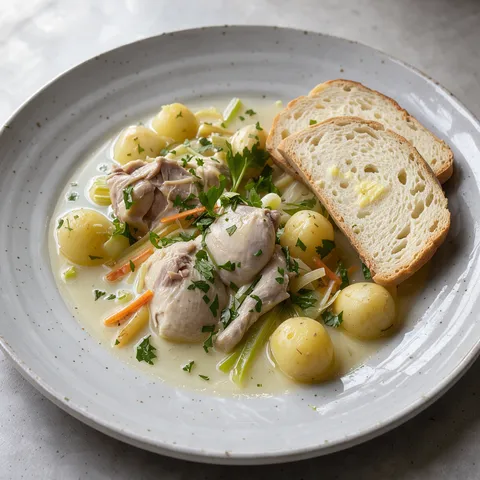 Ghent-Style Creamy Chicken Stew1 hr 20 min · Main course
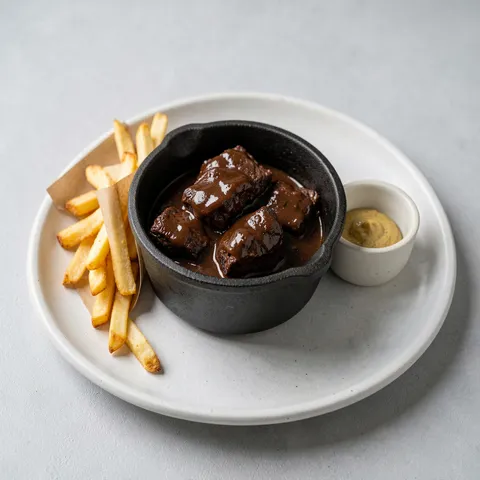 Flemish Beef and Beer Stew3 hr · Main course
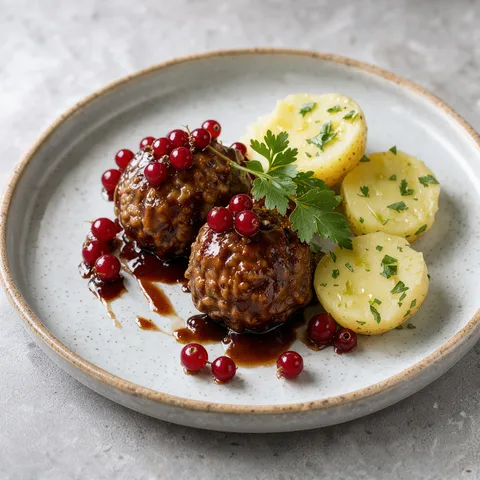 Liège Meatballs in Sweet-Sour Sauce1 hr 15 min · Main course
 Liège Waffles1 hr 40 min · Dessert
 Flemish White Asparagus40 min · Starter
 Belgian Spiced Brown Sugar Biscuits1 hr 10 min · Dessert
 Brussels Vegetable Potato Mash30 min · Main course