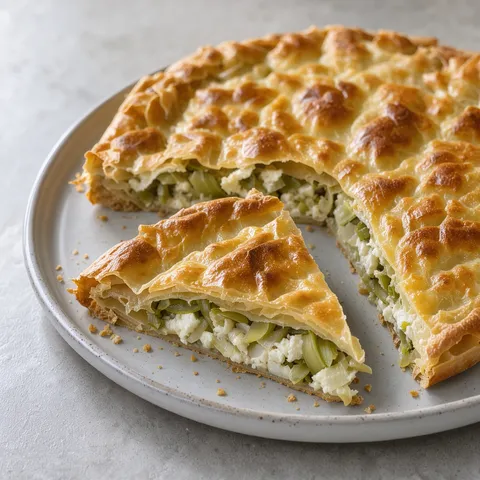
Macedonian Leek and Cheese Pie Zelnik
A North Macedonian bread & pastry. Takes 1 hr 55 min · +30 min dough resting, Serves 4. Difficulty: challenging.
At a glance
- Total time
- 1 hr 55 min · +30 min dough resting
- Serves
- Serves 4
- Difficulty
- Challenging
- Cuisine
- North Macedonian cuisine
- Dish type
- Bread & pastry
- Allergens
- Gluten, Milk, Eggs
Ingredients
Dough
- 500 g plain flour (+60 g for rolling)
- 1 tsp salt
- 1 tbsp vinegar
- 3 tbsp sunflower oil
- about 260 ml lukewarm water
Greasing
- 120 g butter
- 50 ml sunflower oil
Filling
- 1 kg leeks (3-4)
- 2 tbsp sunflower oil
- 250 g white cheese (sirene)
- 3 eggs
- 150 g yoghurt
- 1/2 tsp black pepper
- 1/4 tsp salt
Topping
- 1 egg yolk
- 2 tbsp yoghurt
Equipment
- Mixing bowls
- Cling film
- Baking tray
- Chopping board
- Chef's knife
- Colander
- Sauté pan
- Wooden spoon / spatula
- Saucepan
- Rolling pin / oklava
- Pastry brush
- Oven
Method
- Knead the dough: Mix the flour and salt in a large bowl, make a well in the middle and add the vinegar, oil and 230 ml of the lukewarm water. Bring together and knead on the work surface for 10 min, adding the remaining water a spoonful at a time if needed. The dough should be soft and pliable, like an earlobe, smooth and elastic. The vinegar relaxes the gluten, so the pastry sheets do not tear when rolled thin
- Rest: Divide the dough into 6 equal balls (about 135 g each), rub each with oil, arrange on a tray, cover with cling film and rest for 30 min
- Cook the leeks: During the rest, trim the roots and tough green tops off the leeks. On a chopping board, halve them lengthways with a chef's knife, slice into 1 cm half-rings and wash the grit out thoroughly in plenty of water in a colander. In a sauté pan, heat the oil and cook the leeks for 10-12 min, stirring with a wooden spoon, until they have released and reabsorbed their water and are soft, without colouring. Transfer to a bowl and cool, because hot leek cooks the egg
- Mix the filling: Crumble the white cheese and mix with the eggs, yoghurt, pepper and the cooled leeks. Taste and add salt according to the saltiness of the cheese. Melt the butter with the oil in a small pan. Preheat the oven to 200°C and grease a 32 cm round tin
- Roll out the sheets: On a floured surface, roll the balls one by one into rounds 38-40 cm in diameter, about 1 mm thick, so thin that the pattern of the surface underneath shows through. Wrapping the sheet around the rolling pin as you roll thins it more evenly
- Build the pie: Lay the first sheet in the tin, overhanging the edges, and brush with oil with a pastry brush. Lightly scrunch the second sheet in your hands and scatter it over the first in a wavy layer, then brush with butter. Scrunching leaves air between the layers, which gives Macedonian zelnik its puffed, crisp structure. Spread half of the filling on top
- Finish the layers: Scrunch and lay the third and fourth sheets, brushing each with butter, and spread the remaining filling. Scrunch and lay the fifth sheet and cover with the sixth laid flat. Fold the overhanging edges inwards and press so the filling does not leak
- Cut and brush: With a sharp knife, score the pie into 8 slices without cutting through to the bottom layer. Drizzle the remaining butter between the slices. Mix the egg yolk with the yoghurt and brush over the surface
- Bake: Bake on the bottom shelf of the 200°C oven for 40-45 min, until the top is deep golden and the base slides freely in the tin. A knife pushed into the middle should come out without wet filling
- Rest and serve: Take the pie out of the oven, cover with a clean tea towel and rest for 10 min, which softens the edges and lets the filling settle. Separate along the scoring and serve warm with yoghurt or ayran (salted yoghurt drink)
Chef's note
There is a version of zelnik made with leeks and sirene cheese, and a similar pie exists in Bulgaria. It differs from Bulgarian banitsa in that the filling relies more on leeks than on cheese and the sheets are scrunched into the tin rather than rolled up. In winter it is also made with cabbage, and in spring with sorrel and spinach. The next day, reheat in the oven at 160°C for 10 min and the crispness returns.
Frequently asked questions
- Why is vinegar added to the Zelnik dough?
- Vinegar relaxes the gluten. This way the sheets do not tear when rolled out to 1 mm thick.
- Why are the leeks cooled before going into the filling?
- Hot leeks would cook the egg in the filling. So tip them into a bowl, let them cool and then mix with the cheese, eggs and yoghurt.
- Why are the pastry sheets scrunched up as they are laid in the tin?
- Scrunching leaves air between the layers. That is where the puffy, crisp texture of the pie comes from.
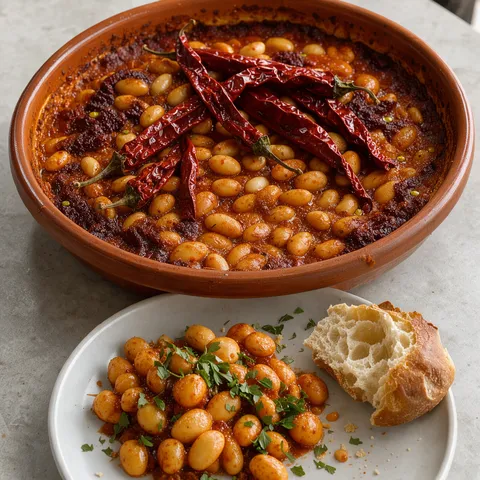 Macedonian Clay-Pan Baked Beans2 hr 25 min · Main course
 Macedonian Lamb and Egg Pide57 min · Bread & pastry
 Ohrid Baked Trout with Potatoes1 hr 5 min · Main course
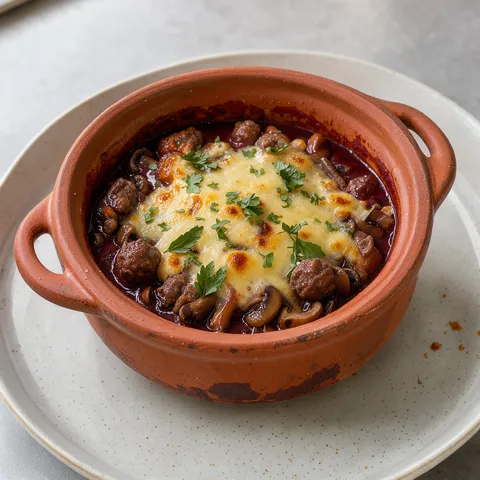 Macedonian Beef and Mushroom Casserole2 hr 40 min · Main course
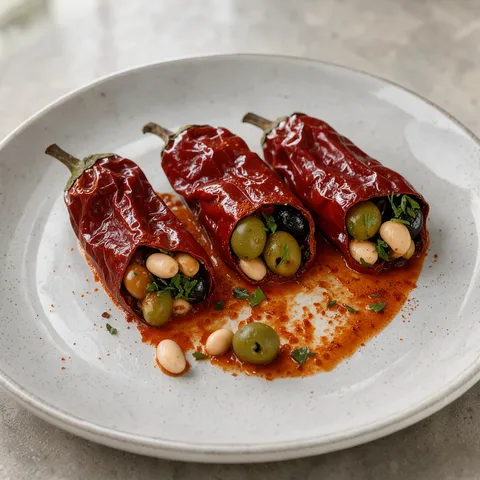 Macedonian Stuffed Peppers2 hr 25 min · Main course
 Pastrmajlija 2.01 hr 25 min · Main course