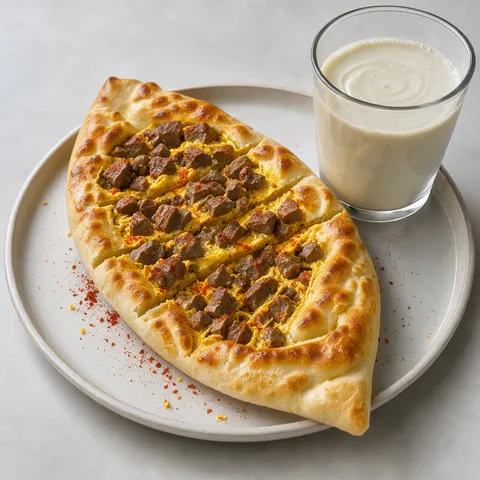
Macedonian Lamb and Egg Pide Pastrmajlija
A North Macedonian bread & pastry. Takes 57 min · +1 hr rising, Serves 4. Difficulty: medium.
At a glance
- Total time
- 57 min · +1 hr rising
- Serves
- Serves 4
- Difficulty
- Medium
- Cuisine
- North Macedonian cuisine
- Dish type
- Bread & pastry
- Allergens
- Gluten, Milk, Eggs, Celery
Ingredients
Dough (makes 2)
- 500 g plain flour (+20 g for rolling)
- 7 g fast-action dried yeast
- 1 tsp caster sugar
- 1.5 tsp salt
- about 300 ml lukewarm water
- 2 tbsp sunflower oil
Meat
- 500 g boneless lamb shoulder or leg
- 1.5 tsp salt
- 1 tsp sweet paprika
- 1/2 tsp black pepper
- 2 tbsp sunflower oil
Topping
- 1 egg yolk (for the edges)
- 3 eggs
- 40 g butter (melted)
To serve
- 800 ml ayran (salted yoghurt drink, in place of kiselo mleko)
Equipment
- Mixing bowls
- Cling film
- Chopping board
- Chef's knife
- Oven
- Baking tray
- Baking paper
- Pastry brush
Method
- Knead the dough: In a large bowl, mix the flour, yeast, sugar and salt. Add 270 ml of the lukewarm water and the oil, bring together, turn out onto the work surface and knead for 10 min, adding the remaining water a spoonful at a time if needed. The dough should be soft, slightly sticky and elastic. The base of pastrmajlija is thicker than a pizza's, so the dough is kept soft rather than firm
- Prove: Divide the dough in two, shape into two balls, put in an oiled bowl and cover with cling film. Prove in a warm place for 1 hr, until doubled in size
- Salt the meat: While the dough proves, cut the lamb into 1.5 cm cubes on a chopping board with a chef's knife, trimming off the sinew and thick fat but leaving a little fat. Rub in a bowl with the salt, paprika and black pepper, cover and keep in the fridge. The salt draws water from the surface of the meat and firms it, coming close to the intense taste of the salted dried meat (pastrma) that gives the dish its name
- Preheat the oven: Heat the oven to its highest setting (250°C, conventional) with the baking tray inside. The hot tray cooks the underside of the dough at once and stops the base turning doughy
- Shape: Take one of the risen doughs onto a floured surface and press with your fingertips into an oval sheet of about 35×18 cm, 1 cm thick in the middle. Fold the long edges 2 cm inwards and press, and pinch the two ends to a point to make a boat shape. Transfer onto baking paper and shape the second in the same way
- Add the meat: Lightly pat the meat dry with kitchen paper, mix with 2 tbsp oil, spread evenly over the middle of the two pides and press the pieces lightly into the dough. Brush the egg yolk over the edges with a pastry brush to give a glossy, browned frame
- Bake: Slide the pides with their baking paper onto the hot tray and bake on the middle shelf of the 250°C oven for 12-14 min, until the edges are deep golden and the edges of the meat have browned. Because the lamb is cut small, it cooks in this time and gives its juices to the dough
- Add the egg: Beat the three eggs with a fork in a bowl. Take the pides out of the oven, pour the egg evenly between the pieces of meat, into the boat, and bake for another 5 min, until the egg is fully set. Traditionally a whole egg is sometimes cracked on top, but beaten egg spreads more evenly between the pieces of meat
- Brush with butter and serve: As soon as they come out of the oven, brush the edges and the inside with the melted butter, which softens and glosses the dough. Cut each pide crosswise into 6 slices and serve hot with cold ayran
Chef's note
The name comes from the salted, dried meat (pastrma), and the dish is associated with the Štip area, where a festival called Pastrmalijada is held every year. Today fresh meat is used in many places; here it is made with lamb, in the spirit of traditional sheep pastrma. It differs from Turkish pide with diced meat in its thick, soft oval base, meat cubes seasoned only with salt and red pepper, and butter instead of mild semi-hard cheese. Some Štip masters do not add egg. The egg must be fully cooked. If you are in an at-risk group, cook the yolk through.
Frequently asked questions
- Why is the lamb rubbed with salt and pepper?
- Salt draws water out of the surface and firms up the meat. This gets close to the intense flavour of the salt-cured dried meat the dish is named after.
- Why is the egg poured over the pide after it has baked?
- The pide bakes first with the meat, then beaten egg is poured into the boat and baked for 5 more minutes. Beaten egg spreads more evenly between the pieces of meat.
- What is Macedonian Lamb and Egg Pide served with?
- Cut the pide crosswise into 6 slices and serve hot. It comes with cold ayran, and the recipe uses 800 ml of ayran.
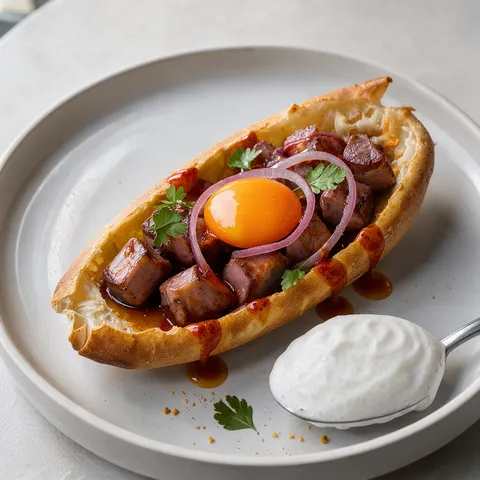 Pastrmajlija 2.01 hr 25 min · Main course
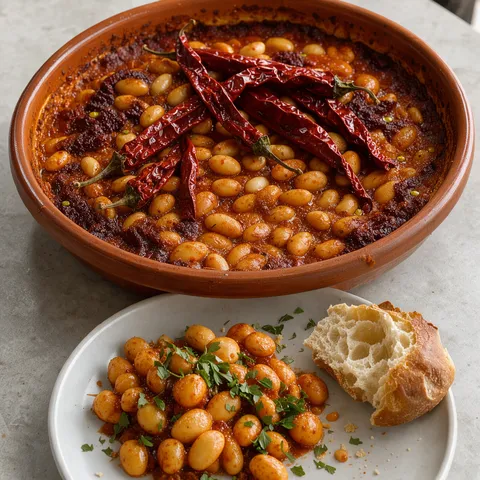 Macedonian Clay-Pan Baked Beans2 hr 25 min · Main course
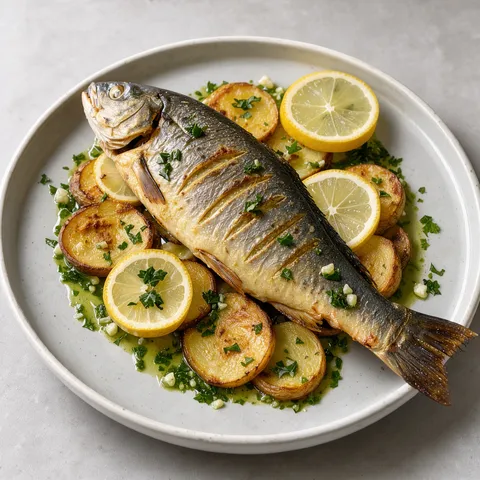 Ohrid Baked Trout with Potatoes1 hr 5 min · Main course
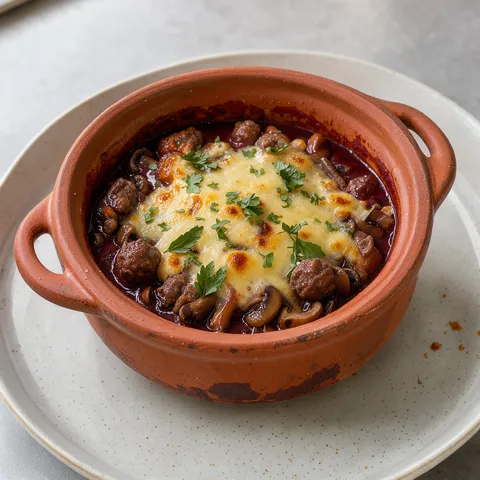 Macedonian Beef and Mushroom Casserole2 hr 40 min · Main course
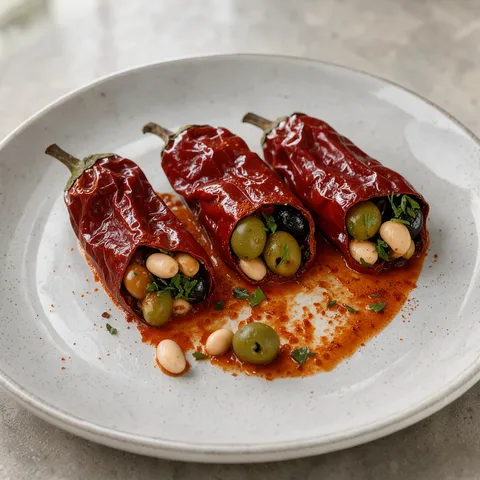 Macedonian Stuffed Peppers2 hr 25 min · Main course
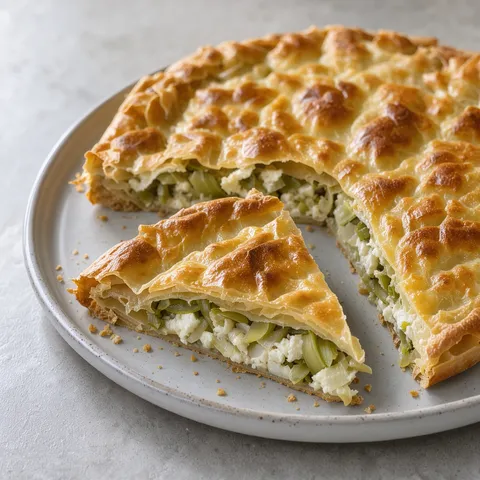 Macedonian Leek and Cheese Pie1 hr 55 min · Bread & pastry
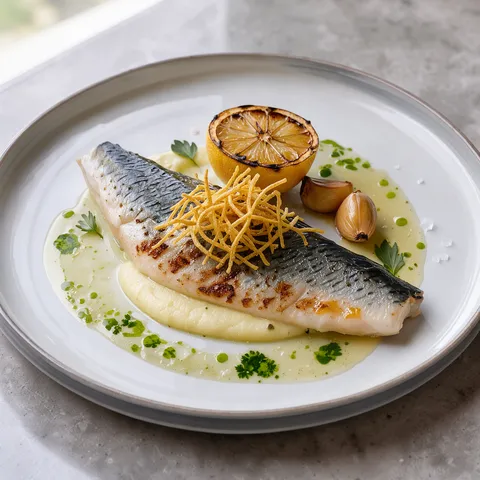 Ohridska Pastrmka 2.01 hr 20 min · Main course