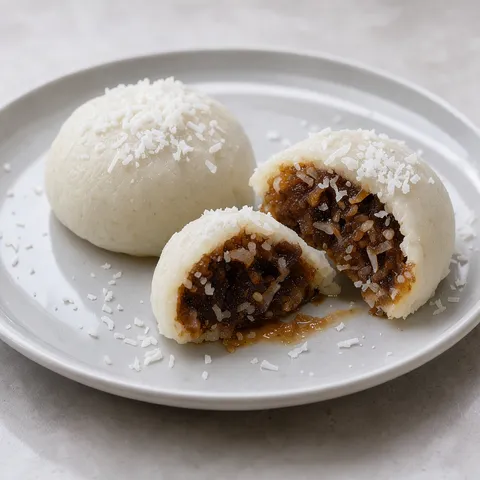
Steamed Rice Cakes with Date Palm Jaggery Bhapa Pitha
A Bangladeshi dessert. Takes 1 hr 5 min (including resting), 8 pieces (4 servings). Difficulty: medium.
At a glance
- Total time
- 1 hr 5 min (including resting)
- Serves
- 8 pieces (4 servings)
- Difficulty
- Medium
- Cuisine
- Bangladeshi cuisine
- Dish type
- Dessert
- Diet
- Gluten-free
- Allergens
- Tree nuts
Ingredients
Dough
- 250 g fine rice flour (ideally freshly ground from soaked and dried rice)
- 1/4 tsp salt
- 100-120 ml lukewarm water
Filling
- 120 g grated khejur gur (date palm jaggery) or dark brown cane sugar (jaggery)
- 80 g freshly grated coconut
- a pinch of ground cardamom (optional)
Equipment
- 1 small bowl (8 cm across)
- 2 thin cotton cloths (muslin, 20×20 cm)
Equipment
- Mixing bowls
- Fine sieve / chinois
- Box grater
- Saucepan
- Steamer basket
- Muslin
Method
- Moisten the flour: Put the rice flour and salt in a large bowl. Sprinkle the lukewarm water over from your palm and mix by rubbing the flour between your fingertips, without kneading. The right texture resembles damp sand: it holds its shape when squeezed in your palm and crumbles when touched with a finger. Too much water turns the pitha doughy and makes it collapse in the steamer
- Sieve: Press the moistened flour through a fine sieve with your palm. The lumps break up and the flour is aerated, giving a light, spongy texture once cooked. Cover the bowl with a damp cloth and leave to rest for 30 min so the moisture spreads evenly through the grains
- Make the filling: Grate the gur and mix it with the coconut using your fingertips, then add the cardamom. If the gur is very hard, grate it finely on a small grater: large pieces stay unmelted
- Set up the steamer: Half-fill a narrow-mouthed saucepan with water and bring to the boil. Fit a perforated lid or steamer basket over the top. In Bangladesh a cloth is stretched over the mouth of the pan and the steam rises through the middle: a steamer basket does the same job
- Fill the pitha: Wrap the small bowl in muslin, or wet the cloth and wring it out. Put 2 tbsp sifted flour into the bowl and level it lightly, scatter 1.5 tbsp of the gur and coconut mixture in the centre and cover with 2 tbsp flour. Press very lightly with the back of a spoon, without compacting. The pitha should stay loose so the steam can pass through it
- Invert: Cover the top of the bowl with the second damp cloth, turn it over together with the cloth onto the steamer basket and carefully lift off the bowl. The pitha keeps the shape of the bowl inside the cloth: fold the corners of the cloth over the top
- Steam: Cover and steam over high heat for 6-8 min. The pitha turns from white to a slightly translucent white, and the gur melts inside, showing brown streaks at the edges. Lift out with the cloth and turn out onto a plate. The steamer basket holds 3-4 pitha at a time: carry on with the remaining mixture in 2-3 rounds in the same way, wetting the cloth again each time
- Plate: Place the hot pitha two to a small plate, with one broken open in the middle to show the gur streaks. Scatter a pinch of freshly grated coconut over the top and serve immediately: they harden as they cool
Chef's note
This is the street sweet of Bangladeshi winter mornings: khejur gur comes in fresh from November to January. Gur is traditionally bought ready-made. The fresher and finer the rice flour, the softer the pitha. In some regions the filling varies, and savoury versions use a mash or fish. Makes 8 pieces (serves 4).
Frequently asked questions
- What consistency should the flour be for pitha?
- The flour should feel like damp sand. It should hold its shape when squeezed in your palm and crumble when touched with a finger. Too much water makes the pitha doughy and it collapses in the steamer.
- Why is the flour sifted?
- Sifting the dampened flour breaks up lumps and aerates it. The pitha comes out light and spongy once cooked.
- How do I steam pitha without a cloth?
- The recipe works with a thin cotton cloth or a steamer basket with a perforated lid. The pitha should stay loose so that the steam can pass through it.
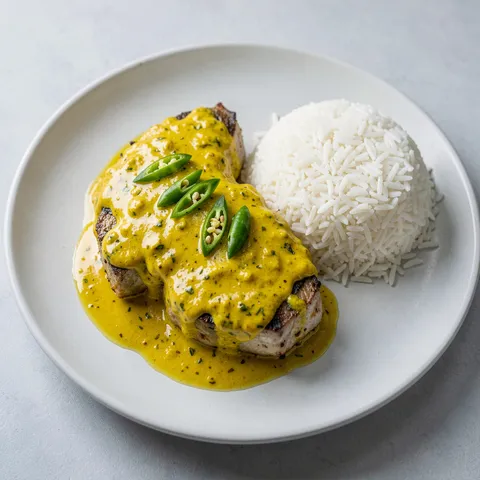 Bengali Hilsa in Mustard Sauce50 min · Main course
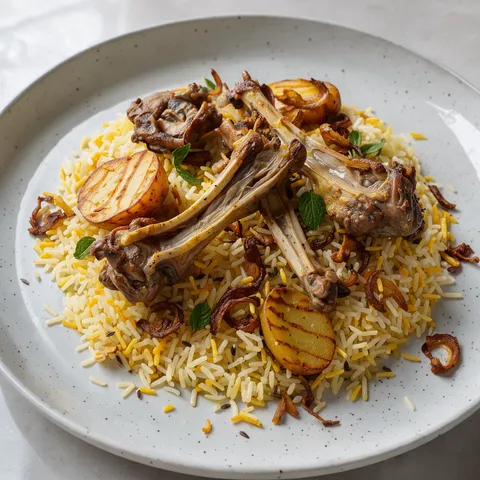 Dhaka-Style Biryani with Raw Marinated Lamb2 hr 15 min · Main course
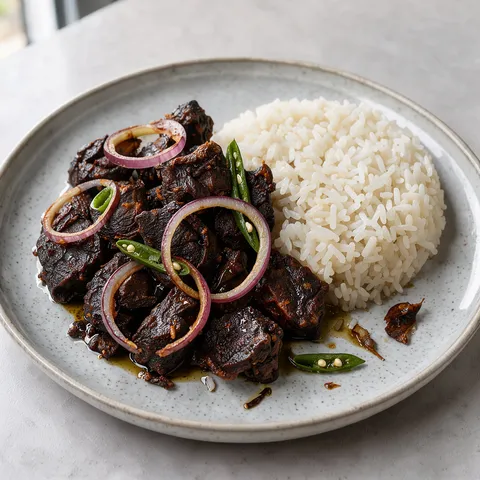 Chittagong-Style Dark-Fried Beef2 hr 30 min · Main course
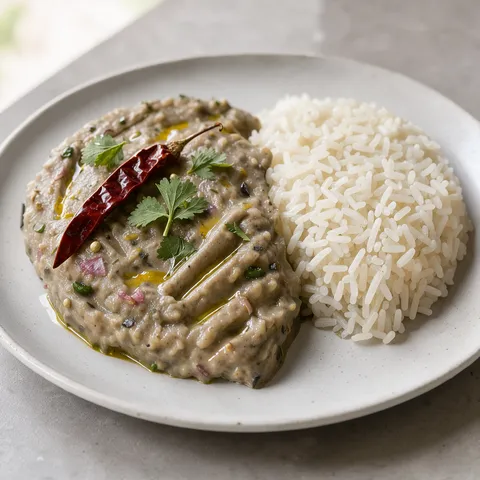 Charred Aubergine Mash with Mustard Oil35 min · Meze
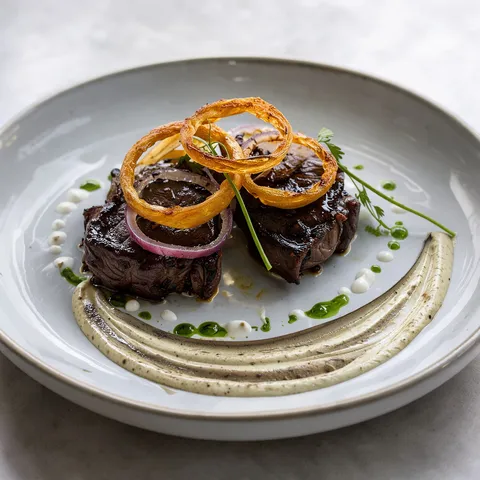 Kala Bhuna 2.01 hr 30 min · Main course
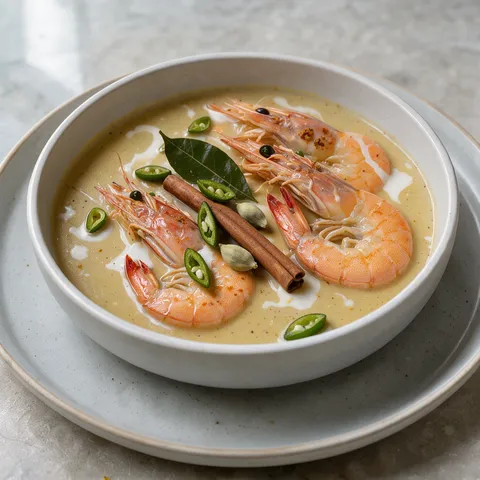 Bengali Prawn Curry with Coconut Milk45 min · Main course