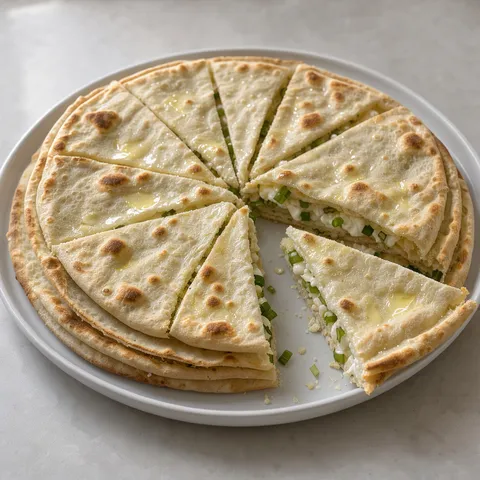
Chepalgash Chechen Thin Bread with Curd Cheese
A Dagestani, Chechen and Ossetian bread & pastry. Takes 1 hr 10 min, 6 pieces, 8 slices (4 servings). Difficulty: medium.
At a glance
- Total time
- 1 hr 10 min
- Serves
- 6 pieces, 8 slices (4 servings)
- Difficulty
- Medium
- Cuisine
- Dagestani, Chechen and Ossetian cuisine
- Dish type
- Bread & pastry
- Diet
- Vegetarian
- Allergens
- Gluten, Milk, Eggs
Ingredients
Dough
- 400 g plain flour (plus 50 g for rolling)
- 250 ml kefir (or ayran)
- 1/2 tsp bicarbonate of soda
- 1/2 tsp salt
Filling
- 400 g fresh fresh curd cheese or unsalted dry curd cheese (well drained)
- 1 egg
- 4 spring onions (finely chopped)
- 1/2 tsp salt
To finish
- 100 g butter (melted)
Equipment
- Mixing bowls
- Rolling pin / oklava
- Frying pan
- Pastry brush
- Chef's knife
- Fine sieve / chinois (optional)
- Saucepan (optional)
Method
- Knead the dough: Mix the kefir with the bicarbonate of soda in a bowl and leave to foam for 2 min. Add the salt and flour and knead for 5 min. The dough should be soft, slightly sticky and smooth: if you are using kefir as runny as ayran, add a little flour. Cover and rest for 15 min
- Make the filling: Mash the fresh curd cheese thoroughly with a fork or pass it once through a fine sieve: any lumps will poke through the dough. Add the egg, spring onions and salt and mix. The filling should be spreadable but not watery: if you do not drain the fresh curd cheese, the dough gets soggy
- Divide into balls: Divide the dough into 6 equal pieces and the filling into 6 equal portions. Spread each piece of dough in your palm into a 12 cm disc, put the filling in the centre, gather the edges up like a bundle and seal tightly. Turn sealed side down
- Roll out: On a floured work surface, press each ball first with your hand, then roll out with a rolling pin, without the filling bursting out, into a round 20-22 cm across and about 4-5 mm thick. Roll from the centre towards the edges so the filling spreads evenly. If the dough tears, sprinkle flour over it and press
- Cook in a dry pan: Heat a large frying pan over medium heat without oil. Put a chepalgash in the pan and cook for 2-3 min, until the underside has brown speckles in places and the dough bubbles. Turn and cook the other side for 2-3 min. Do not put oil in the pan: the bread does not fry, and the dough cooks dry without absorbing fat. The six breads take about 30 min in total: roll out the next one while one cooks
- Remove the flour: Brush the leftover flour off the surface of each cooked chepalgash with a soft brush. All the flour should come off, leaving the bread clean and soft
- Layer with butter: Put a chepalgash on a plate and brush the top generously with melted butter. Place the next bread on top and brush that too. Stack all six breads like this: the layers soften with the butter and stick together
- Cut and plate: Cut the stack into 8 wedges like a cake with a sharp knife. Serve hot, with hot tea or ayran alongside
Chef's note
Chepalgash is the best-known bread of Chechen and Ingush cooking, offered to guests and to new mothers after giving birth. Russian sources make it with the fresh cheese called tvorog. In Türkiye, fresh fresh curd cheese or unsalted dry curd cheese is the closest equivalent. In autumn the filling is made with pumpkin purée. Some accounts say the cooked bread is briefly dipped in hot water, but this could not be verified. At home, brushing off the flour and spreading with melted butter is enough. Leftovers are reheated the next day in a dry frying pan.
Frequently asked questions
- Why is the curd cheese drained for Chepalgash?
- Undrained curd cheese soaks the dough. Mash the curd cheese with a fork and, if needed, pass it through a fine sieve. The filling should be moist but not runny.
- Why is Chepalgash cooked without oil in the pan?
- If oil is put in the pan, the bread fries. In a dry pan the dough dries out without taking up oil and picks up brown spots here and there.
- Why is the flour brushed off the Chepalgash?
- Remove the flour residue on the surface of the cooked chepalgash with a soft brush. All the flour should go so that the bread stays clean and soft.
 Chepalgash 2.01 hr 15 min · Starter
 Avar Khinkal2 hr 15 min · Main course
 Dagestani Braided Lamb Dumplings1 hr 55 min · Bread & pastry
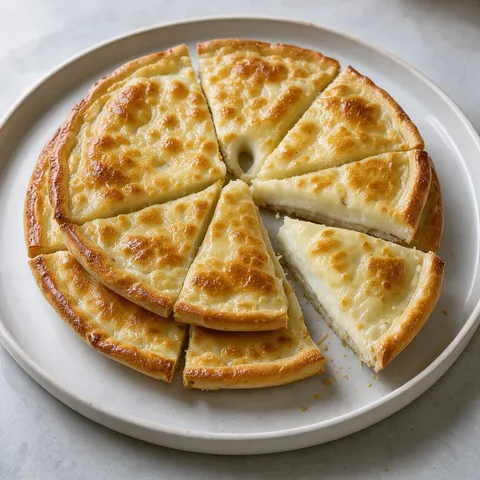 Ualibakh2 hr 5 min · Bread & pastry
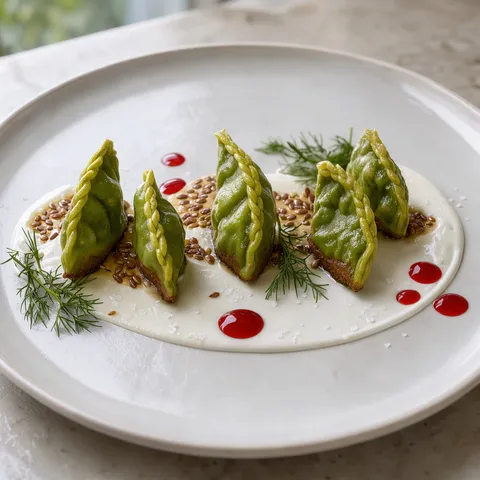 Kurze 2.01 hr 25 min · Bread & pastry
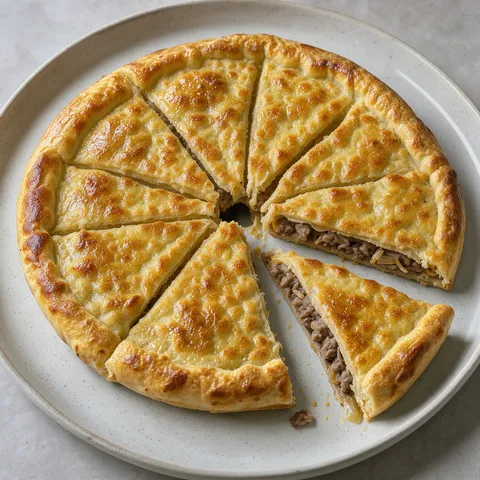 Fydzhin1 hr 10 min · Bread & pastry
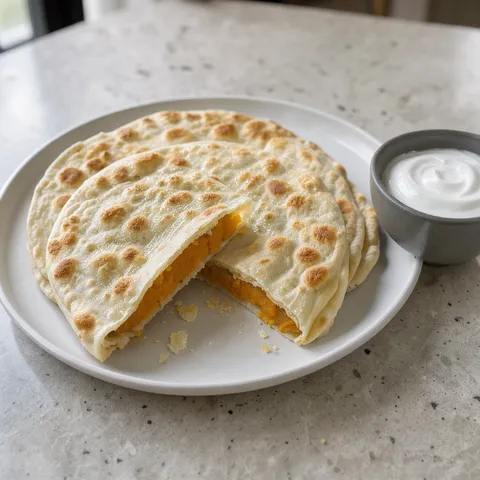 Chudu53 min · Bread & pastry