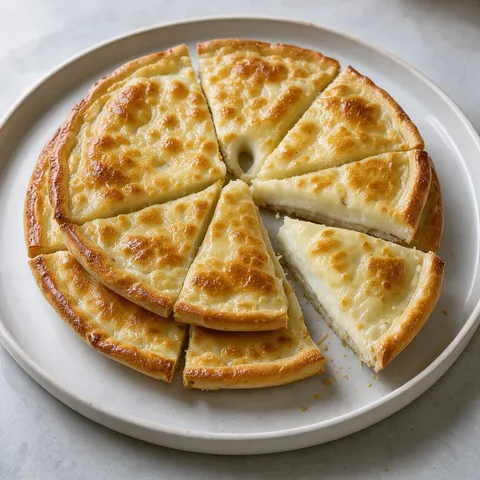
Ualibakh Ossetian Cheese Pie
A Dagestani, Chechen and Ossetian bread & pastry. Takes 2 hr 5 min, 2 pieces 30 cm pide (4 servings, 8 slices). Difficulty: challenging.
At a glance
- Total time
- 2 hr 5 min
- Serves
- 2 pieces 30 cm pide (4 servings, 8 slices)
- Difficulty
- Challenging
- Cuisine
- Dagestani, Chechen and Ossetian cuisine
- Dish type
- Bread & pastry
- Allergens
- Gluten, Milk
Ingredients
Dough
- 450 g plain flour
- 270 ml lukewarm milk (about 37°C)
- 7 g fast-action dried yeast
- 1 tsp sugar
- 1 tsp salt
- 30 ml sunflower oil
Filling
- 400 g low-salt white brined cheese (or use sulguni or Ossetian cheese if you can find it)
- 200 g fresh mild semi-hard cheese
- 3 tbsp strained (Greek-style) yoghurt
To finish
- 60 g butter (melted)
For baking
- a little plain flour
Equipment
- Mixing bowls
- Box grater
- Baking tray
- Baking paper
- Oven
- Pastry brush
- Chef's knife
Method
- Activate the yeast: Mix the lukewarm milk, sugar and yeast in a bowl and leave for 10 min. A thin foam should form on the surface: if it does not, either the milk is too hot or the yeast is dead, so start again
- Knead the dough: Mix the flour with the salt, make a well in the centre and add the yeasted milk and the oil. Knead for 8 min. Ossetian dough is deliberately kept soft: it should stick slightly to your hands and spring back slowly when pressed with a finger. A stiff dough cracks when it is wrapped around the cheese
- Prove: Transfer the dough to a lightly oiled bowl, cover and leave to prove at 26-28°C for 1 hr: it should have doubled in size. In the last 30 min of this time, start preheating the oven to 230°C (220°C fan)
- Make the filling: While the dough proves, taste the white cheese: if it is very salty, soak it in cold water for 20 min and squeeze it out well. Crumble the white cheese by hand, finely grate the semi-hard cheese and knead together with the yoghurt in your palm. The mixture should form a moist ball that holds together when squeezed in your hand: a dry filling turns floury and dry when baked. Shape into two equal balls of about 300 g each
- Fill: Gently press the risen dough to knock out the air and divide it into two equal pieces. On a floured work surface, press one piece out with your fingers into a 20 cm round. Put a ball of cheese in the centre, gather the edges of the dough up around it like a pouch and twist the dough firmly where it meets at the top, pinching off the excess. The cheese should sit inside an envelope of dough of even thickness
- Spread: Turn the pouch over so the sealed side is underneath. Press with your palms from the centre outwards, turning now and then, to spread it into a round 28-30 cm across and 1.5 cm thick. The cheese should reach the edges, and the dough must not tear anywhere. Transfer the pie to a tray lined with baking paper and make a small hole in the centre with your finger to let steam escape. Prepare the second pie in the same way
- Bake: Put the two trays on the middle and bottom shelves of the fan oven and bake for 16-18 min, swapping the trays over after 9 min. The top should be golden, the base browned and firm, and the cheese should bubble gently through the hole in the centre
- Brush with butter: As soon as the pies come out of the oven, brush the tops with half the melted butter. The hot dough absorbs the butter at once and the crust softens
- Plate: Stack the pies on top of each other and drizzle the remaining butter over the top one. Cut the whole stack into 8 wedges with a sharp knife and transfer to a wooden board or flat plate. Serve hot: the cheese should stretch in the first slices
Chef's note
On the Ossetian table pies are stacked in odd numbers, usually three: the number three symbolises sky, earth and sun, and at funerals it drops to two. Ualibakh (Uælibæh) is specifically the cheese pie among Ossetian pies: the potato and cheese one is called kartofjin, and the one with beet leaves and cheese tsakharajin. If you cannot find Ossetian cheese, sulguni or a mix of low-salt white cheese and fresh semi-hard cheese gives the closest result, and neither is a dairy product made at home.
Frequently asked questions
- What if the yeast doesn't foam for Ualibakh?
- After 10 minutes, the milk, sugar and yeast mixture should have a thin foam on top. If it doesn't, the milk is either too hot or the yeast is dead. In that case, start again.
- Why is the dough for the cheese pie kept soft?
- Ossetian dough is deliberately left soft and slightly sticky. A stiff dough cracks as it wraps around the cheese. The right consistency is when the dough springs back slowly after a press with your finger.
- Why can the cheese filling turn dry after baking?
- Knead the cheeses and yoghurt by hand and squeeze into a moist ball that holds together. A dry filling turns floury and dry when baked. If the white brined cheese is very salty, soak it in cold water for 20 minutes and squeeze it dry.
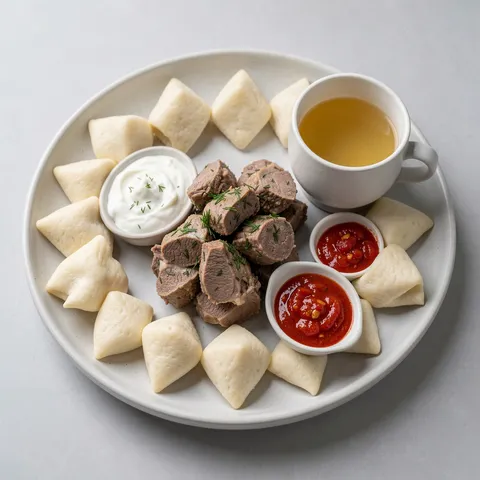 Avar Khinkal2 hr 15 min · Main course
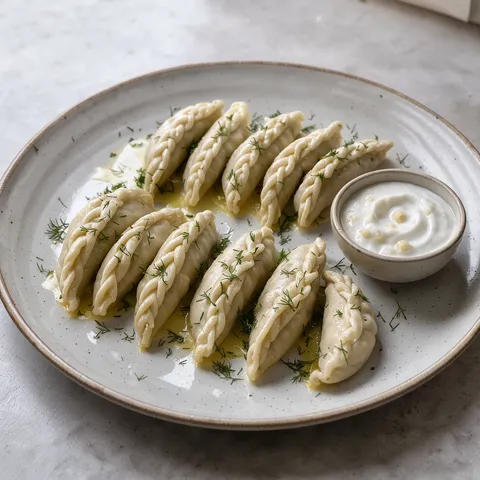 Dagestani Braided Lamb Dumplings1 hr 55 min · Bread & pastry
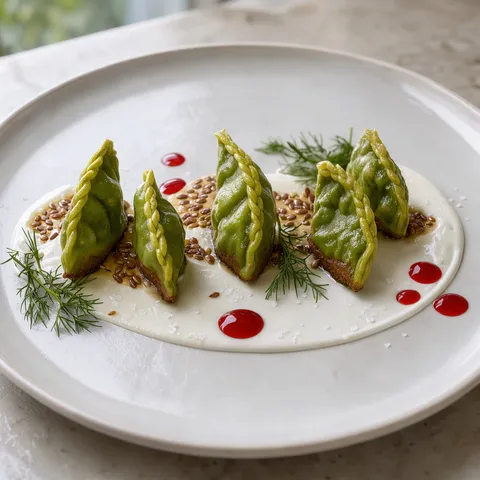 Kurze 2.01 hr 25 min · Bread & pastry
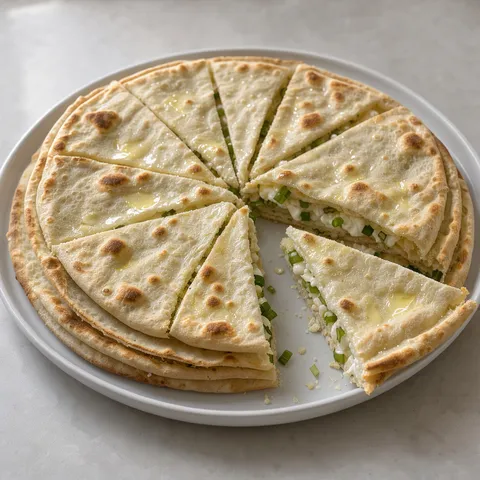 Chepalgash1 hr 10 min · Bread & pastry
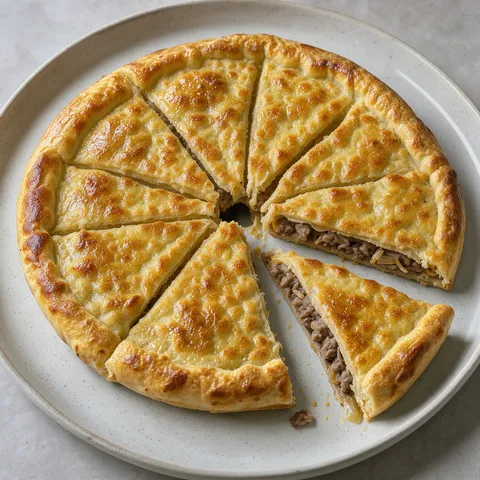 Fydzhin1 hr 10 min · Bread & pastry
 Chepalgash 2.01 hr 15 min · Starter