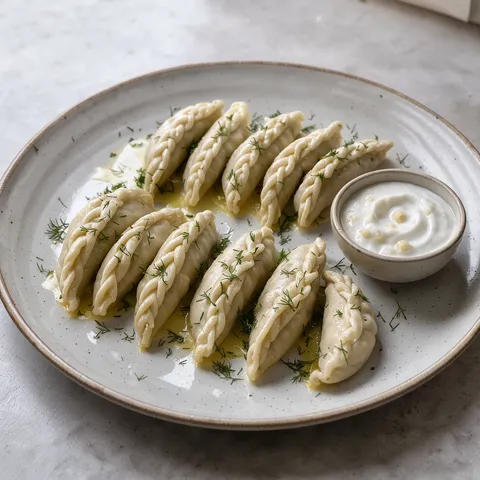
Dagestani Braided Lamb Dumplings Kurze
A Dagestani, Chechen and Ossetian bread & pastry. Takes 1 hr 55 min, 4 servings (about 32 pieces). Difficulty: medium.
At a glance
- Total time
- 1 hr 55 min
- Serves
- 4 servings (about 32 pieces)
- Difficulty
- Medium
- Cuisine
- Dagestani, Chechen and Ossetian cuisine
- Dish type
- Bread & pastry
- Allergens
- Gluten, Milk, Eggs
Ingredients
Dough
- 400 g plain flour
- 1 egg
- 170 ml lukewarm water
- 1 tsp salt
Filling
- 500 g fatty lamb mince (preferably minced twice)
- 2 medium onions (very finely chopped, about 220 g)
- 1 tsp salt
- 1/2 tsp black pepper
- 3 tbsp iced water
For boiling
- 3 litres water
- 1 tbsp salt
Garlic yoghurt
- 300 g strained (Greek-style) yoghurt
- 3 garlic cloves
- 1/2 tsp salt
To finish
- 80 g butter
- 1/2 bunch dill (finely chopped)
Equipment
- Mixing bowls
- Cling film
- Pestle and mortar
- Rolling pin / oklava
- Baking tray
- Saucepan
- Colander
- Frying pan
- Probe thermometer (optional)
Method
- Knead the dough: Put the flour and salt in a large bowl and make a well in the centre. Add the egg and lukewarm water and bring together into a dough with your fingers. Knead on the work surface for 10 min, until the surface is silky smooth. The dough should be firm: a soft dough will not hold the braid and opens up as it boils. Wrap in cling film and rest for 30 min: once the gluten relaxes, it rolls out thinly
- Make the filling: While the dough rests, put the mince, chopped onion, salt and pepper in a bowl. Add the iced water and knead by hand for 2-3 min, until the mixture is sticky and holds together in one mass. This cohesion stops the filling falling apart as it cooks and keeps the juices in. Keep in the fridge until needed
- Make the yoghurt: Crush the garlic with the salt in a pestle and mortar to a paste and whisk into the strained yoghurt. Leave for 10 min so the garlic permeates the yoghurt, and keep somewhere cool
- Roll out the dough: Divide the dough in half and keep one piece covered. Roll the other out on a floured work surface with a rolling pin to 2 mm thick: when held up to the light, a faint shadow should show through. Cut out rounds with an 8 cm glass or cutter, gather up the trimmings and roll out once more. This gives about 32 rounds in total
- Fill and braid: Put 1 dessertspoon (about 15 g) of filling in the centre of each round. Fold the dough over into a half-moon and pinch one end with your fingers. Then fold the edge inwards in small pleats with your thumb, pressing as you go, all the way to the other end, so a braid like an ear of wheat forms along the edge. The braid is not just decoration: it seals the edge twice over and stops the dumplings opening as they boil. Arrange the finished kurze on a floured tray without touching. Finishing the whole batch takes 30-35 min
- Boil: Bring the salted water to the boil in a large saucepan. Drop in the kurze in batches of 10 and stir once gently so they do not stick to the bottom. Once they rise to the surface, cook over medium heat for another 6 min. Cut one open to check: the filling should be firm and grey with clear juices, and the internal temperature of the mince should reach at least 72°C. Lift out with a slotted spoon into a warm dish. The four batches take about 25 min
- Prepare the butter: Melt the butter in a small frying pan over medium heat and heat for 1-2 min until foaming: it should smell only faintly nutty and must not darken
- Plate: Arrange the kurze side by side on a warm serving platter with the braided edges showing. Drizzle with the hot butter and scatter with dill. Put the garlic yoghurt in a bowl alongside for dipping each mouthful. Serve immediately, as the dough of kurze left standing turns tough
Chef's note
Kurze is Dagestan's own dumpling, best known for the braid along its edge. In Avar, Lak and Dargin cooking the filling changes with the season: nettles and egg in spring, pumpkin in autumn, lamb or dried meat in winter. The braid is hard to get neat the first time, but after three or four attempts your hands get used to it. Soured cream is also used instead of garlic yoghurt.
Frequently asked questions
- Why does Kurze dough need to be firm?
- Soft dough won't hold the braid and comes undone when boiled. So the flour, egg and lukewarm water are kneaded for 10 minutes into a firm, smooth dough. Wrapped in cling film and rested for 30 minutes, the gluten relaxes and the dough rolls out thin.
- Is the braided edge of Kurze just for decoration?
- No, the braid presses the edge double, which stops it opening up during boiling. After closing the dough into a half-moon, fold the edge inwards in small pleats with your thumb as you go. Lay the finished kurze on a floured tray without letting them touch.
- How do you tell when Kurze are cooked through?
- Cook them for 6 minutes after they float to the surface, then cut one open to check. The filling should be firm and grey with clear juices. The internal temperature of the mince should reach at least 72°C.
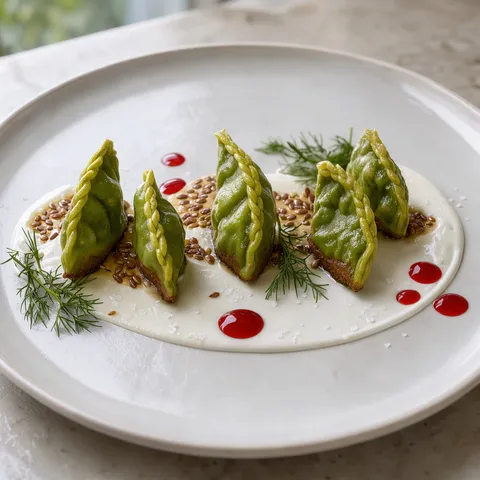 Kurze 2.01 hr 25 min · Bread & pastry
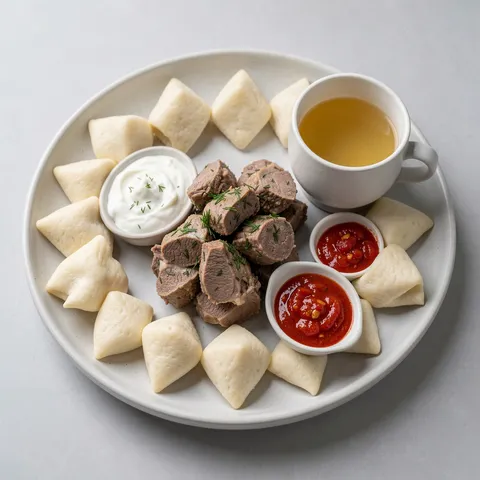 Avar Khinkal2 hr 15 min · Main course
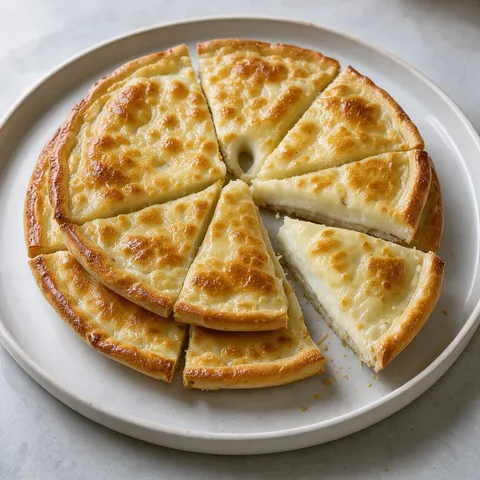 Ualibakh2 hr 5 min · Bread & pastry
 Chepalgash1 hr 10 min · Bread & pastry
 Fydzhin1 hr 10 min · Bread & pastry
 Chepalgash 2.01 hr 15 min · Starter
 Chudu53 min · Bread & pastry