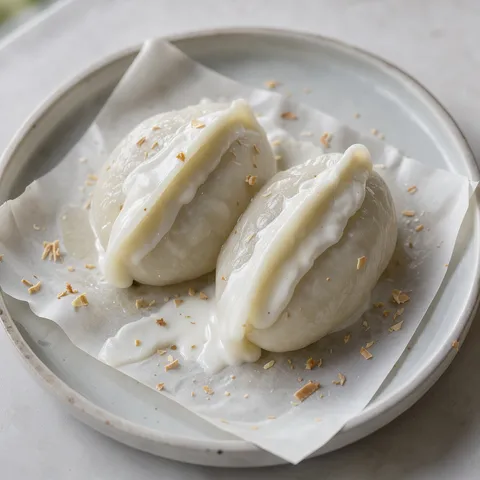
Sago and Banana Balls Dia
A Papua New Guinean dessert. Takes 55 min, Serves 4. Difficulty: medium.
At a glance
- Total time
- 55 min
- Serves
- Serves 4
- Difficulty
- Medium
- Cuisine
- Papua New Guinean cuisine
- Dish type
- Dessert
- Allergens
- Gluten, Milk, Tree nuts
Ingredients
- Balls (makes 8, serves 4): 4 ripe bananas (about 450 g peeled)
- 200 g sago flour or tapioca starch
- 2 tbsp sugar (optional)
- a pinch of salt
Wrapping
- 8 sheets baking paper (20×20 cm)
Cream
- 400 ml full-fat coconut milk
- 1 tbsp sugar
- a pinch of salt
Steam
- 1.5 litres water
Equipment
- Mixing bowls
- Potato masher
- Precision scales
- Wooden spoon / spatula
- Steamer basket
- Baking paper
- Saucepan
Method
- Mash the banana: Put the bananas in a bowl and mash with a potato masher until completely smooth. Very ripe bananas with brown spots on the skin carry the sugar and the aroma, and traditionally the sweetness of dia comes from the banana alone
- Work in the starch: Add the weighed starch, optional sugar and salt and mix with a wooden spoon. The dough should be soft, slightly sticky and fall from the spoon without tearing. If it is too wet, depending on the size of the bananas, add 1-2 tbsp starch
- Prepare the steamer: Put the 1.5 litres water in the bottom of a steamer and bring to the boil over medium-high heat. If the balls go into a cold steamer, the starch cooks unevenly and a white core is left in the centre
- Shape: Wet your hands and divide the dough into 8 equal pieces (about 80 g each). Form each piece in your palm into a thick finger shape 8 cm long
- Wrap: Place each piece in the middle of a sheet of baking paper, roll up the paper and twist both ends like a sweet wrapper. In Papua New Guinea these parcels are wrapped in banana leaf, and here the paper protects the dough from the steam and holds the shape in place of the leaf
- Steam: Arrange the parcels in a single layer in the steamer basket, cover and steam over boiling water for 25 min. Open one parcel and check, and the dough should be translucent, grey-pink and spring back when pressed with a finger. If any white, opaque areas remain, steam for another 5 min
- Thicken the cream: While the balls steam, cook the coconut milk, sugar and salt in a small saucepan over low to medium heat for 20 min, stirring often with a wooden spoon. The milk should reduce by half, coat the back of the spoon thickly and begin to separate at the edges. This clotted cream is the indispensable accompaniment to dia
- Rest: Take the parcels out of the basket and rest, unopened, for 5 min. During this time the hot starch firms up and comes cleanly away from the paper
- Serve: Unwrap the paper, put two balls on each plate and spoon over plenty of hot cream. Dia is eaten warm
Chef's note
Dia (also called pariwa) is a dessert from Papua New Guinea made from sago and ripe banana, steamed in banana leaf and served with thickened coconut cream. Baking paper was used in place of banana leaf, and tapioca (cassava) starch if sago flour cannot be found. For the cream, choose a coconut milk with a high fat content.
Frequently asked questions
- Where does the sweetness of Dia come from?
- Traditionally it comes from the bananas alone. Very ripe bananas with brown speckles on the skin carry the sugar and aroma. The sugar in the recipe is optional.
- Why get the steamer ready beforehand?
- If the balls go into cold steam, the starch doesn't cook evenly and a white core is left inside. Bring the water to the boil first and then put the parcels in.
- How do you know Dia is cooked?
- When you open the parcel, the dough should be translucent and grey-pink and spring back when pressed. If any white, opaque area is left, steam for another 5 minutes.
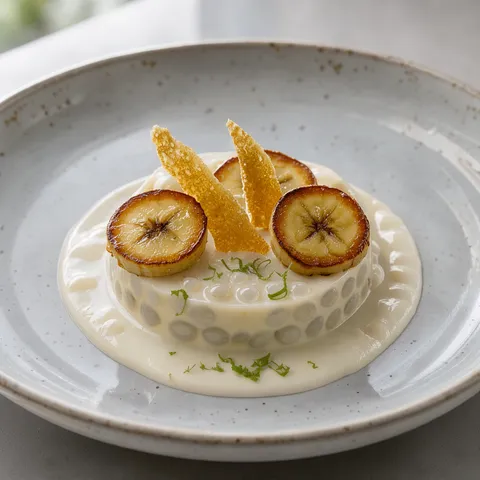 Dia 2.01 hr 10 min · Dessert
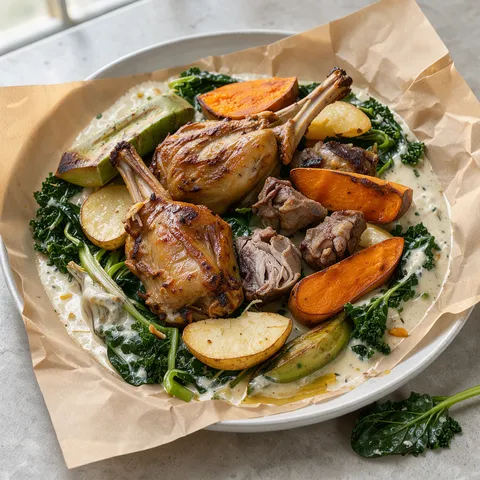 Papua New Guinean Earth-Oven Feast2 hr 10 min · Main course
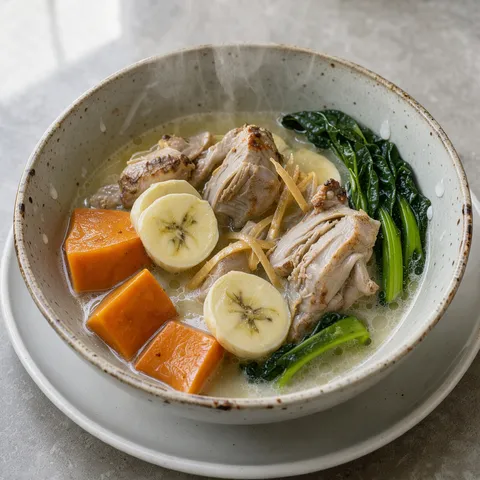 Ginger Chicken in Coconut Milk1 hr · Main course
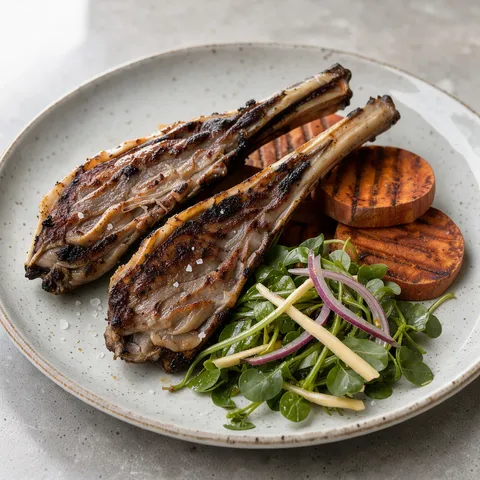 Chargrilled Lamb Breast and Salad1 hr 25 min · Main course
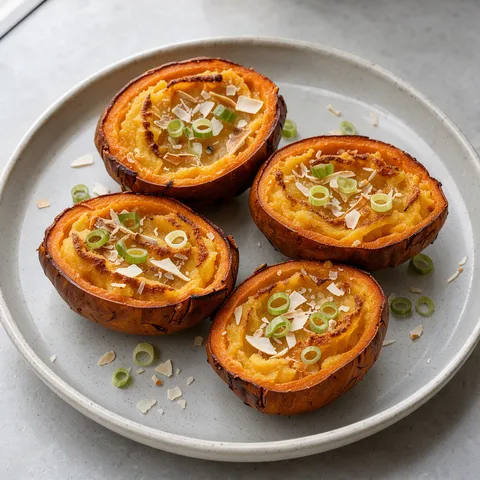 Coconut Sweet Potatoes Baked in Their Skins1 hr 25 min · Side dish
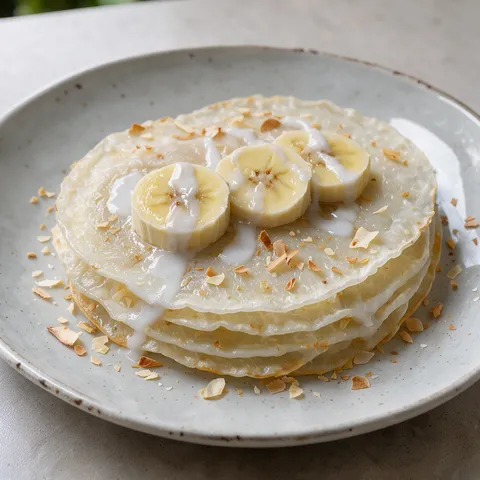 Coconut Sago Pancakes50 min · Bread & pastry
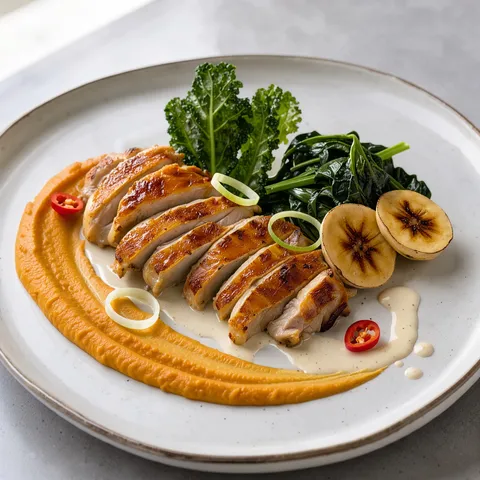 Mumu 2.01 hr 15 min · Main course