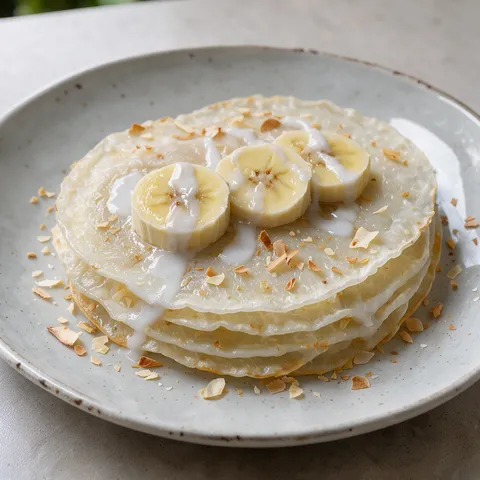
Coconut Sago Pancakes Saksak
A Papua New Guinean bread & pastry. Takes 50 min, Serves 4. Difficulty: medium.
At a glance
- Total time
- 50 min
- Serves
- Serves 4
- Difficulty
- Medium
- Cuisine
- Papua New Guinean cuisine
- Dish type
- Bread & pastry
- Allergens
- Gluten, Milk, Tree nuts
Ingredients
- Dough (makes 8, serves 4): 300 g sago flour or tapioca starch
- about 110 ml water
- 1/2 tsp salt
Coconut
- 80 g desiccated coconut
To serve
- 2 ripe bananas (sliced)
- 100 ml coconut milk
Equipment
- Mixing bowls
- Fine sieve / chinois
- Precision scales
- Frying pan
- Silicone spatula
Method
- Moisten the starch: Put the starch and salt in a large bowl. Add the water in three additions, rubbing with your fingertips and crushing any lumps to break them up. The right moisture is a texture that holds together when squeezed in your palm but crumbles like wet sand at the touch of a finger. Too much water makes a dough and turns the cakes rubbery
- Rest: Cover the bowl with a plate and leave for 10 min. During this time the moisture evens out between the grains. In Papua New Guinea, fresh sago starch comes from the palm already moist, and moistening dry starch recreates this texture
- Sieve: Rub the moist starch through a fine sieve into another bowl, pressing with the palm of your hand. A fine, slightly moist powder like flour should collect underneath. Lumps do not fuse in the pan and leave white, floury spots in the cake
- Portion: To divide into 8 cakes, weigh the starch on scales into eight portions of about 50 g. Also divide the coconut into eight small portions of 10 g
- Heat the pan: Heat a 20 cm non-stick frying pan without oil over medium heat for 2 min. No oil is used, as the starch fuses into a single cake only with dry heat
- Make the cake: First scatter one portion of coconut in the pan, then sift one portion of starch evenly over it through a fine sieve and press lightly out to the edges with the back of a spoon to level. Cook for 2 min without touching. The starch should turn translucent and fuse, and the edges should lift from the pan by themselves
- Turn: Turn the whole cake with a spatula and cook for another 1 min. Both sides should be dry but not coloured, though the underside with the coconut may have light golden flecks. Transfer to a plate and cover with a clean tea towel to let it dry
- Repeat: Cook the remaining seven cakes in the same way (about 3 min each, 24 min in total), wiping the pan with a dry tea towel each time to remove leftover powder. Burnt crumbs leave bitter spots in the next cake
- Serve: Put the cakes on plates two at a time, lay banana slices on top and drizzle with the coconut milk. Saksak is also eaten like bread alongside a savoury dish
Chef's note
Saksak is the name given in Papua New Guinea to the starch extracted from the pith of the sago palm and to foods made from it. In the Sepik region a jelly-like dough is made with boiling water, whereas this form, pressed into a hot pan and turned into a flat cake, is usually made with grated coconut. Sago flour is available in Asian shops, and if you cannot find it, tapioca (cassava) starch, which behaves very similarly, is used.
Frequently asked questions
- Why is Saksak cooked in a dry pan?
- No oil is used, as the starch only fuses into a single cake with dry heat. Heat the pan dry over a medium heat for 2 minutes.
- How damp should the starch be?
- It should hold together when squeezed in your palm but crumble like wet sand when touched with a finger. Too much water makes a dough and the cake turns rubbery.
- Why sift the starch?
- Lumps don't fuse in the pan and leave white, floury spots in the cake. Sift the damp starch through a fine sieve.
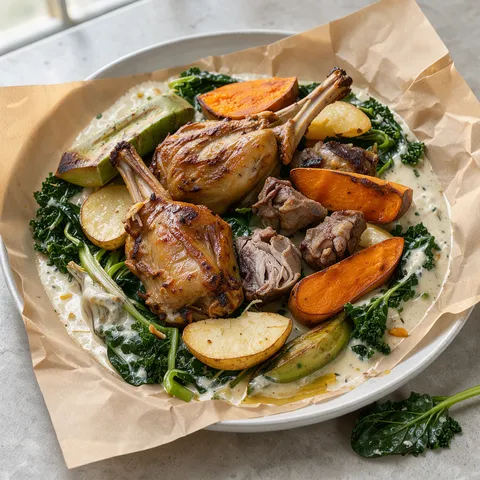 Papua New Guinean Earth-Oven Feast2 hr 10 min · Main course
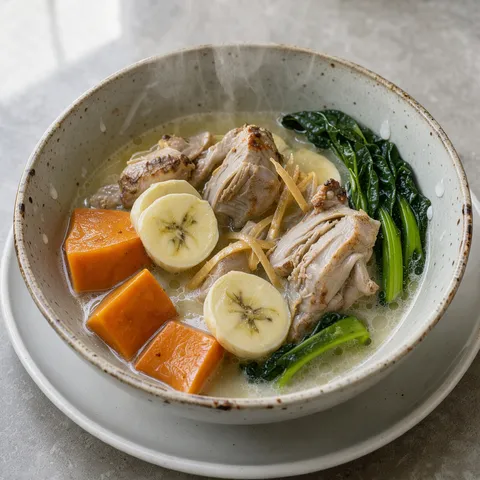 Ginger Chicken in Coconut Milk1 hr · Main course
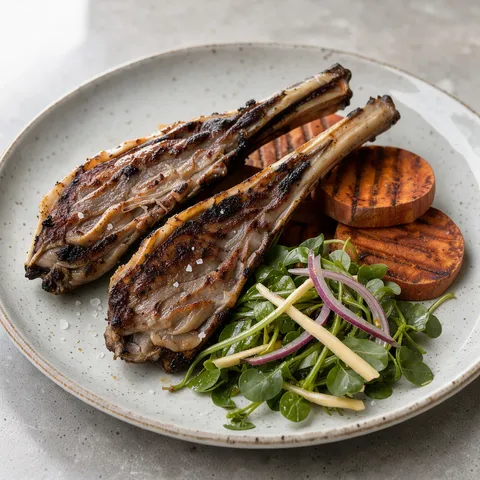 Chargrilled Lamb Breast and Salad1 hr 25 min · Main course
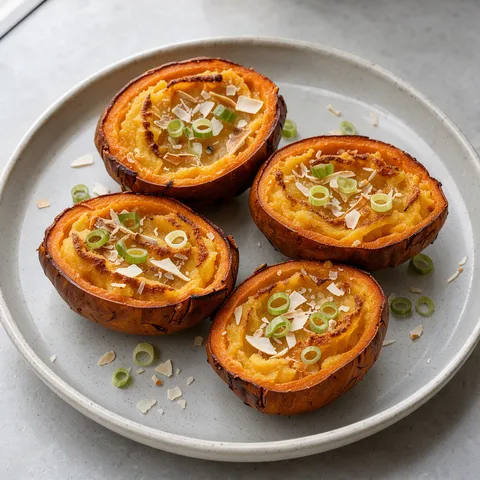 Coconut Sweet Potatoes Baked in Their Skins1 hr 25 min · Side dish
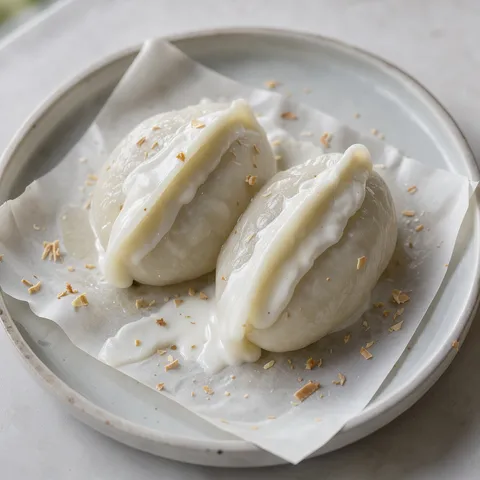 Sago and Banana Balls55 min · Dessert
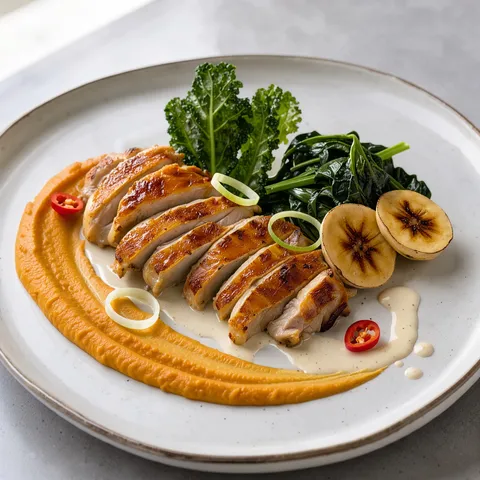 Mumu 2.01 hr 15 min · Main course