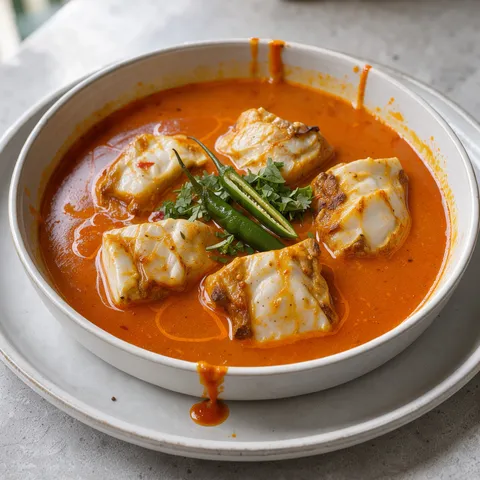
Coconut and Tamarind Fish Curry Goan Fish Curry
An Indian main course. Takes 50 min, Serves 4. Difficulty: medium.
At a glance
- Total time
- 50 min
- Serves
- Serves 4
- Difficulty
- Medium
- Cuisine
- Indian cuisine
- Dish type
- Main course
- Diet
- Gluten-free
- Allergens
- Fish, Tree nuts
Ingredients
Fish
- 600 g firm white fish fillet (sea bass or grouper, skinless)
- 1/2 tsp salt
- 1/4 tsp ground turmeric
Masala paste
- 8 dried Kashmiri chillies (stalks removed)
- 1 tbsp coriander seeds
- 1 tsp cumin seeds
- 6 black peppercorns
- 100 g freshly grated coconut (or 80 g desiccated coconut if unavailable)
- 5 garlic cloves
- 2 cm fresh ginger (peeled)
- 1/2 tsp ground turmeric
- 250 ml water
Sourness
- 20 g tamarind (a walnut-sized piece)
- 60 ml hot water
For cooking
- 2 tbsp coconut oil
- 1 medium onion (about 130 g, finely chopped)
- 2 green chillies (slit lengthways)
- 250 ml water (50 ml of it for rinsing out the blender)
- 1 tsp salt
To finish
- 2 tbsp chopped fresh coriander
Equipment
- Chopping board
- Chef's knife
- Mixing bowls
- Fine sieve / chinois
- Frying pan
- Blender
- Sauté pan
- Probe thermometer (optional)
Method
- Prepare the fish: On a chopping board, cut the fillets into 4-5 cm pieces with a chef's knife and pat dry with kitchen paper. Rub with the 1/2 tsp salt and 1/4 tsp turmeric in a bowl and leave in the fridge for 15 min while you make the masala. The salt firms the surface, so the pieces do not fall apart in the sauce
- Soak the tamarind: Leave the tamarind in the 60 ml hot water in a small bowl for 10 min, then mash it with your fingers and press it through a fine sieve. Discard the seeds and fibres: about 50 ml dark brown, sour liquid remains. In Goa this sourness often comes from kokum, and tamarind does the same job
- Toast the spices: In a 20 cm dry frying pan, toast the Kashmiri chillies, coriander seeds, cumin and peppercorns over medium-low heat for 2 min, shaking the pan constantly. As soon as the coriander darkens a shade and the aromas rise, and the chillies puff slightly and turn brittle, transfer to a plate. If the chillies blacken, the sauce turns bitter and its colour goes brown
- Grind the masala: Put the coconut, toasted spices, garlic, ginger, 1/2 tsp turmeric and the 250 ml water in a blender. If using desiccated coconut, first moisten it in this water for 10 min. Blend for 2-3 min, stopping once to scrape down the sides. The paste should be a smooth, orange-red cream that leaves no grains between your fingers: the velvety texture of Goan curry comes from this
- Fry the onion: Heat the coconut oil in a wide 26 cm sauté pan with a lid over medium heat. Add the onion and fry for 6-7 min, until soft and light golden at the edges. Add the green chillies and stir for 1 min more. Do not let the onion get dark: this curry should taste sweet-sour and clean
- Cook the sauce: Pour the masala paste into the pan, rinse out the blender with the measured 50 ml water and add that too. Add the remaining 200 ml water and the 1 tsp salt and bring to the boil, stirring. Lower the heat and simmer uncovered for 8-10 min, stirring now and then. It is ready when the raw garlic smell has gone, rings of orange oil appear on the surface and the sauce coats the back of a spoon. Add the tamarind water and boil for 2 min more
- Cook the fish in the sauce: Lay the fish pieces in the sauce in a single layer: 600 g fish fits comfortably in a 26 cm pan. Do not stir with a spoon: hold the pan and shake it gently so the sauce comes over the pieces. Cover and cook over the lowest heat for 6-8 min. It is ready when the pieces are completely opaque and flake when pressed with a fork and, if you are using a thermometer, the thickest part reads 63°C
- Rest and serve: Turn off the heat and leave covered for 5 min: in this time the sauce thickens a little more and the flavours settle. Taste for salt and sourness. Scatter with the coriander, divide between shallow bowls with the sauce and serve hot
Chef's note
In Goa this curry is the foundation of the everyday table and is eaten with plain boiled rice. Kashmiri chillies add colour with little heat and are available in Indian shops: if unavailable, use 2 tsp sweet paprika and 1/2 tsp hot chilli powder and add them straight to the blender without toasting. Kokum (the sour fruit rind of Goa) is hard to find, so tamarind is used here. Fresh coconut gives the sauce the best creaminess: you can get it by cracking open a whole coconut and grating the white flesh. Coconut oil is traditionally bought ready-made: if unavailable, use sunflower oil.
Frequently asked questions
- What gives Goan fish curry its sourness?
- In Goa, kokum often provides the sourness. In this recipe tamarind does the same job. Soak 20 g tamarind in 60 ml hot water and strain it.
- Why does the fish fall apart in the sauce and how can I prevent it?
- Rub the fish pieces with salt and turmeric and leave for 15 minutes, as the salt firms the surface. Don't stir with a spoon in the sauce. Just gently shake the pan.
- What happens if the chillies burn while toasting?
- If the chillies blacken, the sauce turns bitter and brown. Toast the Kashmiri chillies, coriander, cumin and black pepper over a medium-low heat for just 2 minutes.
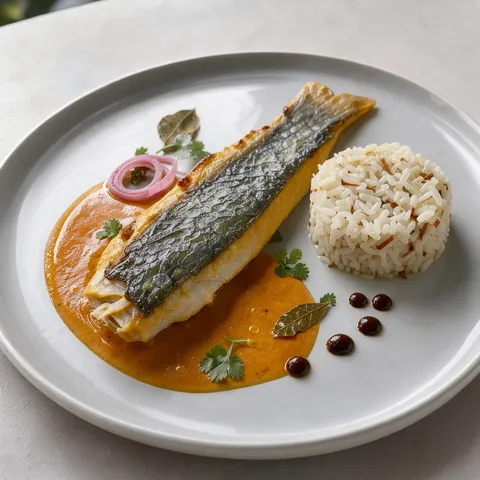 Goan Fish Curry 2.01 hr 20 min · Main course
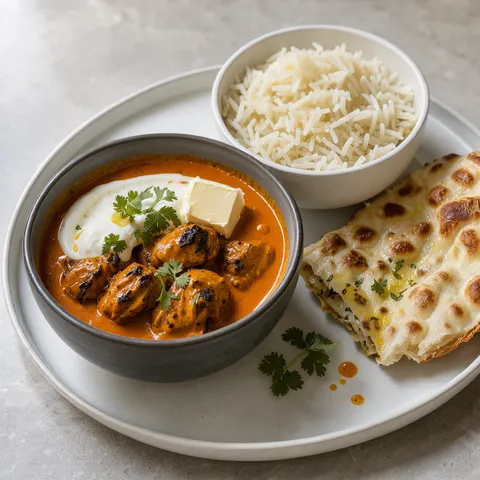 Indian Butter Chicken50 min · Main course
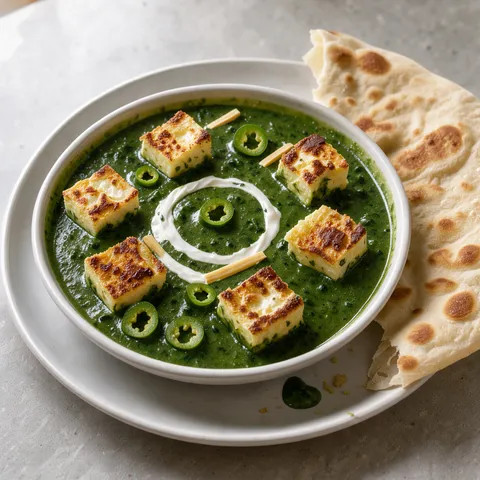 Spinach with Homemade Paneer45 min · Main course
 Black Lentil and Kidney Bean Stew1 hr 30 min · Main course
 Chicken Dum Biryani1 hr 30 min · Main course
 Indian Potato Pastries1 hr 30 min · Bread & pastry
 Fermented Rice Crêpes with Spiced Potato50 min · Bread & pastry