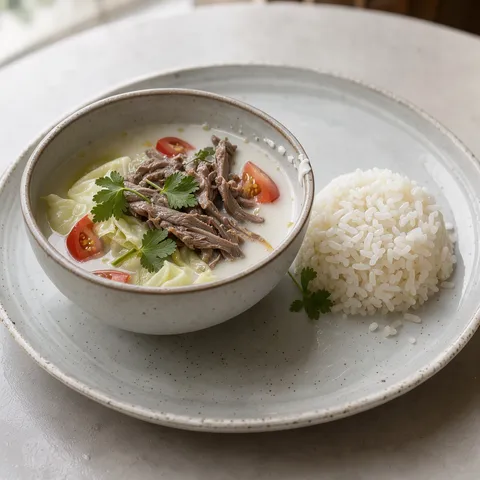
Tongan Coconut Beef and Cabbage Kapisi Pulu
A Tongan main course. Takes 1 hr 25 min (ordinary pan: 2 hr 55 min), Serves 4. Difficulty: challenging.
At a glance
- Total time
- 1 hr 25 min (ordinary pan: 2 hr 55 min)
- Serves
- Serves 4
- Difficulty
- Challenging
- Cuisine
- Tongan cuisine
- Dish type
- Main course
- Diet
- Gluten-free
- Allergens
- Milk, Eggs, Tree nuts
Ingredients
Beef
- 600 g boneless beef brisket (3 cm cubes)
- 1 tsp salt
- 1 bay leaf
- 6 black peppercorns
- 1/2 onion
- 750 ml water
Kapisi
- 1/2 white cabbage (about 700 g)
- 1 onion (sliced into half-moons)
- 2 garlic cloves
- 2 tomatoes (diced)
- 1 tbsp sunflower oil
- 400 ml full-fat coconut milk
- 1/2 tsp salt
- 1/4 tsp black pepper
- 1/2 bunch coriander
Rice
- 300 g jasmine rice
- 450 ml water
- 1/2 tsp salt
Equipment
- Pressure cooker
- Mixing bowls
- Chef's knife
- Chopping board
- Colander
- Saucepan
- Sauté pan
- Wooden spoon / spatula
- Ladle
Method
- Salt the beef: Pat the brisket cubes dry with kitchen paper and rub them with 1 tsp salt in a bowl. In Tonga the meat in kapisi pulu is tinned corned beef (pulu). Here fresh beef brisket is cooked in salted water to give the same salty result that falls apart into shreds. The salt works into the meat as it cooks
- Pressure-cook the meat: Put the meat, bay leaf, peppercorns, half onion and 750 ml water in a pressure cooker (at least 5 litres, no more than half full). Close the lid and wait for it to reach pressure over a high heat (about 8 min), then lower the heat and cook for 25 min. The connective tissue of brisket breaks down quickly under pressure. In an ordinary pan, cook with the lid ajar for 2 hr 15 min
- Release the pressure: Turn off the heat and let the pressure release naturally (about 12 min). Open the lid. The meat should fall apart with a fork without resistance. Transfer it to a bowl and shred with a fork. Set aside 100 ml of the cooking liquid and discard the rest
- Chop the cabbage and aromatics: Remove the outer leaves and hard core of the cabbage and, on a chopping board, cut it into 1 cm wide strips with a chef's knife. Slice the onion into half-moons, thinly slice the garlic, cut the tomatoes into 1 cm dice and roughly chop the coriander leaves
- Cook the rice: Rinse the rice 3 times in a colander and drain. Bring 450 ml water to the boil with 1/2 tsp salt in a small saucepan, add the rice and, when it returns to the boil, cover and cook over the lowest heat for 12 min. Take off the heat and leave to steam for 10 min
- Fry the onion: Heat the oil in a large sauté pan with a lid over a medium heat and fry the onion for 5 min, stirring with a wooden spoon, until translucent. Add the garlic and fry for another 1 min. Burnt garlic turns bitter, so watch the heat
- Add the tomatoes and meat: Add the tomatoes and cook for 3 min, until they release their juice and soften. Add all the shredded beef and the reserved 100 ml of cooking liquid and stir
- Add the cabbage and cream: Pile the cabbage strips on top, add the coconut milk, 1/2 tsp salt and the pepper and stir. Coconut milk splits if it boils, so keep the heat at a gentle tremble
- Cook: Cover and cook over a low heat for 15 min, stirring twice. The cabbage should soften but not fall apart, and the sauce should thicken slightly and coat the meat
- Taste and adjust: Taste for salt and add more if needed. Because the beef was cooked in salted water, little extra salt is usually needed. Take off the heat and stir in half the coriander
- Serve: Fluff the rice with a fork, divide between plates and ladle the kapisi pulu and its sauce alongside. Finish with the remaining coriander. The rice is eaten soaked in the sauce
Chef's note
Kapisi pulu is a Tongan dish of cabbage, salted beef (corned beef) and coconut cream. Sources describe both a pot-cooked version and one baked in moulds lined with cabbage leaves, and the pot version is used here. It is usually served with rice or sweet potatoes. Instead of tinned corned beef, fresh beef brisket is pressure-cooked in salted water here, rather than making corned beef at home by curing it for days. Lu pulu is made with taro leaves, kapisi pulu with cabbage.
Frequently asked questions
- What is used instead of tinned salted beef?
- Fresh beef brisket is salted and cooked in salted water. This gives a salty, shreddy result.
- What happens if the coconut milk boils with the cabbage?
- The milk splits if it boils. Keep the heat at a gentle tremble and cook covered over a low heat.
- Does the dish need extra salt?
- Because the beef cooks in salted water, a little salt is often enough. Taste at the end and adjust if needed.
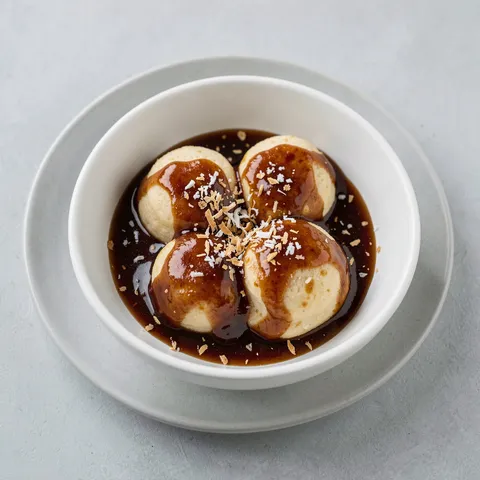 Tongan Dumplings in Coconut Caramel50 min · Dessert
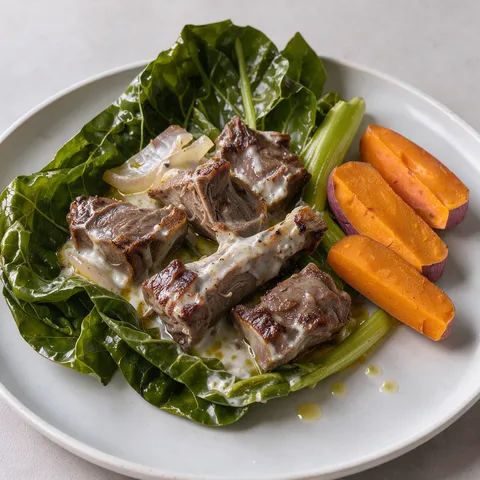 Tongan Lamb and Coconut Parcels2 hr 30 min · Main course
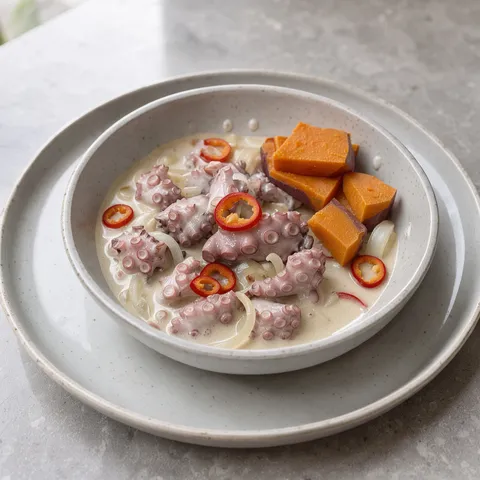 Tongan Octopus in Coconut Milk1 hr 25 min · Main course
 Tongan Watermelon and Coconut Drink25 min · Drink
 Tongan Yam with Coconut Cream45 min · Side dish
 Lu Sipi 2.01 hr 15 min · Main course