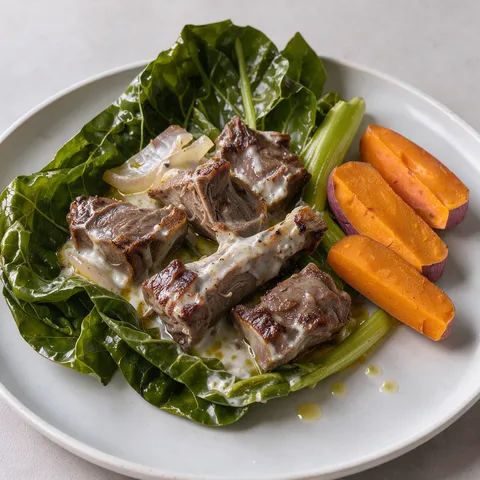
Tongan Lamb and Coconut Parcels Lu Sipi
A Tongan main course. Takes 2 hr 30 min, Serves 4. Difficulty: challenging.
At a glance
- Total time
- 2 hr 30 min
- Serves
- Serves 4
- Difficulty
- Challenging
- Cuisine
- Tongan cuisine
- Dish type
- Main course
- Diet
- Gluten-free
- Allergens
- Milk, Tree nuts
Ingredients
Lamb
- 800 g mixed boneless lamb shoulder and breast (4 cm pieces, fat left on)
- 1 tsp salt
- 1/4 tsp black pepper
Leaves
- 16 large Swiss chard leaves (in place of taro leaves)
Filling
- 2 onions (thinly sliced into rings)
- 2 tomatoes (roughly diced, optional)
- 400 ml full-fat coconut milk
- 1/2 tsp salt
Wrapping
- 4 pieces of foil (45×45 cm)
- 4 sheets of baking paper (35×35 cm)
To serve
- 4 medium sweet potatoes (about 800 g, kumala)
- 1 litre water
- 1/2 tsp salt
Equipment
- Oven
- Mixing bowls
- Chopping board
- Chef's knife
- Baking paper
- Baking tray
- Vegetable peeler
- Saucepan
Method
- Preheat the oven and season the lamb: Preheat the oven to 170°C (conventional). Pat the lamb pieces dry and toss in a bowl with 1 tsp salt and the pepper. In lu sipi (sipi is the Tongan word for sheep or lamb) the fatty parts of the lamb combine with the coconut milk and enrich the sauce, so the fat is not trimmed off
- Prepare the leaves: Cut the chard leaves from their stalks and keep the stalks for another dish. Lay the leaves upside down on a chopping board and, holding a chef's knife flat, shave down the thick central rib. In Tonga lu is made with taro leaves, which are eaten as the green part of the dish, and chard does the same job here
- Build the base of the parcel: Lay a square of foil on the worktop and put a sheet of baking paper in the centre. Arrange four chard leaves in the middle of the paper, overlapping like a star with the tips pointing outwards. Lift the edges of the leaves slightly to form a bowl
- Fill: Put a quarter of the lamb in each leaf bowl and top with onion rings and the optional diced tomato. Mix the coconut milk with 1/2 tsp salt and pour 100 ml into each parcel. The milk needs to stay inside the leaf bowl
- Seal: Bring the tips of the chard leaves together in the centre to cover the filling completely. Then gather up the baking paper and foil in the same way and scrunch them together to seal tightly. In Tonga the taro leaves are wrapped in banana leaves, then in foil, and cooked in an earth oven called an umu. Here the paper and foil take the place of these two layers
- Bake: Arrange the parcels on a baking tray and bake at 170°C for 1 hr 45 min. The connective tissue of the lamb only breaks down with long, covered, moist cooking
- Boil the sweet potatoes: For the last 30 min of cooking, peel the sweet potatoes with a peeler, cut into 5 cm pieces and boil in 1 litre of boiling salted water for 20 min, until soft. Drain and keep warm
- Check: Carefully open the top of one parcel on the side away from you. The lamb should fall apart with a fork without resistance, the chard should be dark green and soft, and the coconut milk should have thickened with its fat risen to the surface. If it is not ready, reseal and bake for another 15 min
- Rest: Leave the parcels to rest, sealed, for 10 min
- Serve: Put a parcel on each plate, open the foil and paper at the table and slide the leaf parcel and its sauce onto the plate. Add the boiled sweet potatoes alongside, to be dipped into the sauce
Chef's note
Lu is a family of Tongan dishes in which meat and coconut cream are wrapped in taro leaves and cooked in an umu (earth oven), and it is essential on Sundays and at feasts. Lu sipi is made with lamb, lu pulu with tinned corned beef and lu moa with chicken. Unlike Fijian palusami, the leaves hold plenty of meat. Here a home oven replaces the earth oven, chard replaces the taro leaves and baking paper replaces the banana leaves.
Frequently asked questions
- Why isn't the fat trimmed from the lamb?
- The fatty part of the lamb combines with the coconut milk and enriches the sauce. So the meat is used with its fat.
- What is used instead of taro leaves in lu sipi?
- Swiss chard leaves are used. Thin the thick central rib with the flat side of a knife, and save the stalks for another dish.
- Why do the lamb parcels cook for so long in the oven?
- The connective tissue in lamb only breaks down with long, covered, moist cooking. The parcels cook at 170°C for 1 hour 45 minutes, and can be cooked covered for 15 minutes more if needed.
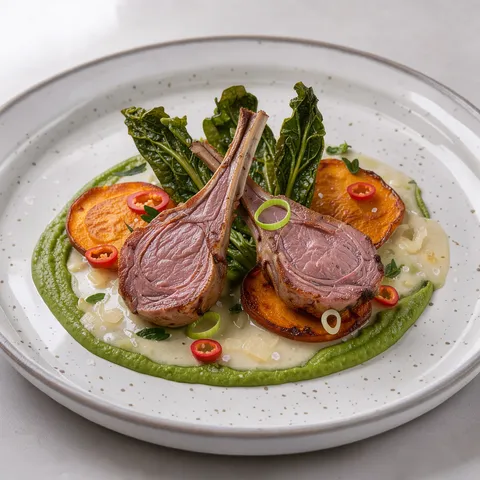 Lu Sipi 2.01 hr 15 min · Main course
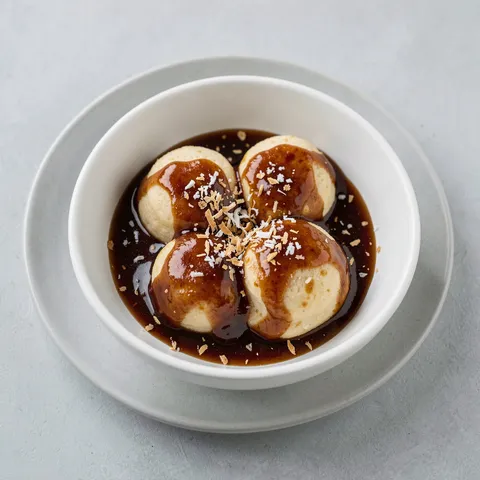 Tongan Dumplings in Coconut Caramel50 min · Dessert
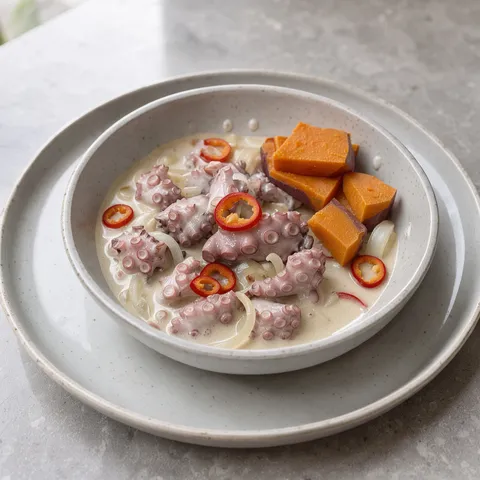 Tongan Octopus in Coconut Milk1 hr 25 min · Main course
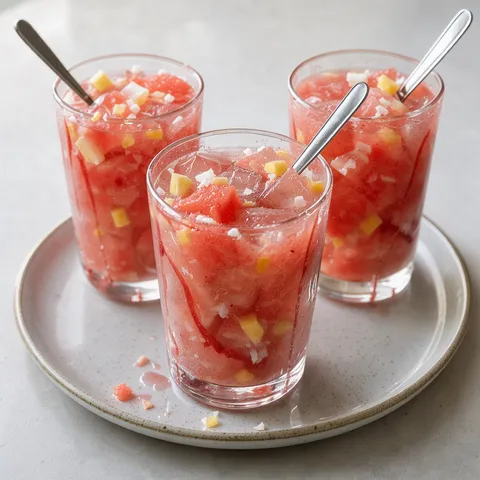 Tongan Watermelon and Coconut Drink25 min · Drink
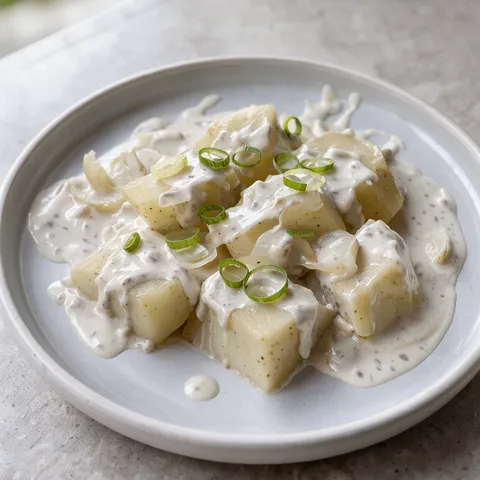 Tongan Yam with Coconut Cream45 min · Side dish
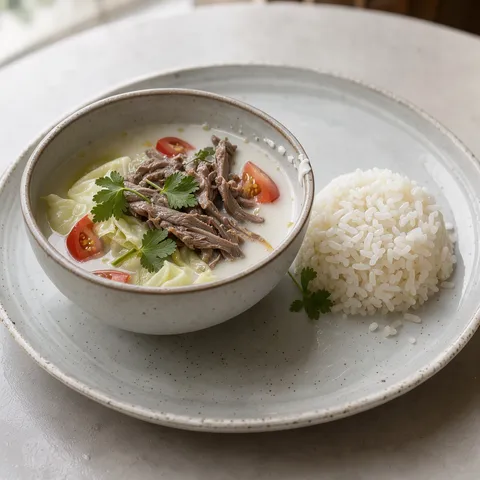 Tongan Coconut Beef and Cabbage1 hr 25 min · Main course